
Growth
I Left Social Media and My Audience Grew. 12 SEO Tips That Helped
Blogs optimized for search engines get more readers, but are typically bland. Sprinkling in these best practices is the best of both worlds.

After seven years of entrepreneurship, I was kinda done with social media. The algorithms weren’t a fit for my content style. The politics get wild during election cycles. And it was getting harder to separate “content research” time from mindless doomscrolling.
But quitting felt hard. Social media posts had led to several quality clients over the years. Additionally, the main top-of-funnel alternative to social media — a search engine strategy, in which most of your views and leads come from Google and other search tools — felt like such a grind. Not only does SEO take a while to build up, but the kind of writing that is optimized for search engines is typically boring as hell.
In 2023, I experimented with ways to pepper SEO best practices into my typical writing style: Newsy, journalistic essays and articles. I still feel like myself. And I’ve gotten a lot more eyeballs on my message this year.
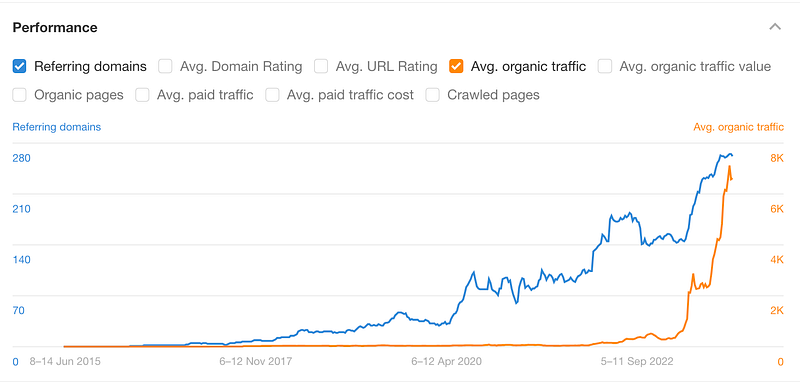
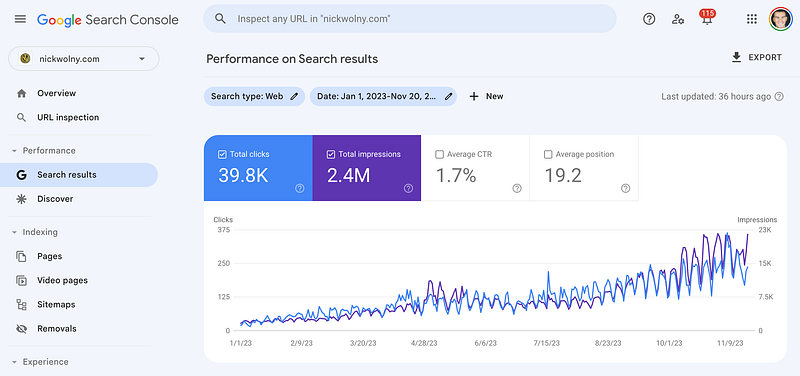
Search engine optimization (SEO) is the practice of writing content that can be picked up and shown in search engine algorithms. Search engine traffic is considered to be very valuable, because these users have “search intent,” meaning they are actively seeking out an answer to a question or a solution to a problem.
Let’s go over some fundamental SEO content writing tips that will help your posts be seen by more readers.
➡️ Related: If you like to write, consider getting the Article Template Toolkit, a free ebook of my best publishing tips as a professional editor. Get it here.
Why Care About SEO Writing?
In marketing, we are trying to get more users to learn about us, come to trust us, and buy from us. There are lots (and lots and lotssss) of marketing strategies, and it can often feel like you have to be everywhere, on every platform, to succeed.
One strategy that has been around for years is SEO writing. In SEO writing, you’re publishing content with a goal to show up in search engine rankings. If users are asking questions that you can answer, we want you to appear in search results so that these users can find you.
It’s important to note that SEO articles are typically explanatory in nature. If you’re sharing a story about how your cat got stuck in a tree, that’s not going to do well in SEO. However, if you were to use that story as an anecdotal lead for an article about how to make the trees in your backyard cat climb-proof, that how-to angle would likely perform better in search engines, when optimized well.
How a Search Engine Results Page (SERP) Works
Some quick vocab: A search engine results page is what users see on Google or other search engines after they’ve asked their question.
The components of a SERP include:
- SEO title. This is the title of your article that specifically shows up in search results.
- Meta description. Meta descriptions are previews of your web page, and will show up to 155 characters of information.
- Featured snippets. A featured snippet is a special placement in search rankings. Examples include FAQs, recipe cards, or YouTube videos.
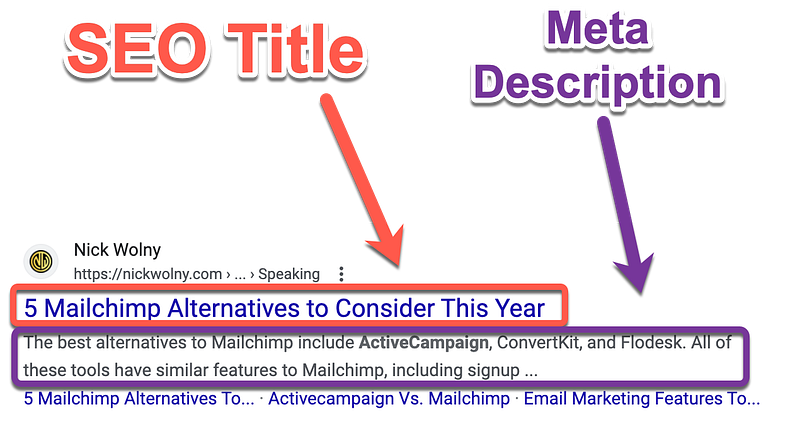
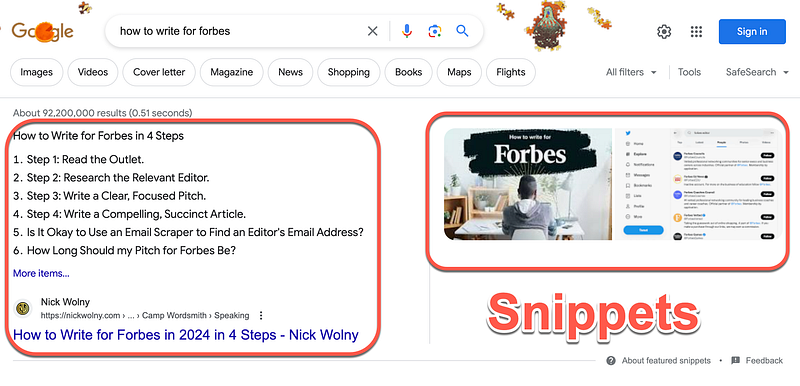
When writing blog posts, ensure that you have these components set up correctly in your publishing settings. This will make your post more attractive to users who are considering different search results.
Alright — time for the tips. Here are some best practices that have helped me this year.
SEO for Writers: 12 Tips to Know
№1: Research Ideal Target Keywords
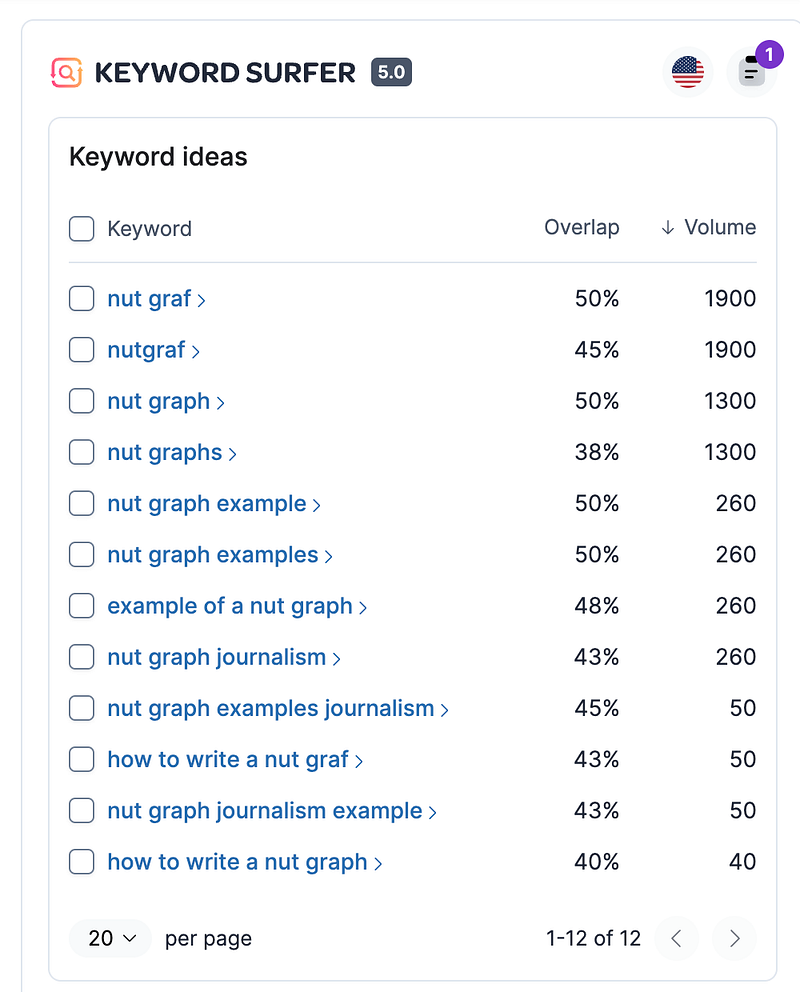
Keywords are the foundation of SEO. They are the words and phrases users are searching for. Effective keyword research helps you identify the search terms users are using to find information related to your content.
Start by brainstorming a list of relevant keyword ideas or phrases related to your niche. Then, use keyword research tools like Google AdWords’ Keyword Planner, SurferSEO, or SEMrush to identify high-volume, low-competition keywords.
№2: Incorporate Related Keywords, Too
You can only identify one target keyword per web page. However, you can have lots of related keywords also sprinkled in throughout the page, increasing the odds that one web page can rank for multiple target keywords.
Once you have your relevant keywords, ensure you place them strategically when writing SEO-friendly content. Include them in your title, headings, subheadings, and naturally within the body text. However, avoid “keyword stuffing,” which can negatively impact your rankings. Aim for a keyword density of around 1–2% to maintain readability while still improving your SEO.
№3: Prioritize Lower Search Volume at First
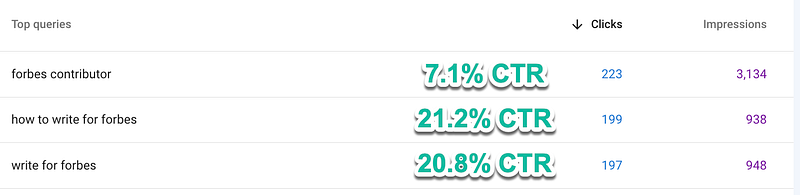
The top results on a SERP receive the majority of the clicks for that target keyword. High SERPs also improve overall SEO on your website. However, the more monthly searches there are for a keyword, the more competitive it’s going to be.
You’ll probably have better luck in your SEO writing efforts if you target less popular search queries at first. Still choose a relevant keyword, but pick a primary keyword that has lower search volume. Starting with primary keywords that have a monthly search volume (MSV) of 100 to 1,000 keywords and still have search intent from your target audience is a smart starting point.
№4: Check Your Site’s Structure
Website speed and mobile responsiveness are key factors that search engines consider when ranking websites. Slow-loading websites can negatively impact user experience and result in higher bounce rates, in which users leave right after arriving or never even arrive on the website to begin with.
Ensure your website is optimized for speed. Best practices include:
- Compressing images.
- Minimizing plugins and scripts.
- Using caching techniques.
- Checking the Core Web Vitals of your website in Google Search Console.
Also make sure your website is mobile-friendly. An increasing number of users browse the internet on their smartphones and tablets. The majority of my website organic traffic is users reading on a phone, so I format accordingly for that experience.

№5: Slay the Headline
Compelling headlines not only attract readers but also help search engines understand the context of your content. Craft an attention-grabbing headline, but also ensure it includes your exact target keyword. Use descriptive and action-oriented language to entice readers to click through to your article.
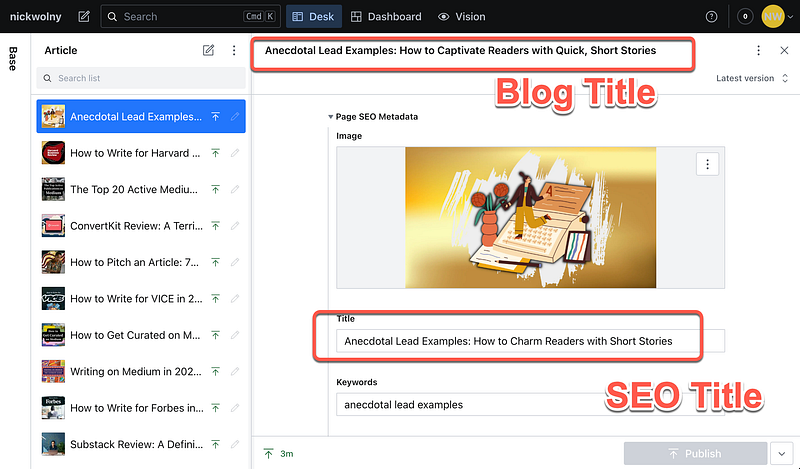
Also know that a blog post has two headlines. There is the blog title, which is what shows on the page. But then there is the SEO title, which we previously mentioned. This is what shows up in search results. Your blog title and SEO title can be different.
№6: Put the Correct Title Tags on Headings and Subheadings
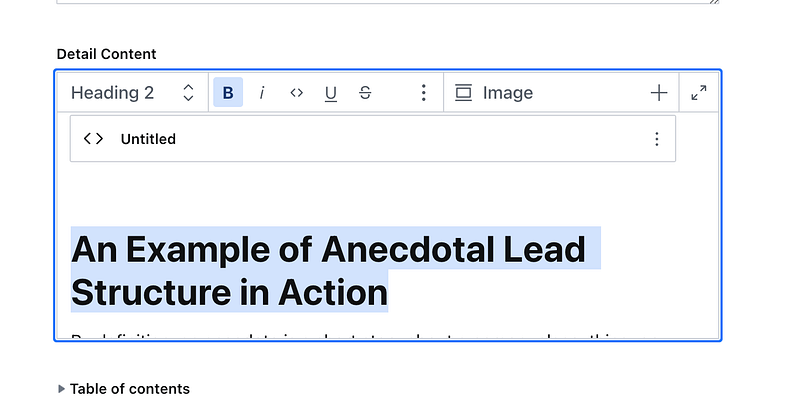
Google can’t tell how big your font size is. That’s one reason why we have what are called title tags. A title tag indicates the hierarchy of a subheading or other text in your article. Common title tags include Heading 1, Heading 2, Heading 3, and so on.
When a search engine crawls your content, it will look to the title tags to determine how your article is organized. If you don’t have the right title tag in the right place, search engines will get confused, and they won’t be able to properly index your article.
№7: Include Image Alt Text
Alt text is descriptive text placed within an image so that screen readers can explain images to vision-impaired readers. Image alt text also describes what is in an image to search engines, since search engines can’t discern imagery on visuals alone. Example: If I show you a photo of a banana, but put in the alt text that it is an apple, Google will think it’s an apple.
You don’t need to include alt text on decorative images, unless you want to.
№8: Keep Up on Internal Links
Internal links are when you link to another page of your website within a post. These help to build your “web” of content that search engines like to see.
When writing SEO-optimized content, look for opportunities to link to other related posts on your website. Doing so will not only help your readers; it can also improve your overall SEO and content strategy.
№9: Pursue External Links
External backlinks are when other websites link to your website, and they play a crucial role in SEO.
That’s because an external backlink indicates to search engines that your content is credible and valuable. Reach out to other writers, bloggers, and websites in your niche and try to establish mutually beneficial relationships. Guest posting, where you write informative articles for other websites in exchange for a backlink, is an effective way to boost your SEO. Additionally, sharing your content on social media platforms can increase its visibility and potentially attract more external backlinks.
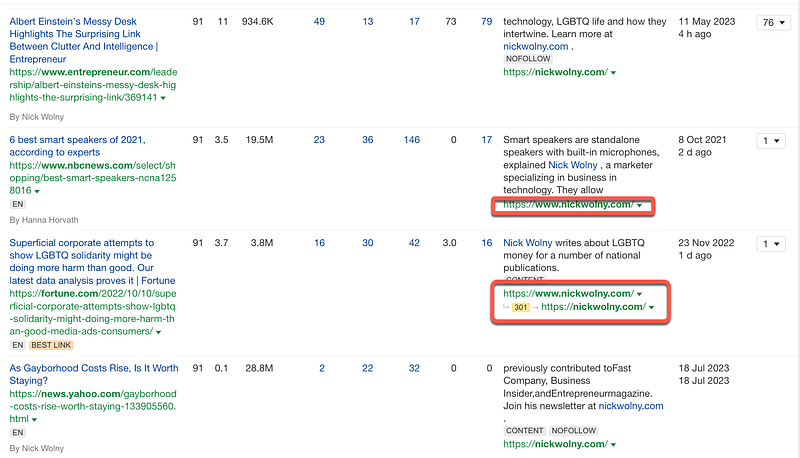
This is another reason getting featured in media outlets is really valuable.
№10: Include Schema Code if Pursuing Featured Snippets
This is a more advanced strategy, but if you’re comfortable with putting tracking code on your blog post, you can create code that increases the chance of getting snippets.
Snippets are special features that show up in Google’s search results. The most common snippets users encounter are FAQs, video clips from YouTube, and shopping carousels. By including this schema markup in your web page’s tracking code section, you make it easier for search engines to see and curate information from your web page into these opportunities.
№11: Measure Organic Search Performance Over Time
An SEO content writer should be looking at performance month over month to see if the numbers are improving. Feedback is a critical component of any good content strategy. You may find that certain web pages are bringing in the vast majority of traffic to your website.
Google Search Console and Google Analytics are free tools that will help you measure your website traffic and overall search performance.
№12: Improve Content Over Time to Rank Higher
While you technically don’t need to touch SEO content again after you’ve published it, it can be helpful to update these posts periodically, as search engines prefer to show newer, fresher content.
You may also want to update posts based on the opportunities you see in your analytics. For example, if you have a post that is appearing in the first page of search results, it would be worth it to try and climb the ladder in search rankings to potentially get more eyeballs and clicks from the same piece of content.

Search Engine Traffic Helps You Reach Your Goals
Recap for memory:
- Research target keywords.
- Incorporate related keywords.
- Prioritize lower search volume.
- Check your Core Web Vitals.
- Slay the headline.
- Use title tags.
- Add in alt text.
- Keep up internal backlinks.
- Pursue external backlinks.
- Add in schema markup.
- Measure performance over time.
- Expand and republish your best posts.
SEO can often feel like a black box. But it’s actually simpler than you might think, and the principles of SEO have remained the same for years. Start harnessing the power of SEO so you can stop lollygagging on social media and get in front of more readers. ◆
Write for top publications, increase visibility, and grow your online reputation. The Article Template Toolkit, available for free for a limited time, has my top tips as a professional editor that will help you succeed.
🚀 Get your free toolkit by clicking here.
Want more marketing tips and tricks? Subscribe to the Better Marketing newsletter the Marketing Memo here.


