
PERSONAL STORY | JAPANESE COOKING
I Learn Cooking from Japanese Anime
Most of those who know me here are aware of my passion for food, especially Japanese cuisine. It’s one of the newer skills I’ve developed over the past 2 years, and I’ve learned most of it from Japanese anime and TV shows.
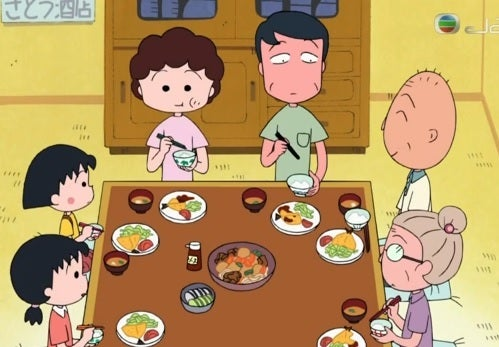
One of my favorite show was Chibi Maruko-chan (ちびまる子ちゃん, “Little Maruko-chan”) by Momoko Sakura.
The story of everyday life of a 9 years old girl named Momoko Sakura and her family. Set in suburban Japan in the year 1974, the series navigates the mischievous adventures of Maruko and her friends. The backdrop of the story is the former Irie District (入江町) in Shimizu, now a part of Shizuoka City, which also happens to be the birthplace of its talented author.
I would really appreciate it if you could please stay on the page
for at least 30 seconds to help me support my work as per Medium's new changes.
Chibi Maruko is quite the character when it comes to food. She can be quite cheeky at times, often making complaints about her mother’s cooking. It’s not that her mom’s cooking is subpar; it’s just that Maruko is a picky eater, and she tends to get bored with certain dishes rather easily. Some of her favorite food are Hambagu, Oden, and curry.
She’d often pestered her mother for curry which later I learned that many Japanese kids loves curry.
They seem to take it better than us here where I come from.
My entire family had to forgo spicy dishes almost entirely just because of my younger sister’s ‘aversion’ to them. She would make a huge fuss, claiming the food was too spicy and pulling all kind of pitiful faces.
It turns out that my younger sister was quite the drama queen. Surprisingly, she could handle much spicier stuff than most of us. I just can’t figure out why she did what she did.
Our culinary preferences stand in contrast to those of the Chinese community here partly because of our hybridized ethnicity.
Most of the time we would have spicy relish on the side with our meals so to not affect our in-house drama queen. We have Sambal Cincaluk, made from fermented shrimp with bird’s eye chilies and lime, as well as Sambal Belacan, which uses similar ingredients but is prepared differently. The term “Sambal” refers to a Malay hot relish.
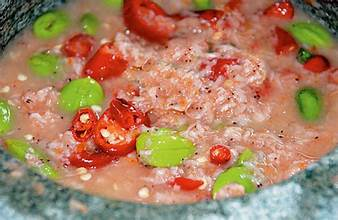
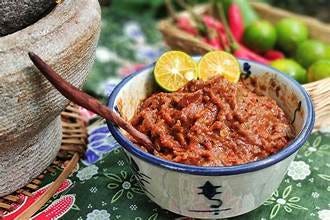
During my teenage years, I managed to learn how to make several other types of relishes as well.
I understand that there are many individuals who genuinely can’t tolerate spicy food.
My own tolerance level decreased significantly after a prolonged period of illness during which I didn’t bother what I put into my mouth. My typical Chinese partner would usually bring home non-spicy food.
It’s quite a change for someone like me who had been enjoying spicy food since the age of four and suddenly, after almost 40 years, found myself unable to handle the heat.
These days, my tolerance level is more in line with the milder Japanese curry type of spiciness. Even having nasi lemak from McDonald’s is too much for me.
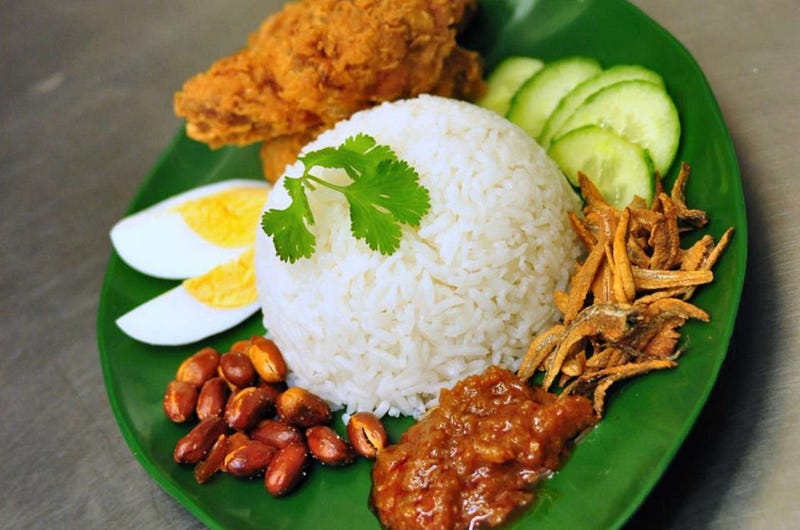
Nasi lemak is a dish originating in Malay cuisine that consists of fragrant rice cooked in coconut milk and pandan leaf.
One of my earliest memories of having a taste of spicy food goes back to a time before I even turned four years old. I can remember it vividly and precisely because it predates the birth of my younger sister.
I insisted on having some Maggi instant curry noodles, just like the adults, even though they were quite spicy for my young palate. I would take a mouthful of noodles and quickly follow it with sips of water, all while keeping the noodles in my mouth. That was my early training in handling spicy food.
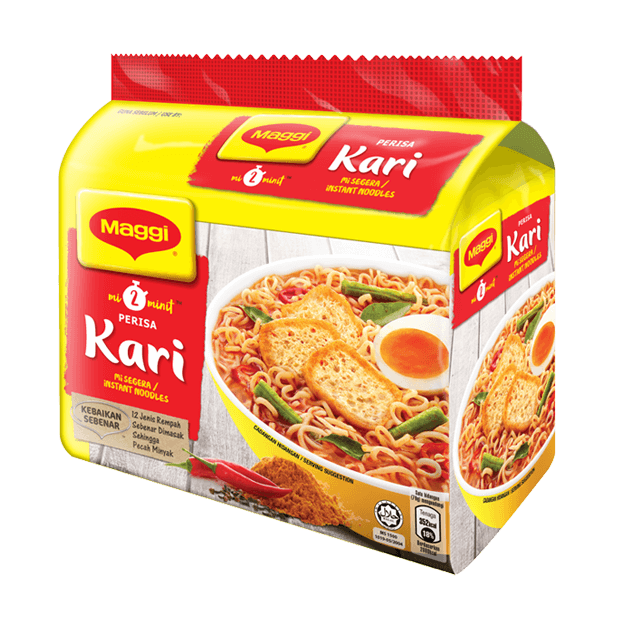
According to a study by Kantar, instant noodles is the eighth top dish in Malaysia. In fact, eight out of 10 Malaysians have Maggi instant noodles in their homes (Kantar Worldpanel).
I can still vividly recall the taste of those noodles on the palate of my mind, and they were incredibly delicious.
Back to the curry story. My curiosity led me to research and discover that apples were used in Japanese curry. Now I know why the Japanese kids love curry so much!
This revelation that sparked my interest to give it a try and soon I began experimenting with flavors and different ingredients.
Sweet, spicy, savory — all in one dish. I was hooked. Japanese curry has been part of my repertoire for a while now. I’ve been experimenting with all sorts of ingredients — eryngii mushrooms, Korean gochujang, shoyu, coffee, Thai coriander root — you name it, I’ve probably tried it.
Natto with curry is also surprisingly delightful.
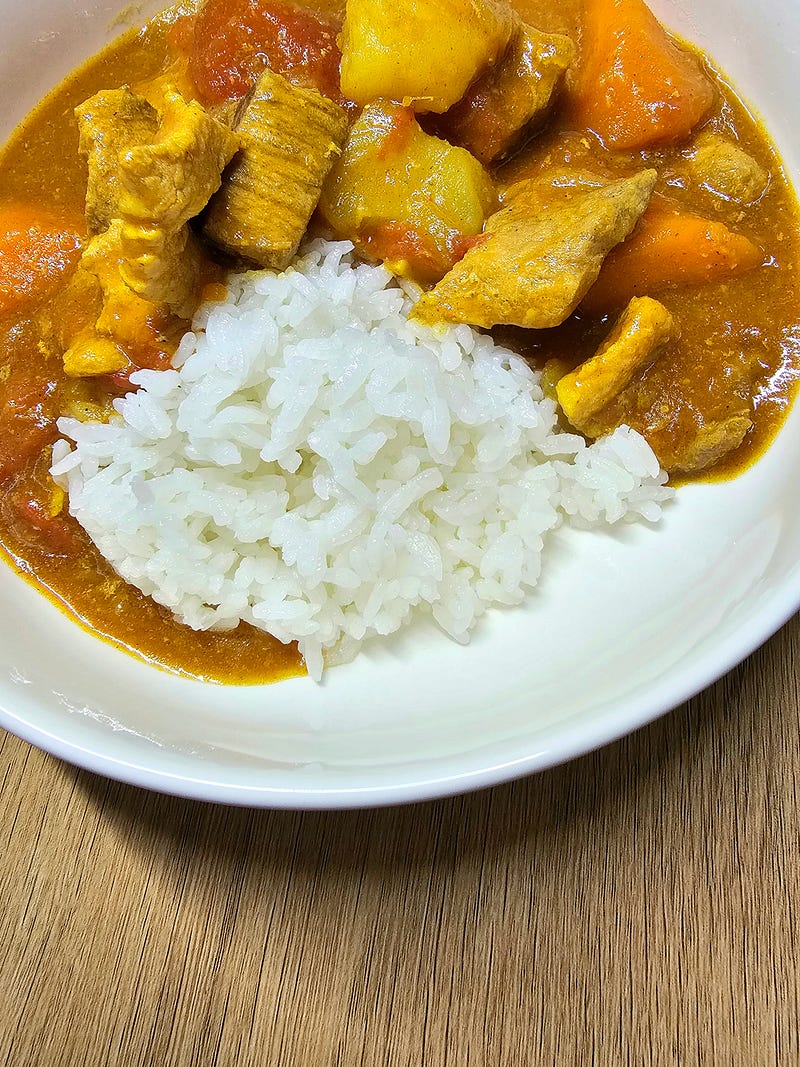
My latest version would be the tomato curry which I learned from “The Makanai: Cooking for the Maiko House” (舞妓さんちのまかないさん). The series takes its inspiration from the manga “Kiyo in Kyoto” by Aiko Koyama about two young girls on their journey of becoming geiko . One of them has a different fate awaiting her as she discovers her unexpected calling within the house: serving as their dedicated live-in cook.
Geisha (or geiko) are professional entertainers who attend guests during meals, banquets and other occasions. They are trained in various traditional Japanese arts, such as dance and music, as well as in the art of communication.
I’ve been paying close attention to what the characters are eating in the shows I watch.
But it’s not easy for me because I was watching them in Cantonese. While I understand and speak the language, I couldn’t read and write in Chinese at all. Sometimes I would ask my partner for help and other times I would use pinyin to search, even though pinyin is more applicable to Mandarin than Cantonese.
Pinyin is the standard system of romanized spelling for transliterating Chinese.
I had to go through a lot of back-and-forth between figuring out the words, making educated guesses and translating between 3 different languages.
After my successful curry making, I proceeded to explore the Washoku.
Washoku is a term that encompasses traditional Japanese home-cooked meal. It often includes elements like rice, miso soup, pickled vegetables, and a main protein source such as fish or meat, all prepared in a traditional Japanese style.
I would typically research a particular dish after watching it in TV dramas. With each episode, I’d discover a new culinary creation. That’s why I often rewatch certain series multiple times. Over time, I began to add my unique twist to the original recipes, like incorporating bird’s eye chili into my tonjiru.
While I’ve tried numerous dishes, I don’t have many pictures to showcase because I’d have to wait for my partner to return from work to use his phone’s camera. This would mean that I couldn’t start eating until I had taken a picture.
My most ambitious attempt to date has been making the Osechi Ryori. The preparation for this traditional New Year’s feast is quite intensive, typically taking about a week, excluding the time needed for sourcing ingredients and conducting test runs.
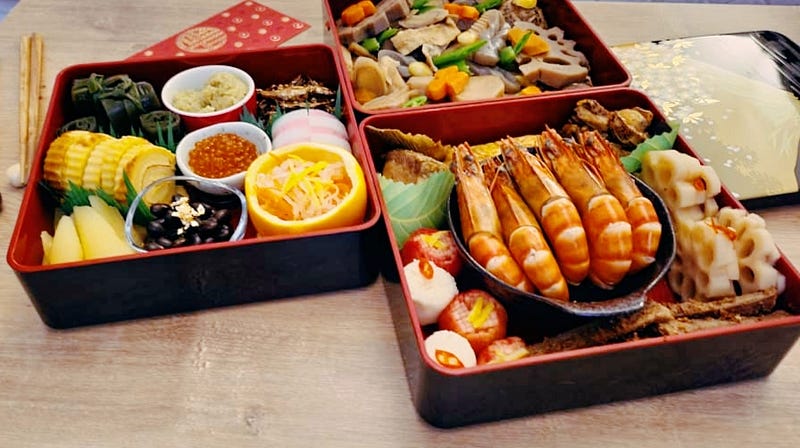
Osechi Ryori is the traditional food enjoyed on New Year’s Day in Japan. It consists of an array of colorful dishes neatly packed together in special boxes known as jubako, which bear a resemblance to bento boxes. Each dish within this traditional feast carries a symbolic meaning, signifying a special meaning.
I had my doubts before this which is good in a way. In the past, my bipolar tendencies would often give me too much confidence, leading me to dive headfirst into various pursuits, often recklessly.
Achieving success with my attempt at preparing Osechi Ryori on my own did indeed boost my confidence somewhat.
I’m committed to continue learning and sharing the knowledge and skills I acquire along the way.
I’m just a humble fan who loves all things Japanese and hopes to bring a little bit of that love to you. Arigatou gozaimasu!


*This story contains affiliate links
All photos belong to their respective websites, as indicated in
the captions. For more information, you may click to visit the provided
sources, which will lead to external websites, unless stated otherwise.


