
I Knew I Could Save It, But I Watched It Die
And how I know loss is loss no matter the form it takes.
I rarely try to analyse death.
It’s an accepted fact of life. We pay taxes, and at some point, at a time we can rarely predict, we shuffle off this mortal coil in the hopeful search for something better.
I’ve never felt the need to read into the meaning of death, feeling it pointless to argue with a concept I can rarely control. I prefer to use my precious time on this earth doing more constructive things.
Nothing I can say or do will change the fact someday, we will all die. It won’t change death when it happens; I’m no saviour full of miracles.
But what happens when I know I could have saved something that died? Every day, I wake up with the reality that I not only killed the business I once had but could have also saved it.
As the monkey known as failure has climbed onto my back and locked its arms around my throat, I keep wondering what kind of saviour I am. Because I let what was most precious to me die, and I’m not sure why.
Before death comes birth
It was impossible to kill something that wasn’t living. That’s the problem with businesses; we don’t know when they become living concepts.
Is it the first moment you come up with the idea?
Is it when you announce the first day of trading?
Or is it when you invest your first dollar into the concept?
Without a birthdate, I can’t be sure when it began to live. For the sake of the story, I can confirm my website design business was born somewhere in the middle of folding towels. That much, I know.
I was in the middle of organising the weekly towel delivery as a receptionist at a glorified massage clinic. It was menial work, at best, uncomplicated and repetitive. Yet, it was paying the bills and providing endless time to develop lucrative business ideas.
I must have folded hundreds of towels before this particular stack. I don’t know why this one evoked my entrepreneurial apparition. But for some reason, the idea dawned on me as I put hem to hem of the material. I would design websites for a living.
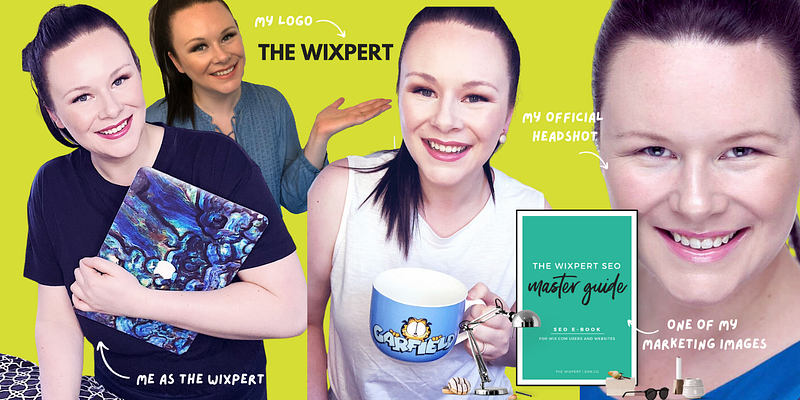
And three towels later, I had the name. The WIXpert. It was a play on Wix plus “expert”. I felt chuffed with my creativity.
I didn’t pluck being a website designer out of thin air. Weeks earlier, one of the girls I worked with asked me for help with her WIX website, one she was creating for her side hustle. A week after that, another asked me for web design guidance.
It’s an easy-to-use program, a website program aimed at technological novices, one I had mastered for my little relationship blog I had at the time.
My colleagues marvelled at my skills, something I enjoyed, considering my administration work didn’t come with much respect.
When the third colleague offered to pay me to help him finish his website, I realised there was money in DIY recovery. Though most website design professionals would mock my business, there was a market for people who wanted control over their website but needed a little help.
Watch out, Jeff Bezos, I thought, I’m coming for you.
You watch your baby grow
After a few months of side hustling with my business, testing the waters and building a clientele, I quit the administration job. Overnight, I became the WIXpert full-time.
I bluffed my way through day one, pretending I knew how to run and grow a business from my makeshift office at home. There was much I didn’t know, and I quickly discovered I needed to learn more on the fly than I ever thought necessary.
But fake it until you make it, right?
Other entrepreneurs had done the same thing before me and gone on to be incredibly successful. Why couldn’t I?
I did everything possible to grow my business. If there was a social media platform, I was on it. I wrote cold emails, handed out business cards, joined low-paying freelancing platforms and took on contracts for the experience.
All the slaving, the grind, the sleepless nights, days unwashed were worth it. My business flourished, and I was earning money and gaining clients. People bought into the WIXpert concept and wanted what I was offering. I was helping my clients, solving problems they had.
In this weird way, my business idea was making a difference, and I could feel it. But every time I looked at my bank account, I knew I wasn’t at Bezos's level yet. I wasn’t even making a salary I had walked away from in my previous job.
This didn’t matter, though. With momentum, I could see if I kept going, the money would come.
Before you take your oh-so-accurate aim
One phone call was all it took.
One of my WIXpert clients picked up their phone on a Friday night, at 8.57 p.m., and called me. I didn’t answer, as I was out with my friends at a bar, but a text message followed soon after.
This client had an insignificant question about how to change the colour of a subtitle on her ‘About’ page. It was in no way an emergency. Her business and website wouldn’t implode if I didn’t answer her immediately.
Although I built my business helping people who didn’t have web design skills, the answer to this question she could have found within seconds on Google. If she had managed to navigate her way to editing text, she was far more advanced than any of my other clients.
I already knew this before I received the text message, too.
I knew my client wasn’t someone without skills. There were days when I wondered why they even hired me. But it would seem this message was providing the answers.
Despite this, their actions didn’t make sense to me. Why were they calling me on a Friday night? Why, after working hours, would you contact your website designer? Why was it urgent enough to pick up the phone, send a message and try and call? Why did you think this problem was significant enough to disrespect my time?
To add insult, I had already told this client I didn’t work weekends, and my work day ended at five-thirty. To ignore this and contact me anyway was disrespecting my time.
I acknowledge a part of this was my issue; I had respect drilled into me as a teen. It was bred into me that you don’t cross certain boundaries when interacting with professionals. I had lost a job for crossing this line when I was younger. You could say it was one of my deal breakers of doing business.
You don’t have to agree with my way of thinking, by the way. But it explains why I snapped. And why I did what I did next.
During that Friday night, I decided I didn’t want customers anymore. I wanted freedom, blissful customer freedom, and a business where they didn’t exist.
What an unrealistic conclusion I can reflect on now. I was angry and too quick to make permanent decisions on temporary emotions.
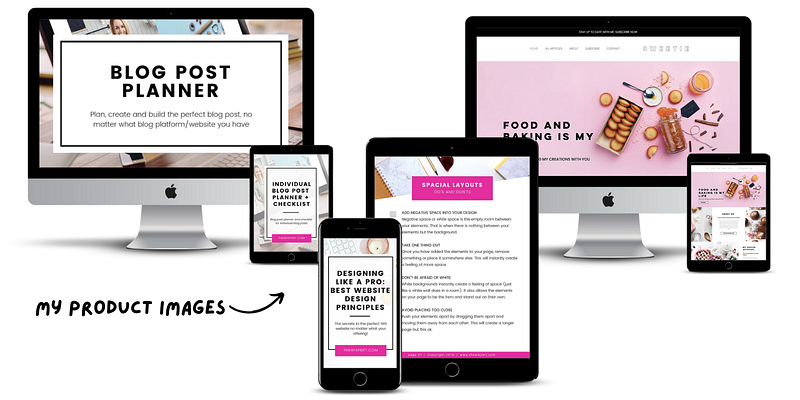
Yet, I started working on this grand plan to turn my person-to-person business into a passive income machine. My vision was to sell website design-related support products, like eBooks and guides.
In hindsight, my products were everything a busy business owner didn’t need. They needed my second set of hands to mind their website, and I thumbed my nose up at them. They didn’t need more education or material that required exceptional time and effort to utilise and learn.
Self-sabotaging me thought Mr Bezos was quaking now.
Little did I know I was digging the business grave with every passing minute.
And then you take away the life support
To ensure my business didn’t survive, I took away everything it needed to live during the transition. I was setting up an online store and education business without funding to support it.
With sweeping enthusiasm, I turned away every paying client I had. Any regular customers on my payroll I terminated my contract with. Any new and well-paying clients who approached me were similarly given the fob off.
My business, such as it was, could never endure these conditions. My customer base, the one-to-one experience I hated so much, kept it alive. Though I worked continuously to build an e-commerce type of business, I was trying to rebrand myself completely. I was also trying to do this without any validation that this idea was worthwhile.
This time, I didn’t have my colleagues who convinced me there was a market for these products. Instead, I chased a dream business scenario that satisfied my type of work.
Any person in business knows you’ll fail if you make what you’re doing all about you.
I persisted with my idea. Like the dead horse, I flogged this idea as hard as possible. I thought, eventually, the world would catch up with what I was trying to sell. I was drowning in my lousy business idea. I was drowning in my even worse execution of the concept.
My business teetered on the edge of collapse.
One family crisis later, in the form of my mother-in-law’s month-long stint in hospital, sealed the deal.
I couldn’t keep going, and my business wouldn’t survive on its own. One night, after returning from a hospital visit, I told my husband I was closing the WIXpert that night.
Time of death: 8.57 pm. Again.
Saying goodbye
They say part of the mourning process is having a funeral for your loved one. It’s important to attend so that everyone can grieve together, share in mutual support, and say goodbye. It is a ceremonial closure, which, based on the longevity of the tradition, seems to work.
It’s the death rite of passage.
I should have had one.
But I never went to a funeral for my business. Nor was there one held in my absence. Though if there was, I wouldn’t have attended. I didn’t want to start mourning my failed business because that would be admitting failure.
By acknowledging the end, I would admit to the world, “Look at this beautiful life I birthed and killed. Comfort me.”
I didn’t believe I deserved sympathy, nor did I think I earned points for trying. I killed something so dear to me I felt like I should have been buried along with it.
This time was tough to endure. Luckily, though, I don’t think these things any more.
So this is what loss feels like
You don’t need to lose a loved one to know what death feels like.
Without being disrespectful to the living, breathing creatures of this earth, loss doesn’t discriminate. You don’t need a person to die to feel the pain, anguish and regret that comes from losing something you care about.
It’s also how you know how much you love and cherish certain parts of your life. Because when they’re gone, it feels like part of you is missing.
Sometimes, I wonder why it still hurts. I’ve moved on since then and birthed another business exceeding my former business’s earnings. It’s also proving to be my most enjoyable career move ever. I get up in the morning and adore my professional life.
But it doesn’t erase the pain. Shouldn’t this be an adequate replacement for my failures? Can’t success replicate the feeling of complete defeat?
I wish it could.
But that’s the stranglehold death has upon us. When something vanishes from our lives, nothing can replace it. We have distractions, but they don’t provide closure.
I wish death weren’t such a cliche.
I wish I had something revolutionary to say about the subject. I had hoped my short, one-time-only analysis had a meaningful conclusion or a lesson we didn’t already know. Alas, all I can say is: death sucks, no matter what form it takes.
But that’s a lot of wishing.
I’m here to use my wins and losses in life, business and relationships as your cautionary tale | http://www.ellenjellymcrae.com/