
I Just Found Out I’m a Heteroromantic Bisexual
Grappling with the complexities of bisexuality and the value of labels
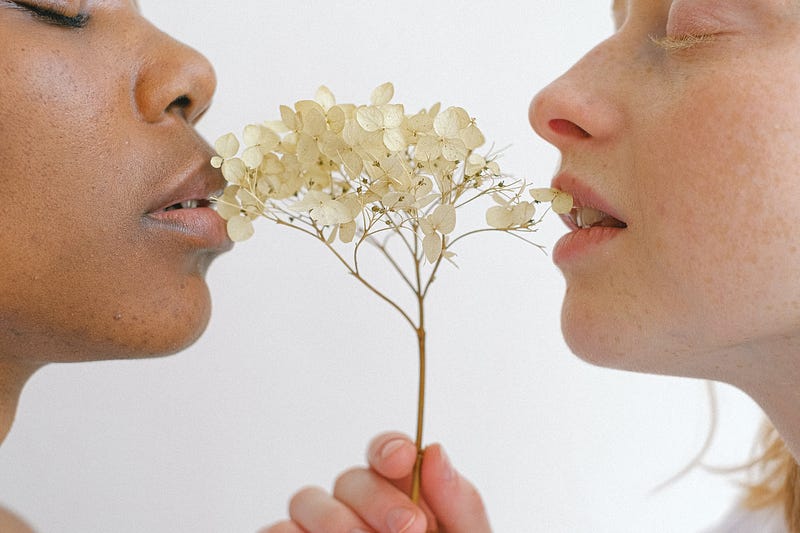
As a cisgender, straight-passing woman, the vast majority would look at me and pin me as that: Straight.
But, I’m not.
Friends and family, even those who know that I’ve had (and have) intimate relationships with women too, would likely say that I’m straight, or at least, mostly straight.
This is still not true.
And while I do have to come out, again and again, I do acknowledge the obvious privilege of being able to pass straight while still being allowed to openly explore my sexuality without shame or fear. While repeatedly telling my mother I’m not straight is irritating, I won’t pretend for a second that I’ve had to fight the same battles as my so many of my LGBTQI friends.
I suppose it’s more of a blessing than a curse.
Still, since we’re right in the middle of Bisexual Awareness Week (#BiWeek) with Celebrate Bisexuality Day this Wednesday the 23rd of September, I thought this was a good time to dig deeper into the topic. I’ve been grappling with my own bi-ness lately and have been putting thought into which words and terminology best describe my feelings around my sexuality.
A few weeks ago, the right label fell into my lap and upon reading further, I think I finally know what to call myself:
I’m a heteroromantic bisexual.
I don’t remember exactly when I started being attracted to the same sex, but I know it was as early as middle school, around the same time that I started really being interested in guys as well.
I didn’t really know that bisexuality was even a thing, I just knew that I found other girls beautiful and attractive, and whenever I had a chance to kiss one of them, usually as part of some kind of game or dare, I would.
One of my best girlfriends in high school and I would make out every chance we got. Nothing ever came of it but years of tipsy kisses at parties, but neither of us could keep our hands—or lips—off each other as soon as we’d had a bit of that liquid courage. It was socially acceptable, and even encouraged, for girls to kiss in this setting, so we stuck with that. But what we did was never part of some game to arouse or allure other guys for attention; we did it for us, which mostly meant sneaking off to the bathrooms or other secluded corners at the party to passionately make out.
I still remember hers as the softest, most tender, and sensual kisses ever. I can still smell the scent of her too-sweet teenage cologne, the touch of her strawberry blonde hair, and the delicate freckles on her cheeks.
Her kisses were like ripe peaches melting on my tongue.
I never entertained the option of being in a relationship with her, or other girls, because I did like guys too, and that just seemed like the most convenient route to go down. Besides, I was already in close friend-relationships with a handful of girls, and we shared everything—and occasionally, with some of them—kisses and touches too.
I continued like this for almost two decades; dating guys who didn’t mind that I occasionally kissed girls. They weren’t a threat—because I was mostly straight.
Until one day, one of them was.
In the process of leaving a toxic, dead-end relationship with my last long-term partner, I fell right into the arms of a doe-eyed lesbian who was nothing like the other straight-passing women I’d kissed in the past. Suddenly, with someone who wanted more—much more—than booze-fueled, stolen kisses at parties, I was confronted with the fact that I was actually bisexual; that I was capable of being attracted to another woman, wholly and fully.
I started imagining what my life would be like in a relationship with her and what it would be like to really come out, to my friends and family, and most dauntingly, my father.
Because girls kissing girls was so mainstream-accepted, I’d never had to confront my sexuality before. It was just this thing that I did, and I’d never been asked to label or explain myself. But, here I was, in my thirties, turning my whole life upside down and grappling with my sexuality in the midst of it.
After my lesbian relationship ended, I went back to dating men again. It wasn’t a conscious decision—it just happened.
Was it just a phase?
Many, including close friends and family, will say that it was; I was escaping an abusive relationship and I was confused. They’ll still say that I’m mostly straight, perhaps a bit fluid.
I’ve been questioning all of it too.
Throughout the last years, I’ve continued to have intimate, sexual relationships with women, and because I’ve been dating in poly, sex-positive circles, there’s been space to explore both: I’m lucky to have a male partner and a stunning female lover at the same time!
I’m realizing through this, that my relationships with women often take on different nature than those with men. While I tend to fall more romantically for men, my relationships with women are flexible; we’re usually always friends first, and we can move easily between being lovers and girlfriends, and back again, but we don’t date in the traditional sense.
Since I mostly end in romantic relationships with the opposite sex, and only really dated a woman once, am I even allowed to claim the term bisexual? For a while, I was calling myself heteroflexible, thinking it was more accurate, but this didn’t feel right either. I wasn’t just flexible in the way that I could be persuaded by a boyfriend into having a threesome with another woman. I happen to want and desire intimacy with the same sex, very much on my own account, and without needing the slightest encouragement from a partner.
So what was I?
Coined the father of the sexual revolution, Alfred Kinsey created the Kinsey scale to demonstrate that sexuality doesn’t fit into two strict categories—homo- and heterosexual—and that most of us are sexually fluid and subject to change over time. Consulting the scale, I pinpointed myself a two: Predominantly heterosexual, but more than incidentally homosexual.
Still, I’m not just 60% straight and 40% gay. Instead, something about how I feel, both emotionally and sexually, fluctuates wildly between different genders and sexes too. And, strangely, I have a much more clear type-preference when it comes to guys, whereas with women, I don’t and gravitate towards a huge range of body types and gender expressions; I’m attracted to both super-femmes and androgynous women but fall almost exclusively for rather masculine men.
It was a relief to find the term heteroromantic bisexual or hetero-amorously bisexual, as sex columnist Dan Savage calls it. These words gives a name to how I feel (most of the time, at least) and it acknowledges and validates that there is such a thing, and, also that there are many different ways to be bisexual.
Many who identify as bisexual may know how we feel, but find it complicated to put it into words, simply because it isn’t usually a straight-forward fifty-fifty split, and the word bisexual doesn’t cover all the complexities of our individual experiences.
According to an article on Healthline, you can still be bisexual or pansexual if you find yourself more attracted to one gender than others and surveys and studies show that many bisexual and pansexual people have a preference. This doesn’t make your orientation any less valid.
The same article lists that you can be aromantic, biromantic, panromantic, grey-romantic, demiromantic, heteroromantic, homoromantic, and poly-romantic. Further, you can end all of the above words in -sexual too—and then combine any of them—meaning you can be a homoromantic bisexual or a panromantic demisexual, for example.
Labels can be meaningful in that they do a great job validating our feelings and making us feel seen. When there’s a word for what we’re experiencing, that experience feels real.
The term heteroromantic bisexual clarified a lot for me that I haven’t been able to accurately express and gave me something more specific than bisexual or heteroflexible (which I don’t like at all).
In the end, I see that sexuality is hugely individual and always in flux. It can change throughout our lives, and I expect myself to continue to move and change too, as I always have. Perhaps my label will be different down the line?
More important than labels, in the end, is the freedom and courage to be open and honest with ourselves and those we’re close with—and especially those we form intimate relationships with. I hope we can get to a place where labels matter less than the ability to ebb and flow, and that we can reach the general understanding that neither gender identity, expression, nor attraction are binary or static.
Happy #BiWeek!



