I Just Finished Watching “Midnight Mass” on Netflix
And it got me thinking…
Midnight Mass didn’t exactly jump out at me. I’d been seeing the suggestion for it but it seemed too dark for what I was in the mood for. I was doing my online shopping for the holidays and wanted to listen to something that had that dark comedy thing happening. Yet, a familiar face — Rahul Kohli from iZombie — stood out, and I caved.
First things first, I made the mistake of thinking it would be a good option to listen to from the outset. Not so much. It does have the mood of a true horror — dark, wet, north-east coast, does-the-sun-ever-come-out vibe which sets the tone for the movie. I rewound and watched the first ten or fifteen minutes, then set about to listening to while shopping, pausing occasionally to look in.
Wikipedia’s page describes the series as being a passion project of Mike Flanagan, creator of The Haunting of Hill House and The Haunting of Bly Manor, dealing intimately with Flanagan’s upbringing in the Catholic Church, and his eventual sobriety and atheism. This is evident in the religious zeal of the characters and watching over the course of the series just how far they will allow it to carry them.
Midnight Mass brings to the screen a people desperate for a Savior; seeking to resurrect a dying community and refill their pews with devotees. It’s a group of people who are coping with the aftermath of an oil spill affecting their fishing/crabbing industry and praying for a change.
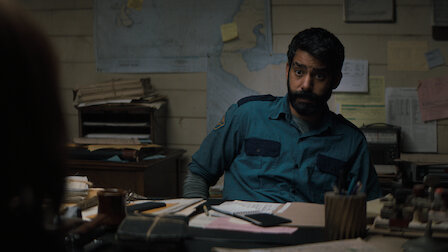
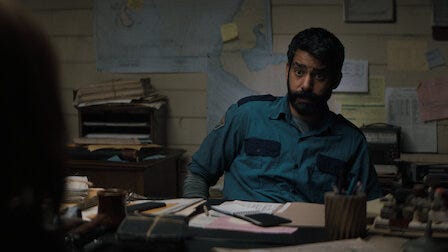
Rahul Kohli enters the screen around twenty minutes in (give or take) as a Muslim police officer who has moved to the island with his teenage son. Erin, the pregnant, single woman, played by Kate Siegel, comes back to town. While Zach Gilford is the prodigal son who returns to his family after serving time for his role in a fatal car accident. The “foreigner”, the “whore”, and the “drunk”.
This is a beautifully produced movie that brings the outcasts/sinners head-to-head with the righteous. People who have lost sight of the humanity of their neighbors, and of themselves, engage in dialogues that get one thinking about our purpose on this planet, and what is truly important. How much does salvation really mean when the people we love are the price we pay?
I found myself thinking of recent years both here in the United States and internationally. People are so desperate for some kind of Savior or salvation; they have taken to doing things they may never have dreamed they would do. They’re shells of who they were. Exactly how far are we going to take this ride? I really want to know. I hear people, even friends, talking about another civil war as if one, with fields drenched in blood, weren’t enough. Yet, this term is being thrown about casually. Are we seriously willing to pay this price in blood? Asking for a friend.
At one point, Sheriff Hassan mentions that people don’t know why he brought his son to the small town, it’s as if no one asked. It is far easier to consider a field of bodies of people we don’t know, or don’t care about. Once we start to care, it’s all over. Because raising a weapon towards the face of a person whom we have come to know and care about should be impossible. And if it’s not, what the hell is wrong with us?
While Midnight Mass is a dark tale of religion in a small town, I found that it has a much wider relevance that can capture the attention of anyone who is paying attention to current events. But isn’t that how it usually goes? What we see playing out in front of us in a small way must come together to formulate into something far grander; creating wars and battles that we could have sworn we didn’t see coming. We just didn’t think that the small ball of anger could grow into something that would pit thousands against thousands. I’m not pointing fingers, I’m asking myself: what am I doing that is making this better or worse?
We do, by the way, live on an island. It’s a gorgeous, ball of water and land in the middle of a galaxy that is isolated from any outside help. We’re it. We are only as distant from one another as we choose to believe we are. Once we allow ourselves to turn on one another — son on mother, husband on daughter, friend on friend — what kind of salvation do we actually deserve?
While I wouldn’t call it a Christmas series, I would say it’s a movie that should get us thinking about sacred spaces: what are they, who are welcome, and why? Isn’t that the heart of the holidays? To take time to reflect on the sacred.
Each episode hovers around an hour long. There’s only seven episodes as opposed to a five season twenty episode run. You can curl up with a cup of hot chocolate or spiked eggnog, and binge it in a weekend.