
I Jumped on the Dry January Bandwagon.
And I Got a Surprise!
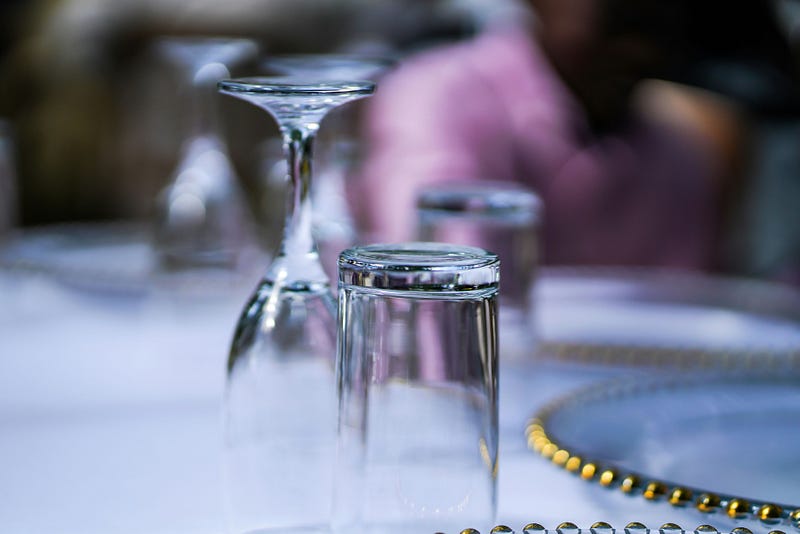
“First you take a drink, then the drink takes a drink, then the drink takes you.”
F. Scott Fitzgerald
Did you take part in Dry January?
This wasn’t my first Dry January. It wasn’t even my second. There was one year that I even did a Sober September. Those other times I went thirty days without alcohol, I was left with a subtle sense of accomplishment, along with a sigh of relief. If I could go thirty days without drinking any alcohol then I must not have a problem with alcohol. Right?
I thought having the willpower not to drink meant that I didn’t have a problem with alcohol. But the truth is, you can have a “problem” with alcohol and not be an alcoholic. That was one of the takeaways I had this time around.
“An alcoholic is someone you don’t like who drinks as much as you do.”
Dylan Thomas
What is Dry January?
Dry January is the wellness trend where you commit to abstaining from alcohol for January. The term was trademarked in 2013 by the United Kingdom organization Alcohol Change. They attribute the idea of abstaining from alcohol for one month to a young woman named Emily Robinson in 2011 who was preparing for a half marathon. But the actual idea is even older. In 1942, the government of Finland sought to reduce alcohol consumption to conserve resources in the war against the Soviet Union.
More than anything else, Dry January is a chance to reassess your drinking habits. In other words, it’s about rethinking your drinking. I was at the point where I didn’t get drunk every day, but I did drink almost every day. And I wouldn’t say I liked having that habit. And that’s what it felt like — a habit I’d picked up along the way. A habit that necessarily I wouldn’t say I like having.
For me, the difference this time was that I was more focused on my approach to Dry January than the results. I wanted to hit the reset button. This time, I tried to look at my drinking. And the best time to look at your relationship with alcohol is . . . when you’re sober. It allows for clarity. I wanted to take a hard look at how and why I drank.
Why do we drink?
For some people, alcohol is an escape — from anxiety, or their troubles, or just from reality. People feel more accessible, courageous, and uninhibited after a few.
I drink because I like the taste of red wine and good beer, like craft IPAs. I enjoy the floaty, relaxed feeling after the first and second drinks.
But there were things I didn’t like about drinking. Inhibition can be a double-edged sword when it goes too far. I’ve never danced topless on top of the bar, but I do tend to over-share. After a couple of glasses of wine, I might say too much, too loudly. Which means that some mornings I’d wake up and think, oh crap, did I say that?
I also didn’t like the loss of control. I find myself accepting a third or fourth drink when someone offers it. Even when I already feel a contented euphoria after two drinks. That’s the “drink takes a drink” part of the F. Scott Fitzgerald quote. (Which is from The Great Gatsby, by the way. A novel with a lot of excessive drinking!)
What happened when I stopped drinking for 30 days
- I felt better overall — physically and mentally. I got my system back on track. I realized that alcohol made me dizzy. I think more clearly when I’m not drinking every day.
- I had more energy, probably because I slept much better.
- I found suitable substitutes for alcohol, such as tart cherry juice on the rocks and Non-Alcoholic beers. Some very tasty NAs include “Just the Haze” from Sam Adams and Athletic Brewing’s IPAs.
- I consumed fewer calories. Not just because I eliminated all those extra empty calories in beer and wine but because I snacked less. Salty snacks go hand-in-hand with alcohol, at least in my book. I remember the first time I watched an episode of Scandal and saw Olivia Pope curl up on her couch with a tall glass of wine and a big bowl of popcorn. Yes! I thought, I’m with you, Liv! But snacking plus alcohol had a snowball effect on me. The more I drank, the more I snacked.
- I’m more productive when I’m not drinking. I’ve stuck to an exercise routine I started at the beginning of January. And I’m writing again!
The first two weeks were hard. I found myself thinking about alcohol—a lot. But I can honestly say I don’t think about it anymore. (Except when writing an article about it.) And perhaps, the biggest surprise for me was that I didn’t miss drinking. And I thought that I would! Especially when I’ve been around people who are drinking. People who I would typically drink with. I’m fine, thanks, with my NA beers.
At the bottom of the glass . . .
The fact is there are more reasons not to drink alcohol than to drink it. It’s terrible for your health, especially your brain and heart. Alcohol can cause high blood pressure and high cholesterol, and it impairs sleep. It increases the risk for certain diseases, including breast cancer, heart disease, stroke, and liver problems. It weakens your immune system. It is a toxin.
The World Health Organization considers alcohol a Group 1 carcinogen, the highest risk group, which includes such scary things as asbestos and radiation. They even went so far as to say, in the Lancet Public Health Journal, that “when it comes to alcohol consumption, there is no safe amount that does not affect [your] health.” Yikes!
Bottom line — no amount of alcohol is good for us. Even if we think drinking makes us feel good.
“The day I became free of alcohol and embraced the truth that I would not be giving up anything by not drinking.”
Liz Hemingway.
The biggest takeaway I got from doing Dry January is that I stopped thinking about alcohol — when I was going to have a drink, what I was going to have. This was ironic because I did Dry January to think about my alcohol consumption. For now, I’m staying dry. But I won’t announce to my family and friends that I’m doing a Dry February. I’m just going to continue not drinking alcohol quietly. Because, who knows, I might end up doing a Dry 2024.
One more thing. If you choose to stop drinking and are struggling with alcohol, please know this: You are not alone. Plenty of others out there will support you online and in person.


