
I Ignored The Signs of an Eating Disorder in My Friend
It taught me a few things about ignorance of the most trivial of things we say or do.
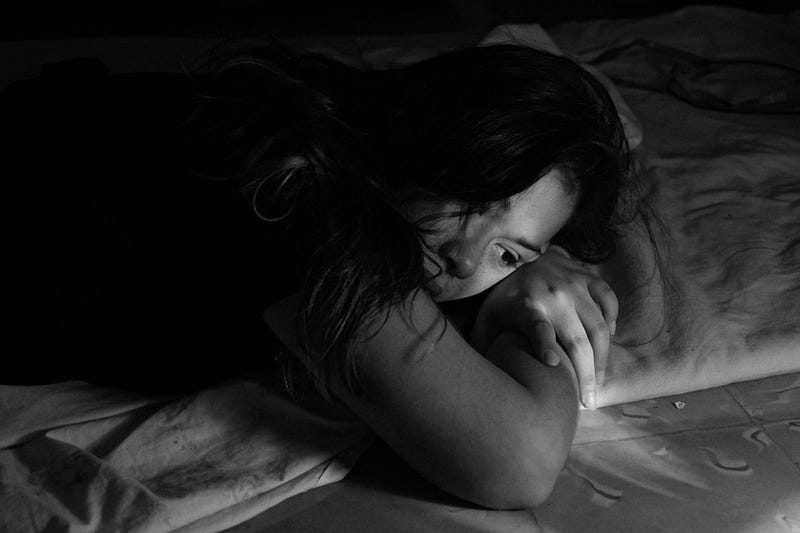
It was just another sleepover, like old times. We’d watch chick-flicks, then horror movies around the ‘witching hour’, then chick-flicks again to calm down our spooked selves.
It was just another sleepover, like the time when we were 10, playing dress-up with our mother’s favourite, expensive dupattas. Or when we were 15, talking about love, life, and our parents, as if we had lived our whole life already because little did we know.
But now, we were 20. Almost through college, consumed by the irrepressible inkling of the Great Unknown ahead of us, also called Life.
It was around 2 am when she looked at me after a strong debate about whether Feminism is about equality or not, and she said, unsure of herself.
“I think I am too obsessed with my… weight.”
Which came out as no surprise to me. One, because I was also the one to sometimes obsess too much over my goal weight, and two, because she had been struggling with her weight since childhood as a fat girl.
I moved my head down, expressing my concern but wanting further explanation. It could well be an eating disorder and I knew how people here, even in our families, would only dismiss the authenticity of an eating disorder, seeing as how mental illnesses aren’t still much talked about in Indian or even Asian families.
“Whatever I eat, I keep wanting to throw it out. I keep going to the bathroom, making myself poop it out.”
I was guilty the minute I started questioning the ‘authenticity’ of her disorder in my mind. Sure yes, I’d heard of eating disorders and people making themselves puke, but this I wasn’t so sure of (even though I later came to know that the symptom very real, but that’s not the point here). Yet I still had the decency to hear her out completely, support her in her recovery from what could be the early symptoms of an eating disorder.
My mind oscillated from worry to the idiotic, backward thought that it could be a cry for attention to a totally different thing, something else than my friend had described. My dangerous prejudice to completely ignore her despair and instead to examine her symptoms made me what I had been fearing about the people around me when they started to describe mental illnesses as a trend, setting the awareness of mental health movement ten times backward.
Our Society failed her, and so did I
Desi culture has always held that prejudice against fat people.
For me, it wasn’t hard to realize the fatphobia in everyday things we say. I had seen my friend being bullied for her weight at such a young age, or her being bombarded with unwanted weight loss tips by random aunties of the neighbourhood. And as an underweight kid, I was subject to some bullying and unnecessary opinions of my own, but I grew up to learn how that was completely different than fatphobia in a world that fetishized my weight at large, even if the aunties didn’t.
Needless to say, our society failed her.
More than anything, I failed her when I thought it to be a well enough concern to comment on how extreme her liquid diet was. A comment that in the end helped no one and instead shamed her for her acute lifestyle choices to achieve weight loss.
Yet, this is a mistake we all make. As an underweight, little girl, I was always told my arms looked like ugly twigs in spaghetti straps and that they might look good on ‘healthier’ shoulders and arms, but as soon as I started gaining weight after puberty hit, the same spaghetti straps, no matter how much I liked wearing them, got me compliments that constantly reminded me that my arm fat and stretch marks were showing and that I needed to cover them up because they made me look like a bulky, male weightlifter.
No matter how much I still despise the comments that weakened my self-esteem, I still went ahead and let my mind project the same negativity on to a friend that only needed my help and support.
Stop diagnosing and judging people
Another mistake I made was to focus on the genuinity of her symptoms, rather than identifying my friend’s helplessness.
This exposes another pattern of our society’s reaction to mental illness. There is so much information available on the Internet now, that while it has done tremendously well in raising awareness, it has also encouraged one toxic aspect of human nature; Judgement.
You often hear warnings to not self-diagnose yourself with an illness, but besides that, we take our own summarised knowledge of mental disorders from YouTube or Instagram and start judging whether other people really have it or they are just “posing for show”.
The trope that mental illness has become a trend is highly dangerous. It glamourizes mental illness when raising awareness should be more about caution and not vanity. If you hold the same prejudice that some people are just faking a mental illness, you’re really setting this progress backward and not helping anyone.
What I should’ve done and what you can do
I think this often, somedays with regret, somedays with satisfaction, content that I’m not the same ignorant person I used to be, there is loads I have learnt and there is loads to unlearn. Which brings me to the first step, stop being so hard on yourself.
It’s true you cannot know everything. There are so many aspects that set us apart from other human beings, our sexuality, our colour, our nationality. You don’t have to know everything to be respectful, you only need to be open to new thoughts and experiences. Yes, educate yourself and do it every day, but don’t beat yourself up for things that are very new to you or out of your comfort zone.
That being said, once you say something that comes off as tone-deaf or ignorant but you had no knowledge of it, listen to the other person, don’t judge them. If a black person or any marginalised community feels your statement is offensive to their community, listen to what they have to say and don’t keep justifying and defending yourself. And don’t judge them to be too aggressive or not having a sense of humor, instead look inside and check your own privilege.
Third and the last step is to forgive. We’ve all done ignorant things in life and we still do. On the other side, we’ve also been hurt by the ignorance of someone else. We are all products of experiences given to us by the people around us, not only our choices and it helps no one to hold on to grudges. People make mistakes, people learn from mistakes. So forgive your friends and parents, and ask for forgiveness, because in it lies the secret to peace and growth.
Ignorance is not bliss. If you really want to be respectful of others and be mindful of how you react, treat yourself like a human, leave room for mistakes but only so you can learn and grow through them in the end.