
I Hope You Trip On Your Dress and The Fairies Show You Favor
Inside the customs and superstitions of a dancer’s life
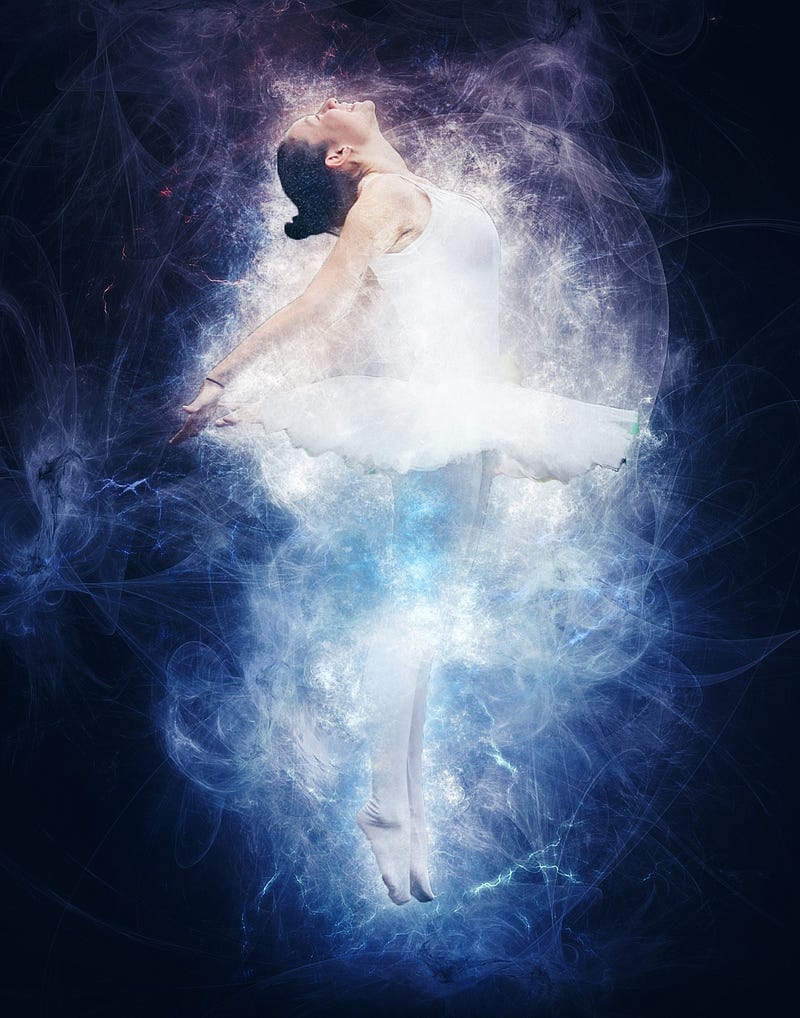
Starting high school is often a nervous time for many young teenagers and it was no different for me. I was extremely shy, some would say painfully so. I had graduated 8th grade in a class of four and was joining a 9th grade class of over 400. I would have been largely invisible for those four years, had it not been that I’d been accepted into the performing arts conservatory that was part of the giant high school. I loved the two periods a day taken up by dance classes but for the rest of the day, I kept my head down and did what was expected.
Despite this, shortly after I began High School I was called to the principal’s office. At first I didn’t hear the announcement, not expecting that it could be for me. I was generally a good kid, never got detention, got good grades, so when I heard my name called, I couldn’t imagine what I had done to warrant it.
I waited, sweating nervously, in the secretary’s office until called in. The principal told me to sit, then folded his hands on his desk and looked at me with unfriendly eyes. The conversation began as I suspect, most of these types of conversations do.
“Do you know why you’re here?”
This was asked with the clear expectation that I should and the unstated implication that if I didn’t, then what I had done was even worse than originally suspected.
I wracked my brain for what I could possibly have done to warrant this visit to a room I’d never seen before except from the outside. I had dropped a diet coke in the hallway and someone had skidded in it before I managed to get back with paper towels. But surely the principal knew that was an accident. You didn’t get called in for an accident did you?
I had just gotten back to school from being out for two weeks because of a bad case of the chicken pox. But my doctor had sent a note so it was excused. Still, maybe he thought I had been faking it or had written the note myself? Though if that were the case, I’m sure he’d have just told his secretary to call my parents to check.
After not coming up with anything else I had no choice but to reply that I didn’t, in fact, know why I was there. The principal frowned.
“You need to know that while wishing harm on other students may seem like no big deal to you, such that you don’t seem to think it’s even worth remembering . . .
Whoa. . . Say What? What does that mean?
“. . . we look very unfavorably on students who do this sort of thing. From our viewpoint, such a comment is not that far off from making a threat.”
I sat there mute, having absolutely no idea what he was talking about. Like I said, I was a good kid. I didn’t run around wishing harm on others and I certainly didn’t threaten them. I wondered if another student had lied about me, but couldn’t think of anyone who might do that. Where on earth had the principal gotten this idea from?
We sat in silence for another minute or so. I’m sure he figured that would break me eventually and I’d finally confess. But as I was clueless about the accusation, his silent treatment fell flat. This made him even more irritable, and me even more worried.
“What do you have to say for yourself?”
The only thing I had to say was the truth — that I didn’t know what he was referring to.
“So, then, you don’t remember telling several girls you hoped that they would trip on their dresses and fall down the stairs?”
Ohhhhhhh.
And the truth was I had said it to several girls as charged. Well a version of it anyway. He had added the fall down the stairs part. But I hadn’t said it for whatever mean spirited reason he thought.
Over the next couple of minutes, I did my best to explain to the principal that this was nothing more than a dance custom. The girls in question were all in a performance that night. Telling a dancer you hoped she tripped on her dress backstage was one way of wishing her luck. (Another way,was to say “Merde,” the French word for s**t. You can read more about this custom in this article below.)
Wishing for a dancer to trip was a superstition that began in old English theaters and as many superstitions in that part of the world, it was based on old fairy folklore. As the story goes, fairies were mischievous creatures who liked to play tricks on unsuspecting humans. Knowing that dancers prided themselves on being graceful, fairies would have fun with them by causing them to trip.
While this was disconcerting for a dancer, it also provided an opportunity to win favor from the fairies. If the girl who had tripped recognized the fairies presence, and acknowledged them by kissing the hem of her dress, it would make the fairies happy. They would then use their magic to ensure the dancer had a wonderful performance and bring other good fortune as well.
As I spoke, I could see that the principal was finding my story unbelievable. I thought I was sunk and would likely miss the performance that night as I’d be sitting in detention. But while he didn’t actually believe me at first, a quick call to our ballet master, who simply went by the name Mr. Z, since his name was too difficult to pronounce, straightened things out.
Rituals and superstitions play a major role in many dancers’ pre-show routines. Even those who don’t consider themselves normally superstitious, strictly follow the code regarding certain dos and don’ts, and expect those who visit backstage to do so as well. What and when you bring a dancer to say congratulations, the colors a dancer wears on stage, how they exit the dressing room, and how a dress rehearsal goes all can set up a positive or negative mindset for a dancer. This can help or hinder their efforts on stage.
These beliefs and behaviors may function to tie the members of a company closer together by providing certain things they all practice. They can also provide an illusion of control which can help turn nervousness into magic onstage.
Unfortunately, among the uninitiated, many of these practices may seem a bit odd, or in some cases even mean spirited. Telling someone to trip on their dress or saying something that appears to be swearing at them, on the surface, would not appear to be ways one might use to wish someone well.
While I managed to get out the situation that time, I can’t say the principal didn’t still eye me with some concern when dismissing me from his office. I was of course relieved when I returned to class despite the stares of my classmates who wondered what the goody-two-shoes had done to get in trouble. My relief was short lived though, as I thought of some of the other customs dancers had that if observed or overhead might once more land me in the principal’s office.
So that night, I wrote a short book for him that I thought might help. It included all the theater related superstitions with a special section for those specifically followed by dancers, as we were the most superstitious of the lot. While he never acknowledge receiving the book, I never found myself in his office again and no one else in the dance program did either.
I thought my luck had come to an end one day, however, when running down the hall to meet my mother. She was there to pick me up early because I had a performance that night and an early call which I was late for.
Trying to stuff my notebook into my backpack at the same time, I wasn’t paying attention to where I was going. Out of my peripheral vision I saw someone in my path and tried to side step them, though a bit too late. Bumping into them hard, I spun around to offer a quick apology, but it died on my lips when I saw who it was.
I had just come running down the hall, an offense in and of itself, and slammed into the principal. There was no dance custom that would get me out of this one and if I was late for call I wouldn’t go on that night. Tears sprang to my eyes but instead of the scowl I expected, the principal actually smiled.
“Careful there, Ms. Frank, you don’t want to get hurt before your performance tonight,” he said. I let out the huge breath I had been holding. Then to my amazement he added, “Merde,” the standard way of wishing a dancer good luck and walked past me
I roused myself from my shock and continued toward the parking lot, albeit at a somewhat more sedate pace. Just before I turned the corner, I heard the principal’s voice behind me. “Oh, and be sure to trip on your dress!”
That night’s performance turned out to be one of my best ever.
If you enjoyed reading this story, then you might also like these:
You can find links to my other work on Medium and follow me here. Thank you for reading and for supporting Mental Gecko!


