
I Have Obsessive Compulsive Disorder
I also have a wasp nest in my attic. Neither of these facts define me.
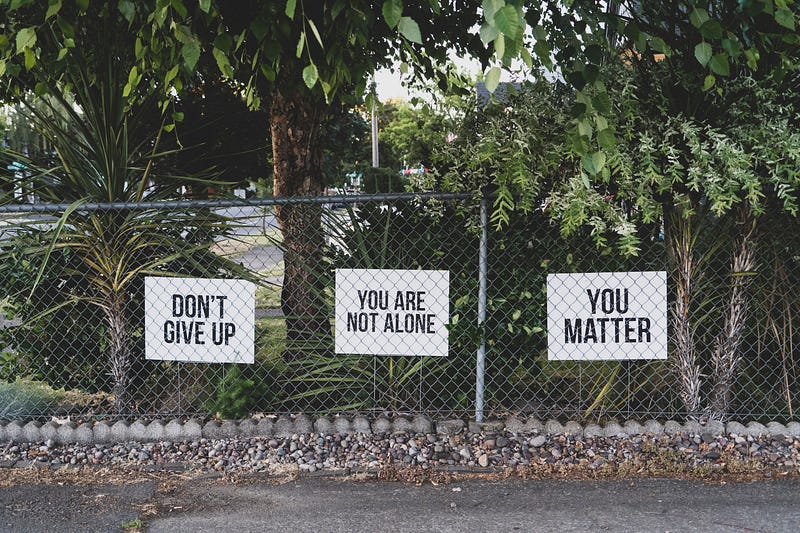
I have OCD. I have done since I was seven. I was officially diagnosed when I was seventeen. And I’ll have it forever. Now that I’m twenty-four and the apocalypse is lurking boundlessly in the streets, for some reason, it feels like the best time to share this with you. Or the easiest. Or the most fitting. I think it’s a mixture of them all.
And I know what this means. I know what you’ll think. You’ll think I like things clean. Obsessively clean. Kim and Aggie clean. Monica Gellar clean. Then maybe you’ll write it off as nothing more than that.
Except, you should know that you couldn’t be more wrong (in a nice way). If you’ve ever met me, you’ll know I do not give a crap about waltzing around with mud-stained leggings, wearing stale eyeliner with ravioli sauce smeared down my chin. My OCD is nothing whatsoever to do with cleanliness, or even really that heightened sense of organisation (although I do bloody adore it when you tear back the lid of a Muller Corner and all the yoghurt remains in place, entirely smooth and unstuck. Mmm).
So for the purpose of this post, it will probably be easier if you separate the two — OCD and hyper-cleanliness — just for a moment.
What I Have
Obsessive-Compulsive Disorder. That is true. That is what it’s titled. It’s just that it’s not that generalised, umbrella term that you might have heard of. If you know more about it or know somebody else who has it, or even have it yourself then I’m sorry (on its behalf, too) for going on about it so much here. This next part you will probably already know (too well).
And you’re damn right I’ll tirelessly watch those videos where they meticulously slice sand. You’re damn right I have a rigid structure regarding how I place my crockery in the drying rack after washing up. You’re damn right I will unplug the straighteners of every house along my street if only they’d let me inside their damn rooms.
But that’s nothing to do with my OCD and everything to do with my love of beaches and kitchenware and infiltrating people’s homes. My love of being organised might very well be a side-effect of my OCD, but it’s one I enact purposefully. It’s of my own accord. The rest, however, is not.
There is so much that I could tell you about it — what it has entailed, how it has manifested itself, how I (didn’t) handle it — there really is. But I guess different parts might mean different things to different people, or none mean anything to anybody. So if you ever have any questions, please feel free to ask me (then wait three to five working days whilst I draft out an excessively long email in which I overshare massively and likely include three to four gifs of my favourite biscuits). But for now, instead of the what’s and the when’s, I’ll stick to the why’s and the where’s. Because the who isn’t just me. This isn’t just something I’ve experienced. It’s common and it’s crappy and it’s completely okay. I just want you all to know that.
And the how’s? Well. That’s something I don’t think I’ll ever know. How it happens and how to get rid of it. But that won’t damn well stop me from trying.
Why I Couldn’t Tell You Before
There was a time when I wouldn’t have been able to write this. As in, mentally forbidden to. I wouldn’t have been able to write the word “think” in the subtitle or even reference myself in the first person. If this was an essay due for my A-Level English Literature class, then you’d find me hunched over my notebook, hands trembling, beginning each sentence halfway down the page (I wasn’t allowed to use the top several lines) and starting from right, to left. Writing each word out, backwards. Letter by letter, but not in order and not with ease. My knuckles were sweating.
My own brain was binding me to darkness and restriction.
I couldn’t tell my own parents; my two soulmates who had the displeasure of watching me slowly crumble with each passing day, inexplicably and inch by inch. I wanted to tell them (but in some ways I didn’t. My mom and dad do everything for me. There was no way I could possibly repay them by lobbing heaps of worry and concern their way. A better thank you gift is biscuits. Lob biscuits instead). I wanted to tell them. But I just — couldn’t.
Eventually, I did. Ten years later. (Granted, I didn’t know it was OCD that I had as a child. I barely realised that that’s what it was even when the doctor confirmed it. To me, I couldn’t fathom the idea that something so demonic and dark and debilitating could have a name as clear and concise as three little letters).
The mess inside my mind had piled up so large and unstable, it threatened to topple at any moment — much like the state of my own bedroom. I’d begun to stash all of my belongings (and I do mean, all. Ps, I’m a hoarder) on my bed, because I was just unable to stick them anywhere else. They couldn’t reside on my bookshelf of desk or, (gasp!) take space on the floor (shudder). I couldn’t put anything anywhere other than right there on the quilt beside me. It got to the point where I had to sleep like a fetus, cramped up against the tiny width of my pillow, and enclosed by everything I’ve ever owned. (and I do mean all my clothes, all my toys, all my books. School bags. Boxes. Mirrors. Boots. A printer). No wonder I have the posture of a curly fry.
When it all got too much, when it all came tumbling down, the debris must have landed in just the right place, at just the right moment — perhaps a fluffy dressing gown from the top of the pile slipped off and covered my OCD just long enough for me to slip by unnoticed, write a letter to my parents, hand it to my mom before dashing back to the Cavern of Crap built from the foundations of my bed, and wait for her to read about the beast I was sharing my head-space with. I probably should have waited until she’d finished watching Coronation Street, first.
This was at least eight years ago now. The beast, he’s not so rampant anymore. A little tamer, more domesticated, even house-trained. Sure, he still craps on the carpet occasionally, but who doesn’t?
How It Seemingly Began
I don’t know exactly where it began. Probably my head. Maybe my local Aldi (I mean, there really is nothing I don’t bring home from there). And I only sort of know when it began. Or when it started to flaunt itself at least. It lay dormant for a little while, most likely stockpiling on biscuits and picking the perfect outfit to wear for its dramatic entrance (perfectly ironed, ample pockets for snacks, black).
There’s no explicit why, nothing other than the universe explaining: “oh balls, yeah, sorry pal. Listen. I got a little distracted, Friends was on, it was that episode when Rachel thinks Joey has proposed — do not get me started on that — and I wasn’t paying attention whilst carving out the composition of your brain, so yeah, I accidentally sliced out the chunk that enables you to touch a door handle a regular amount of times, you know? But hey, it’s whatever man. I’m sure you’ll cope”. It just is.
But there sure is a whole lot of hows. It manifested in countless ways, at first imperceptibly, just tiny alterations in my regular ol’ lifestyle until it slowly evolved into a full-blown nightmare. It weaselled it’s way into aspects of my life that I didn’t even realise could be controlled by ritual and routine.
Because the thing is, we all have bouts of OCD. We often label them as “organisation” or “structure” or even “habits”. But depending on how we perceive them and execute them, tiny shards of obsessive and compulsive behaviours can pierce through. Everybody professes the value of forming and upholding daily habits. And hey, I’m everybody. They’re ace, they’re vital, they’re life-enhancing.
But there is a thin line between a habit and a ritual, and that line tends to be you, having to rest your toes along a crack in the pavement, at a ninety-degree angle, not too much pressure now, be firm though, hold it still, oh wait, inch a little further upwards for one, two, three, sigh no you ruined it better start again then, okay, eight, nine, ten — that’s not routine. That’s ritual. OCD is the graveyard where routines go to become rituals. You barely even see the transition. Like your tiny punk rocker twelve-year-old sister. Now she’s fourteen and wears only the colour yellow. You just did not see that unfold.
What might begin as a healthy habit can rapidly transform into a toxic routine. And just like that, it’s stuck. A permanent scar on your soul.
The distinguishing feature here, between you liking to place all your mugs back in the cupboard in a certain layout and me having to place all my mugs back in the cupboard in a certain layout is exactly that; you like to. I have to.
You do it to make your home look nice.
I do it to keep mine from burning down.
Where It Seemingly Is Now
OCD is like an internal organ — it’s a part of me. I can’t just scoop it out, bin it, possibly sell it on eBay. For better or worse, it will always be a part of me. But, whilst it was once like a mutated third foot, tripping me up at all hours of the day, it is now like an appendix. It’s there, but it doesn’t do much.
Because I learned, finally, to distinguish that part of myself from my whole self. An entire novel is not defined by the middle three sentences of one page. A galaxy is not that lone comet, zipping through the skies. A lifetime is not valued by that one dark week you spent holed up inside your room. You are not one single thing, much less a bad thing. You are all parts of yourself and exactly how you use them. As am I — and I know that now.
And whilst my OCD is so frequently labelled as a crappy little Bad Thing™, I have decided to spin it around, flip it over and channel it, where possible, into becoming a Good Thing™.
Perhaps even great.
What It Made Me
Super good at washing up. I mean honestly, it’s a work of art.
It made me impatient. Ironically. I wasted so much of my life waiting for the right moment (the moment my brain released me from whatever ritual I was trapped in, often undefined and always a little hazy, to the point where I’d be forced to repeat it, just to be sure) that now I am itching to harness all moments, every single one, even the crappier ones, because that’s a whole lot better than letting them all slip by. You can learn from bad things, you can morph them into compelling anecdotes to tell at your Uncle’s wedding, you can lob them into a short piece of fiction and share your suffering with the world. But doing nothing? That results in nothing. I will not live a nothing life.
It made me hopeful. In a twisted way, it reminded me of the blindingly broad power of our minds. Just think about it. If I can become so wholly dictated by mine, enslaved to it even, then imagine what I could do if I learned to take control, to utilise it properly, healthily, and direct it towards manifesting my very own desires. Imagine what it could do if I strung up a couple dozen fairy-lights in my brain, shooed away the darkness, and used that glimmering glow to guide my way to exactly where I intend to be. If my mind can bind me to this elaborately constructed dungeon, then imagine what I can turn it into now that I’ve escaped. With a little renovation and an Argos catalogue in tow— it might well become a palace one day. That gives me hope.
It made me thankful. For all the little things. The little things I once upon a time could not do. Painting my nails purple. Wearing odd socks. Typing certain words. Sleeping on the other side of the bed. Quick showering. Changing my jewellery. Throwing out old eyeliner. Touching things with one hand. Odd numbers. Sleeping the moment I’m tired. Walking freely, anywhere. Deleting apps. Reading. Coughing arbitrarily (perhaps still frowned upon in public now, though). And so much more. All these tiny details of life that I couldn’t do or know or associate with — and now, they’re here. Now I’m aware of them, I’m not estranged from them, I’m friends with them. I’m so grateful that I can be.
It made me human (despite the countless PowerPoints I made as a 13-year-old ready to share with my family as I talked them through my transition into a full-time vampire). Nobody is indestructible. Nobody experiences life unscathed. Nobody gets an easy ride, a free ticket, a do-over. We are all living on this planet, real-time, no stunt doubles or proof-reads or practise runs. This is it, it is now, and we endure some crappy ol’ crap at times, I tell ya. But what we humans also do is; we learn. We grow. We evolve. We’re emotional beings and throwing a tantrum is much easier than throwing our hands into the air and asking for help — but we get there. We move past it and we try again. We’re human. We feel afraid and then we do it anyway. Our stories are permanent fixtures in this cosmos and no matter what, we keep on writing them.
It made me superhuman. And it makes you that, too. Because every OCD induced thought of something bad happening to your boyfriend — that’s just your brains messed up way of reminding you how much he means to you, how much you love him. Every hour spent pressing your finger against the light switch until it blistered is just a symbol of your determination to make sure the planet doesn’t crumble around you. Every moment of uncertainty is because you’re certain something bad will happen if not, and there’s no way you’ll let that be the case, no doubt about it.
In these niche, obscure ways, your OCD is not your kryptonite. It’s your superpower. Because here you are, doing what your brain has told you to do in order to protect the entire world. Recognise your abilities. Realise you’re a hero — not simply for abiding by these incessant, obtrusive thoughts. But enduring through them. And eventually, overcoming them.
Why I Am Telling You All This
Because that’s what life is. The profession of a person. Declaring our existence by sharing our existence.
Sure, we don’t all spill the darkest corners of ourselves. We tidy up bits, conceal them, lock them away. But they’re still there, just gathering dust. Eventually somebody will stumble upon them, pry open the drawer, and find them crammed in there, mouldy and gasping for light. Sometimes it’s easier to share these things, it’s better to, even when it feels like the most difficult thing in the world. I wish I’d known that as a seven-year-old. I wish I’d known that as a seventeen-year-old. But hindsight is only a beautiful thing when implemented going forward. I know this now.
So here I am, telling you all this because one, it’s a part of my story. And two, it very well might be a part of yours too. If that’s the case, let’s cameo in each others. Help one another out. Learn a thing or five (eight years ago, I would have had to use the number four here. See? Each tiny win is a win, regardless of its size. Remember that).
And one thing I do want to tell you is that yeah like some people say: it’s all in your head. That’s true, it is. But not like how they think. They say that to ridicule us, to make us feel as though it’s self-inflicted and that we have every power to just think it away. But really, that just makes us feel powerless. Because yeah, whilst the origin and location of it might be in our head, that doesn’t make it any less real. That’s simply just where it’s confined, contained, caged. Which actually makes it more real when you think about it, because it’s trapped by the root source of our very being. Our essence. Our mind. It’s our very engine that’s broken, damaged, scarred, and we’re carrying it round with us, acting as though it’s not.
But we shouldn’t have to. We shouldn’t want to. We shouldn’t, at all. So let’s not.
I think, if anything, I’m telling you this because I want you to know that it’s okay to be anything less than in Full Working Order. It’s okay to be exhausted. It’s okay to miserable. It’s okay to be afraid and hide it. Or to be angry and scream it. Or to be numb to everything, indefinitely and intensely. Because even showstopping theatre productions have intermissions. Even decade long soap operas have ad breaks. Computers restart and the sunlight dips behind the horizon. Novels have blank pages between chapters and singers have to breathe between the high notes.
We all need a break sometimes. Even if we only realise that after we’ve already broken. But there’s nothing that cannot be mended. Grab a tube of golden glitter glue and come find me. We’ll stick your pieces back together, in an order of your choosing, no matter how long it takes.
I’m here to tell you to be delicate with yourself. Be kind. Be patient. Forgive your mind. It’s not trying to work against you. Sometimes it just seeks out the loopholes in life and then gets a little nauseous whilst looping through them. It’s afraid, that’s all. We all are. And in some ways, I think that’s beautiful. Because fear is just our innate human response to the idea that one day we’ll lose this life of ours. And this is just us, desperately clinging on to every last inch of it that we can.
You have to see him — Oliver Columbus Drew — as a flatmate, not a rowdy neighbour. Don’t fight him. Co-exist alongside him. Compromise. He’s just afraid, you see. He’s lonely. So he clings onto your brain a little too tightly and sometimes it hurts — it really hurts. His fears filter through and paralyse you, but all he needs is a little kindness. Instead of trying to kick him out, ask him what he requires. Instead of letting him drive you insane, utilise what he has provided you.
He brought the toastie maker and the drying rack and he pays for the wifi. He also gifted you a deep rooted love for structure, an awareness of the little things, a chance to showcase your strength. In return, lend him your portable heater. Share your cutlery. Take him for a walk, talk it out, learn to work together. Don’t focus on the bin bags full of recycling he’s left outside your front door — focus on the fact that he’s recycling in the first place, he’s tidying up and caring for the planet. Forgive him his mistakes and take a moment to see why they happened in the first place. Often, Oliver is only acting out of your best interest, even if he does get it wrong at times.
So take him for what he is, let him into your home, and be kind to him. But don’t let him mess up the place. This is your home, first and foremost, don’t let him off rent-free. Instead, stick on the kettle, pull out a chair, and have a word. Keep talking, keep listening, keep the snack cupboard stocked. Have your own space, your own life, but stop every now and then for a chat on the landing.
Live together peacefully.
Everything will be alright.


