
I Have a Secret: I’m a Housewife
I’m the domestic caretaker of a multi-generational family and proud of it…kind of
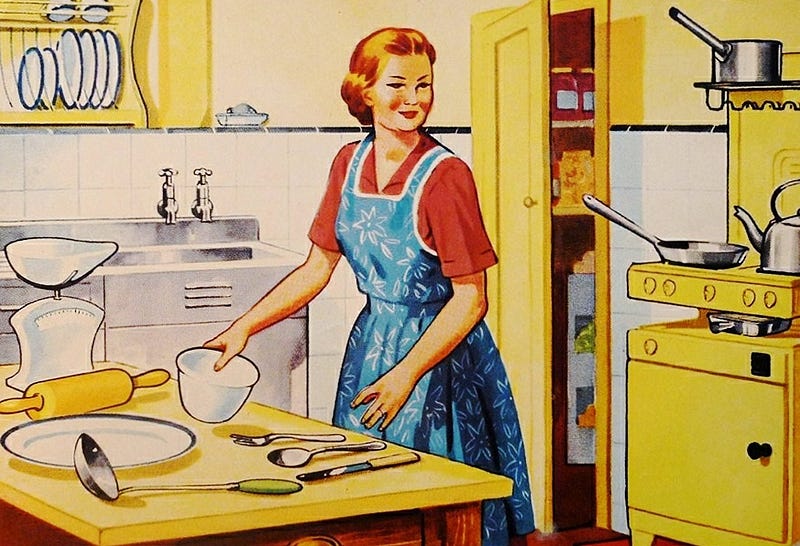
I am a housewife. A housemistress? A home person, homemaker, home economist, home engineer, lady of the house, stay-at-home grandma? All of these terms seem either old-fashioned, sexist, or just plain ridiculous.
I hesitate to even write this. It feels like I’m saying I’m some kind of June Cleaver, in a perfect house with perfect meals and pearls. I also wonder if some will think less of me for not “working.” When people ask me what I do I always say “writer.” Which is also true. But why do I shy away from claiming housewife?
So where does this concept of “housewife” even come from?
A History
Women who stayed home to do the domestic chores and care for the children once had a revered status. It was tough and time-consuming work that required some type of domestic help. Women did everything by hand and from scratch from cleaning to cooking to intricate crafts. They relied on their mothers to teach them and other women to help them know how to run a household. They were a force to be reckoned with.
Then came technology. Labor-saving devices cut out the drudgery of the domestic chores but did not cut the time given over to chores. Since the work was easier, a woman could do it alone, but it would take more time. Machines did not require skill and when they didn’t work, a repairman had to be called instead of another woman helping problem-solve.
Instead of relying on the wisdom of their own mothers or one another, women increasingly looked to experts for everything from home repair to cooking to parenting. Their busyness was mundane and many women lost their sense of agency. Women were disconnected from the outside world and at the same time felt they couldn’t really do anything.
The 1960s saw women entering the workforce. Domesticity went out of fashion. Today over half of women work. Domestic chores are shared between partners to a degree, with women doing an average of two more hours a day more house chores than men. Stay-at-home parents are predominately female, with 17% being men.
I didn’t expect to be a housewife. My own mom did not enjoy the domestic life and chose to work, just like her own mother. My paternal grandmother did not work and was unhappy at home. When I had my son, I realized I wanted to be his full-time caregiver. When I became a stay-at-home mom, my father voiced his concern that I would not be fulfilled. But I was. Maybe that is why I feel some reluctance to own my role. My own parents didn’t understand my peace with it. And I think my culture doesn’t either.
It seems okay if there are young kids at home after that? Does it seem lazy? I have gotten the question about what I do all day. And I do feel the need to account. I live in the “labor-saving devices” domestic world. Much of what I do does not have a product. I am not sewing clothes for my family or making butter. And I do have time to rest, to pursue my interests. In our society that seems so decadent. I get it. I think this is a kind of guilt I feel.
When my children grew I thought I should go to work, so I did. But within five years circumstances would have me back at home. I watch my granddaughter a day or two a week. I do the bulk of the chores, cooking, and shopping. But I am also a firm believer in not focusing on that stuff too much. I have other interests like writing 😉.
I know what a privilege this has been for me. So many families cannot afford such a luxury if they wanted it. The dream is really that women and men have more choices about their home and work life, especially during the years of child-rearing. And no matter what those choices are, to be proud of their role.
Much of this research comes from The Hidden Feelings of Motherhood: Coping with Stress, Depression, 2001, by Kathleen Kendall-Tackett
💛 Enjoy my work? Click here to support! ❓ Not a member of Medium? Support me by joining Medium here