
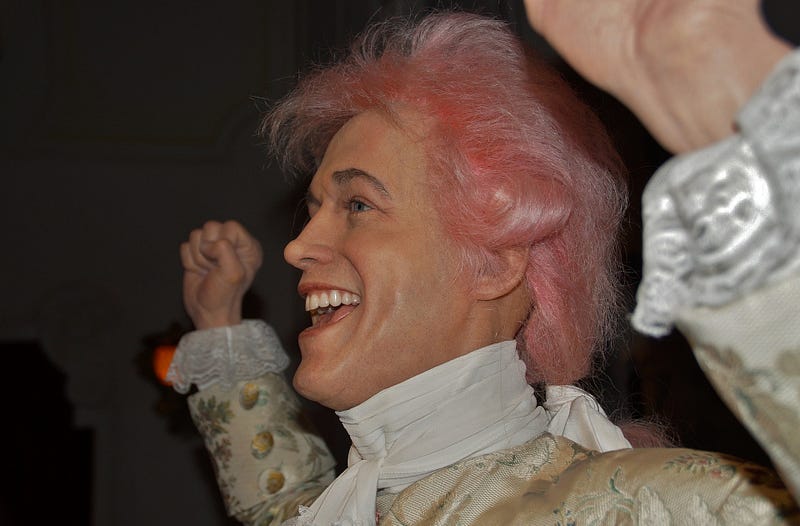
I Have A Crush On Mozart
Why is it so easy to fall in love with this musical genius?
Granted, it’s a long distance relationship. He, an Austrian, now existing in the ether somewhere. Me, a middle-aged Canadian, living in lock down. But we have always found a way to make it work.
Hey Siri, play “Wolfgang Amadeus Mozart playlist”.
I’m alone in the house this morning with our two dogs. I have my iPhone plugged into our speakers, and I crank the volume to eleven while I do my house work.
How can I feel a connection to music composed over 200 years ago? And why is Mozart’s work still so popular it is performed all over the world to this day?
Clearly I am not the only one he’s flirted with.
Flash mob performances are a perfect example of music that remains so enjoyable and magnetic that “Rondo Alla Turca” will instantly draw a crowd. Watch these faces light up with recognition.
OK, but Opera?
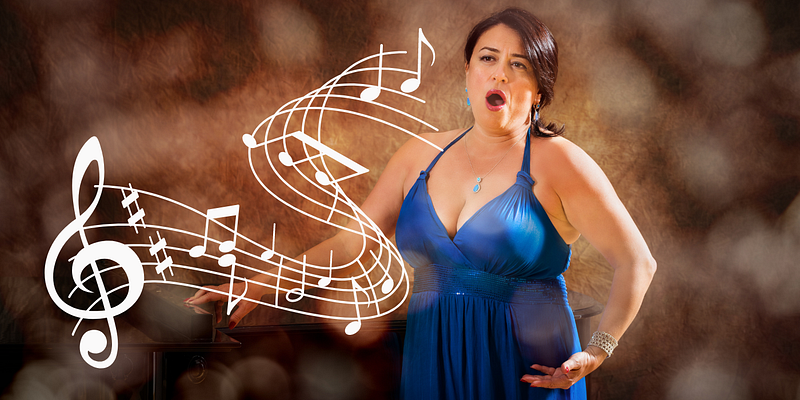
I am not partial to opera but Mozart’s thrill me. The training and control it requires to sing in an operatic style are a lifetime pursuit.
You try hitting the unusually high notes Mozart wrote for his poor sopranos! Hear the Queen of the Night’s high F in “Der Hölle Rache kocht in meinem Herzen” from The Magic Flute (start 40 seconds in here). Incredible!
Let the Woo-ing Begin
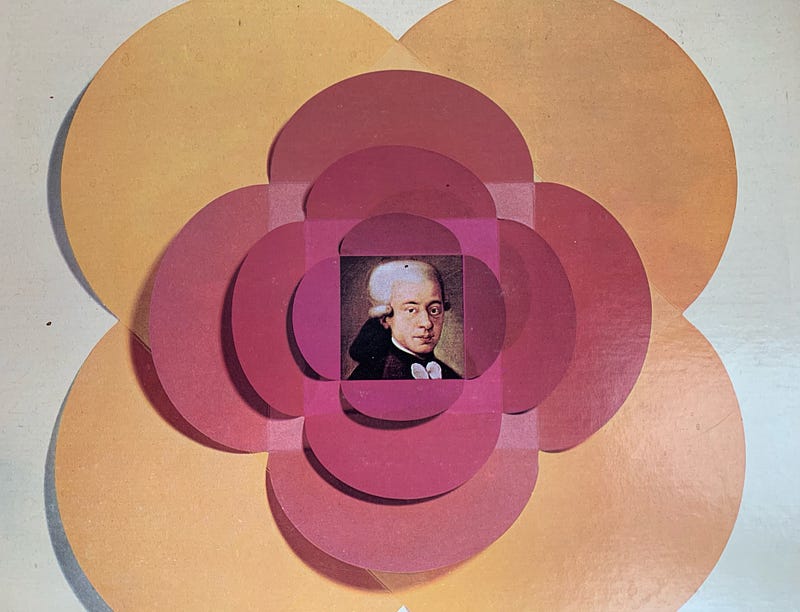
Love at first sight. — Lucky for me, I grew up in a household that loved music. My dad in particular couldn’t get enough of it and was the driving force behind our musical endeavours. He invested in a good quality turntable and speakers and played fun music that he liked on LPs — everything from “Sing Along With Mitch Miller and the Gang” to “Mozart Mania” (a loose interpretation of the Classical composer, by Waldo De Los Rios).
To settle us at bedtime, our parents played records softly from the living room. I still remember “Mozart Mania” one was my favourites.
Stars in my eyes. — I was enrolled in Yamaha Electone organ lessons while all of my friends were taking piano lessons. I much preferred the Baroque, Classical and Romantic era music they were learning, the music theory behind it and so on. The music I was learning were pop tunes, exclusively teaching melodies on the right hand with accompanying chords on the left hand — a far cry from the Classical masters. So when visiting my friends, I would sit at their piano and try playing their lessons. Oh the mysterious bass clef!
Flirting. — Music was fun as a child but I also learned to understand how it could bring one solace. We all experience loneliness and longing and these feelings are pretty much a prerequisite as a teenager. At 16 I saw the movie Amadeus and the little bit I knew about Classical music suddenly turned into an obsession. Mozart’s music ranges from playful to sombre, from Eine Kleine Nachtmusik to Don Giovani, and I was all in. He had my full attention and I started integrating Mozart into my 80’s cassette tape collection.
Going Steady. — I continued to study music history in my first year of University. I had the great fortune of having an inspired professor. Her love for music and teaching it captured my imagination. Our exams consisted of aural music identification — name the composer and the composition. You really had to get under the skin of the piece you were listening to because she didn’t play the entire piece, only a few bars. I found it easy to pick out Mozart, but not so easy to name his pieces since he rarely named them. In fact, a dude named Ludwig von Köchel took it upon himself to catalogue them by number (almost 700 of them!).
My Husband’s OK with My Boyfriend from the 1750's
In fact, he loves him too! Why does Mozart’s music elicit the feelings that it does? Obviously Martin and I are not the only ones smitten since it is still so tied into our humanity throughout two centuries.
Marvel with me at Cecilia Bartoli’s interpretation of the aria Voi che sapete — this version of hers in particular. She caresses the notes with her breath control, the phrasing; the joy and longing of being in love comes through without knowing a word of Italian. Can you feel it? Oh, and the ornate flourish she adds in the last few bars *sigh*.
During some of my loneliest periods in life I found comfort in the Clarinet Quintets. When I felt passion and anguish I’d turn to Don Giovani. A day for light, fresh and happy? We all know the infamous Eine Kleine Nachtmusik, even when it’s performed with a rubber chicken.
What is Wolfie’s X Factor?
How can he wrap measures of musical notation around my heart and brain so lovingly? I believe it is because of similar qualities that draw us to those we fall in love with, either romantically or platonically: empathy and belonging.
Mozart has a deep understanding of the human condition that transcends time.
Connection. — I was surprised to discover how many studies have been done on the effects of Mozart’s music on our brain. I believe the connection, where the empathy resonates, is in the music’s resolution. His melodies are predictable enough to intrinsically follow their path, until he throws in a little kerfuffle.
In an NPR podcast called All Things Considered, Michele Norris interviews author Mario Livio. She asks if symmetry explains why certain forms of music are pleasing to our ear. Mr. Livio responds:
“It’s part of that. It turns out that the music we like best, in all forms of music, not just classical music, is of the type that is kind of in the middle between, you know, being predictable and, and being surprising. I mean, we don’t like it to be completely predictable. We definitely don’t like to be surprised all the time.”
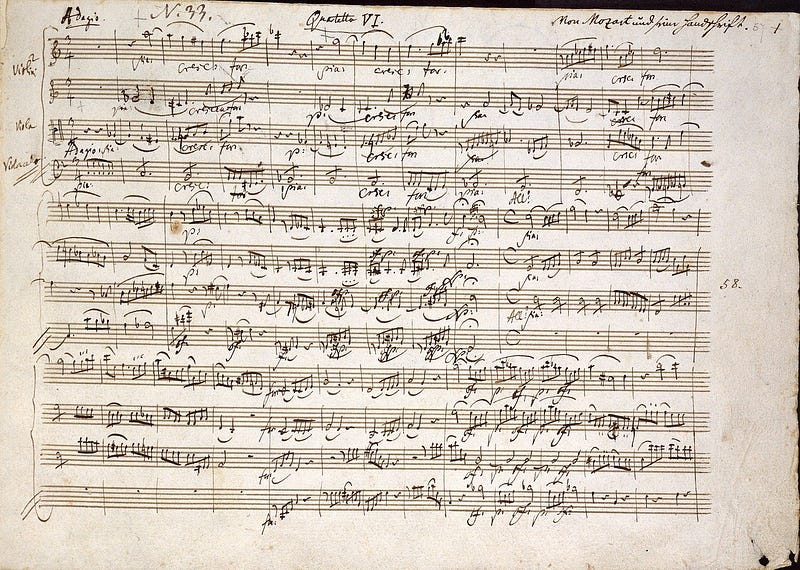
What I know is I never get tired of listening to Mozart. To my delight, Martin bought me a keyboard for Christmas and now I am checking off a box on my bucket list: I am learning to play Mozart — with both hands!
This is a profound feeling for me. I am only learning very easy versions of Papageno’s Song and Sonata in A (my music book definitely doesn’t look as complex as an original Mozart composition above!) but I can feel and hear the sounds I am making echo his melodic intent. The harmonies soothe, a deep contentment washing over me.
A Long Term Relationship
What I think it all boils down to is that the universality of Mozart, the reassurance of his compositions. Most of his pieces are written in a consoling major key. They are predictable to our Western ears but then he throws in a little something to be resolved, which it always does by the end.
It’s been a year of many insecurities. These days I think we could all could do with some predictability, reassurance and empathy all wrapped up in a nuanced piano concerto.
If you liked this story you may also enjoy: