
Friends|Friendship|Adulthood|Differences
I had a Friend once … and then I grew up
Why friends are so hard to come by
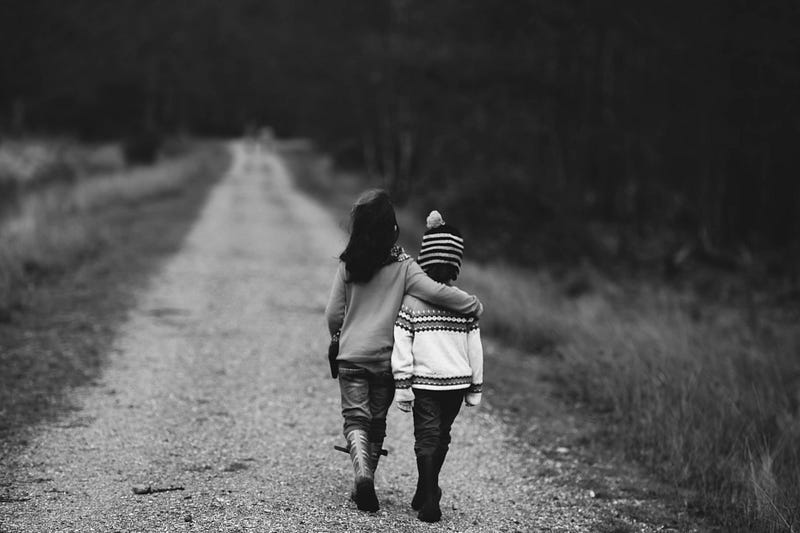
I’m a visual person. As much as I love words, I’d rather be shown how to do something, then told all about it in 500 words or less. So, when I recently went to the giant dictionary behind my desk to check out the word, friend, I was hoping there’d be a picture of one there, so, I had a better idea of what to look for.
There wasn’t.
I thought that maybe the reason friendship and friends had eluded me for so many years was that I just didn’t know what one looked like. Easy to happen. Lots of us people out there, walking and running with no time to waste. Might bump into a friend, knock a latte out of their hand, and not even recognize them.
It’s possible. Sure, beats the alternative answer, doesn’t it? No friends, means not very friendly.
People aren’t always the best judge of themselves. Things can get subjective. Life’s already tough, working with people, dealing with strangers; making nice because you want them to return, but not understanding why some are mean and some aren’t.
But when it comes time to look in the mirror and ask a tough question or two about ourselves, we often demure. It’s too late in the day, mind not working properly. Haven’t eaten yet. Bad to make decisions with low blood sugar.
We want to be honest and reveal who we are, especially to ourselves. But sometimes we don’t know how.
WHAT’S A FRIEND?
When I was younger, a friend was someone you played with. Who let you bat and pitch and didn’t seem to care all that much, as long as everyone was having fun.
It’s a definition I held onto for some years, because it was simple to understand. There were few moving parts and they seldom changed.
As a teenager, a friend became something vastly different. Didn’t see it coming. Language was probably a part of it. When we’re young we use smaller words and rely more on touch and feelings. When we’re older, touch falls away and larger words, with greater meaning and angst, fill our minds and we struggle to define ourselves in simple terms.
Every day is about all of life. Every act, impacts our world, the world of others, the world across the globe. How this actually works, who knows, because in theory it seems impossible. But teenagers feel it all and it changes every day.
Trying to find a friend is this whirlwind of emotion and dire consequence is a challenge. I thought I did pretty well when it was happening. Thought I found true friendship and lifelong bonds.
But as the teen years waned, I found that the “gap”; that metaphysical space between who I was and who they were, began to widen.
As in canyon wide and deep. And everything I thought we had in common; every idea and point of view that I thought bound us together was actually formed through illusion. Created solely by a common interest in sports, and girls, in drugs and self-medicating our way through the Sixties.
As people; as individuals who thought differently about the world and the news and the butcher down the street, I found myself on my own hilltop, shouting across the canyon every day, just to be heard. And to be understood, well, that never really happened.
Old friends fell away, obsolete, in some tragical sense. Unable or unwilling to fulfill the sacred role that we all longed for. Our minds grew and evolved and new ideas were planted. For me, those ideas came from that little boy, sitting quietly on the front stoop, watching the world passing by. Thinking thoughts that no four-year-old should have been thinking — but I did. Every day.
So, as the teen years passed and we became adults — never saw that coming either — our minds, through some force of Nature or genetic imperative, swiveled around and ceased looking inward. Outward into the world we gazed, looking for insights in the cloud of change hovering above our lives.
ARE FRIENDS PEOPLE TOO?
Somewhere around the age of 21 or so, I thought friends were buffers. Kind of like the cushioning they drape over the outfield walls in Ballparks, so the outfielders don’t kill themselves chasing fly-balls.
Friends acted as confidante and priest. Who willingly listened to our confessions, while straining to not laugh or judge. They filled roles, preset somewhere down the corridors of time, that yet seemed so loose and undefined that we all eventually gave up trying to be one and just acted out as we were.
I think that maybe I had this thought back then. Had this realization that friends were a little like unicorns. More myth than fact, but somewhere, somehow a little truth trickled down into the story and I became stuck with the word and what it meant.
I believe I came that close to understanding friendship, but then something, got in the way. Something clogged the works and I rekindled my desire to find one and thus continued the sadness and discontent.
Like dreaming, the watch you lost, was actually in the top drawer of your dresser and awakening every morning to find out that it still wasn’t there. I trudged on in search of my unicorn and convinced myself they were actually out there.
THEY ARE AND THEY’RE NOT
Older still and friendship once again went through some serious analysis. Friends came, bright and new and filled with promise and out they went, too soon or not soon enough. I struggled with terms and definitions yet again and sought to dissect friendships (couldn’t find anyone willing to do this) so that I could understand what made it beat. What gave it life and purpose and drew the interests of so many people.
Friends often found me in workplaces. In offices positioned next door or down the halls. In shared lunches and laughter. In poker nights held in alternating homes, filled again with more laughter, finger foods and camaraderie that felt really good. Like children touching and feeling rather than just using words and talking all about it.
But these friends had expiration dates on them. I hadn’t noticed. Not then, not since, when I realized most friends did.
They weren’t fucking cartons of milk, or blocks of cheddar. Why should they expire and cease to be relevant?
In a world where work is where it’s found and players change from job to job, friendships are a necessary victim of this weird and unappealing sort of progress. Work and friends go together like rain and umbrellas. They augment each other. Making the environment we find ourselves in more tolerable.
But when the sun shines or the weather changes and becomes a new norm, friends become like old umbrellas, slipped into the stand by the front door and forgotten.
ARE FRIENDS LIKE BROTHERS OR SISTERS?
When growing up with two sisters; one older, one much younger, I thought friends could take the place of brothers. Or even dads, if you happen to lose them early, like I did mine. “Tag you’re a mentor,” and hope they fulfill the role, whether they agree to it or not.
But I was the extroverted introvert. The quietly complex and brooding Victorian hero, perched by the moors, thinking: This place is fucking bleak. And wondering why Life was such a complicated drama. Shakespearean tragedy crashing into Vaudeville.
I wondered a lot. Seemed tragic, I suppose, to the casual onlooker. But I wasn’t.
Curious. Perceptive. Not easily fooled. Some might call it a gift, being four and reading adults like a fucking catalog from Sears and Roebuck. Not so much a gift as an offset. The weighted end of the teeter-totter, so that some balance could be attained in life.
Look at my kindergarten class photo. The taciturn son of Marcus Aurelius, staring at the photographer with a look at bemusement.
A Stoic by birth, challenged to decode the ravings of kids my age, shouting — Tag you’re it and Ringalevio, while dashing through alleys, oblivious to heat, cold, or the scorching language from grandma, until the limbs fell numb and the sun couldn’t be bothered to stay up any longer.
Friends are people, just like you and me. Some ease into friendships with the skill of Fred Astaire. Others, inflict blunt force trauma while attempting to be helpful, not seeing the wounds until they are being shown the door.
I don’t fault the few friends I’ve had. That is, those that fit the template I erected somewhere in my mind and held those poor souls up against. They were friends, with expiration dates on them. Situational friends if you will, that came right when they were needed and left just before they no longer were. Timing, ever elegant, though frightfully painful for that four-year-old that still dwells within.
FRIENDS AREN’T FOREVER
We all have moments that seem somewhat surreal; that leaves us questioning reality and time. Standing in line for but a few moments, we meet someone who seems to find us in a nanosecond and begins to share ideas and opinions that we kept locked in the cupboard, next to the one copy of Playboy, that mother never found and threw away.
There they are, strangers for all intents and purposes and yet — you know them and they know you. Instant friends and then they are gone. Was that friendship? Did it pass the minimum standard, so many parts per thousand?
Who knows. I don’t, not for sure. But I’m coming round to believe, that’s exactly what friends are and what friendship is all about.
That connection. That moment when something is freely given and freely accepted, no strings attached.
Fast friends for fifty years — that would be nice. No, it would.
But for the extroverted introvert; the stoic child with the ageless eyes wondering if he missed his station, on that train ride through the cosmos — a friend of any length, duration or proximity to hearth and home, is a friend indeed.
In that case, I have many more friends than I thought. Maybe not those seen on the Hallmark Channel or in reruns of Lassie, but good ones nonetheless.
Okay, so Mr. Webster, how would you define a friend? What fixed ideas will you urge me to take hold of as I cast about, ever vigilant for the new friend lurking in the shadows?
Or should I take hammer to mold and shatter that illusion that friendships are born of consistency and duration? That friends are like redwoods, growing straight and tall in one’s backyard. Ever the guardian of the deeper trust that seldom rises to the surface.
Alas, I am neither cured of my need to search, nor finding total comfort in the knowledge that friends are everywhere. I am sure that both points will converge at some, as yet, unknown point in my life and that the moment will be well worth the wait.
Until then, excuse me, while I peel away the mantle of adulthood and feigned superiority and return to that four-year-old, sitting on the front stoop. Seeing the world as clearly as the Hubble sees an astronaut’s hand placed in front of it.
Witnessing the creation of a new life, not so tumultuous as Kilauea, but just as breathtaking.
Joe Luca is writer and editor for ILLUMINATION and a published author and writer of children’s stories, short fiction, non-fiction articles, screenplays and poetry. Publications include Child’s Life, Children’s Playmate and others. There are some other articles below — have a read. And thank you for stopping by.
Sherry McGuinn Britni Pepper Caroline de Braganza Kathryn A. LeRoy, Ph.D. P.G. Barnett Tom Byers Amy Marley Selma Paul Myers MBA George J. Ziogas Rasheed Hooda Harley King Karen Madej Ann Venkataraman Charles Roast Charlotte Zobeir Ali
Copyright 2020 Joe Luca


