
Mental Health of Children of Alcoholics
I Grew Up With Alcoholics and This Is How It Felt
How being the child of alcoholic parents affects you for life
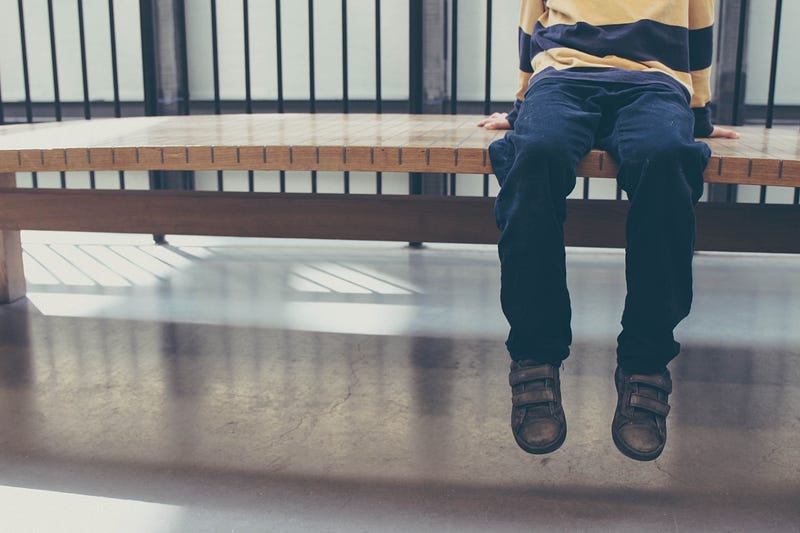
When I was 12 years old, my world collapsed. My mother’s words, “I have a drinking problem,” abruptly divided my previous childhood into a “time before the addiction” and my new reality, the time “after the confession.” It made me one of the 2.65 million children of alcoholics in Germany alone.
But let me start at the beginning because my life was not always a mess. Actually, I was a pretty happy child. In my first years of life, there was only my mother and me. She was my entire world and my safe haven.
I loved her idolatrously.
Sure, there were those moments when she acted kind of funny, mostly in the evening. But the next morning she was always the mom I knew.
When Everything Started To Change
When I was 8 years old, she met her life partner at the time, a high-functioning but severe alcoholic who made our lives hell from then on.
At night I often lay in bed shaking with fear. I knew he would be aggressive when he wouldn’t come home after work, and despite my young age, I knew his behavior was influenced by alcohol.
I couldn’t understand why someone would drink something that turned him into a monster — time and time again. However, he made my mom happy, and that was more important to me than anything else in the world. But secretly I soon deeply detested two things: him and alcohol.
“I Have a Drinking Problem”
So you see, when my mother confessed her “drinking problem” to me, I was already somewhat familiar with the subject of addiction.
However, her addiction was something completely different for me. Not because her addiction was worse or less bad than her partner’s, but because I just loved her so much.
Suddenly, her increasingly strange behavior made sense. I felt that something irretrievable was being taken away from me. That my life would never again be as I knew it. I remember the nausea that spread through my stomach and did not go away for many days.
And I remember trying to call a friend. When I couldn’t reach her even after several attempts — the line was busy — I rode to her place unannounced by bicycle.
We hid in the green. I cried incessantly. My friend asked me what was wrong, but I only managed the words “something really bad happened”.
My mother had forbidden me to talk about her “problem”. Many years later, I learned that the “don’t talk about it” dogma is a common pattern of the family disease alcoholism.
Addiction Haunted Me
From that point on, my childhood was marked by my mother’s withdrawals and relapses, getting my hopes up and being disappointed, and especially by the daily question of what condition I would find my mother in when I came home from school:
Was she drunk? Was she sleeping off her intoxication? Or was I lucky and she was sober?
And the worst part of it all was that I didn’t even know who to be mad at. After all, my mother was sick. And you can’t be mad at a sick person, right? I couldn’t blame her for an illness, no matter how much her behavior hurt me.
So I just told myself that I would soon be old enough to move out. I would then be independent. My life would be in order again. I would be fine then. All I wanted was a normal life, and that meant a life where addiction didn’t matter.
It wasn’t until many years later — long after I had moved out — that I realized that addiction would forever be a part of my story. I couldn’t just leave it behind, no matter how hard I tried. It kept catching up with me.
What My Story Tells About Other Children of Alcoholics
Addiction is a transgenerational vicious cycle and it has been on the verge of slamming its claws into me a few times. Because even as an adult, I was still suffering from the childhood injuries I had experienced from my mother’s alcoholism.
And I’m not alone with that. That’s why it’s so important to talk about it.
There are countless films, podcasts, reports, and documentaries about alcoholics. There are endless help programs for them, but very few for children.
Hagstöm and Forinder, who interviewed children living with alcohol-abusing parents as part of a long-term study, described them as “silenced and invisible victims”.
Even after parental alcohol abuse was revealed or the children exhibited help-seeking behavior, little changed, making them “visible but unprotected victims”.
Children of Alcoholics Are Overlooked
Children quickly learn that their needs are secondary (I mean, the very fact that I wanted to become a psychologist to help addicts speaks volumes). In the process, many forget that they have a right to receive help too.
It is the children who are particularly vulnerable and in need of protection. But they are often overlooked. Their voices go unheard. As a result, many of them develop problems themselves later on.
Hardter, for example, concluded in her review that adult children of alcoholics are at increased risk for a number of negative outcomes: Many become substance-dependent themselves later in life. They also suffer more frequently from depressive symptoms and anxiety disorders, to name just a few examples.
The day my world collapsed may have been 17 years ago. But I still think of the time that followed a lot. Addiction became a part of my identity: I was, and still am, the (adult) child of an alcoholic. And I now know that I am only one of many.
So, let’s break the cloak of silence and talk about it. Because that’s the only way to heal old wounds and break the cycle of alcoholism.
To stay updated on all my stories about children of alcoholics and how Mental Health is portrayed in movies and TV, be sure to subscribe to my email notifications. Also, I always appreciate claps and comments as feedback on how you liked this topic in particular!