
I Grew Up with a Deep Respect for Food
Cooking food was storytelling.
Sharing food was communion.
As a young child, I went to the market with my parents and was taught about choosing quality food. My parents had limited means; however, food was a priority, and they somehow made what little we had feel like abundance.
Growing our own food whenever possible was preferable. We picked and sorted blueberries. We grew tomatoes, peppers, carrots, onions, and lettuce each summer. We picked plums and peaches and pears. We canned the bounty.
I grew up learning to use all parts of plants and animals whenever possible. In the heat of August, we picked the flowers from zucchini plants, battered them, and fried them. This delicious finished product was sprinkled with Parmesan cheese.
After beef soup was made, we would eat the marrow, long before bone marrow was “ in fashion.” When a chicken was used to make soup, the meat was used to make a casserole. My grandmother and mother would share the chicken neck and wings, both described as the sweetest of meat.
Leftovers were viewed as a treat and often morphed into something new with a bit of kitchen magic, often an omelet or a pizza.
To the best of our ability, we passed on the respect for food to our kids, now grown adults. I feel a sense of pride when I watch my adult daughter, an incredible cook, and my son-in-law prepare delicious meals with the healthiest ingredients. It makes me happy to see my adult son bake cookies with a recipe he invents. Mission accomplished.
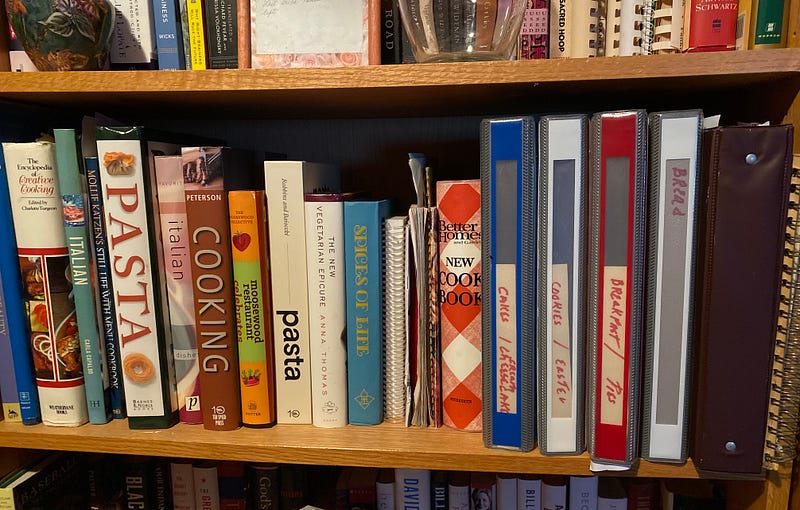
My most treasured gift from my Mom is a collection of her handwritten cookbooks. Six binders hold a history delineated by meals. I love seeing her handwriting. I remember when she got a computer and handwriting shifted to typing. I smile when I see her typing, all caps printed on colored paper, tucked neatly inside a plastic cover.
Holding her recipes gives me a palpable sense that she is near and I love that. They are incredibly comforting.
The amount of food Mom made was as important as the choice of food. There was always enough food for a few more guests. Unexpected guests did come by, and more chairs and place settings would appear very quickly. This sense of hospitality was unwavering. We try to emulate this.
I remember in some of Mom’s last days in her home, she could barely walk, but she somehow managed to get coffee and goodies on the table for whomever came by for a visit.
There was a bit of rigidity in maintaining traditions of certain foods for certain occasions. Growing up I sometimes wanted to change it up, and try something new, but my parents were not interested in changing anything.
Later, as we raised our own family, and especially now that our family is grown, repeating those traditions stirs such clear memories that I understand why the traditions were and are so important.
In many ways, there are many people who sit down to a meal when we gather, some seen, many unseen but present, nonetheless.
The sharing of food reminds us of who we are and where we belong.
Eating together is a daily practice of gratitude: grateful for not only what we have been given, but for those who gave to us.


