
I Found the Best Way to Break Into Investment Banking Through Networking on LinkedIn
Wondering how you can leverage the most powerful networking tool in the business tool to break into the highly coveted investment banking industry?

With over 930 million members across the world, LinkedIn has become one of the most powerful networking tools available to anyone in the business or finance world.
Whether you’re a recent graduate or an experienced professional thinking about a potential career change, learning to make use of LinkedIn is crucial if you’re looking to break into the competitive world of investment banking or take your career within the industry to the next level.
Regardless of your goals, whether that’s to land an internship offer, get a referral, set up a coffee chat, or simply to make friends, LinkedIn has the power to help you achieve all your networking goals.
In this article’ I’ll help you create a profile that stands out, learn to utilize the groups feature in LinkedIn to establish a network, reach out to people effectively for the highest chances of a response, and learn to nurture your relationships to the best of your ability.
So without further ado, grab your virtual business cards and let’s dive right in.
The Main Point of Networking on LinkedIn for Investment Banking
The primary goal of your networking efforts on LinkedIn should be to establish a name for yourself and get to know the people in the local investment banking spaces or industries that you want to work in.
Your end goal should be to set up coffee chats and meetings with some of the business professionals, so that you can get your name out there and expose yourself to potential job/internship opportunities that you want!
You could end up getting referrals to a top firm, or have someone on the inside vouching for you as to why you should be getting that job over someone else.
Get your name out there, and who knows, the opportunities might just present themselves to you!
You can never go wrong with having introduced yourself to too many people in the investment banking industry.
Tips for Creating a Standout LinkedIn Profile
Your LinkedIn profile is the digital resume you can show to the world.
And the first step to effectively networking for investment banking through LinkedIn is to ensure that you have a strong profile.
Think of LinkedIn Networking Like Dating.
You can have as much game, confidence or ‘rizz’ as possible, but if you haven’t put in the effort to make yourself an attractive (in any aspects) person, you’re going to find it difficult to find matches.
LinkedIn is also the tool you can leverage to make a good first impression on potential connections.

So, this first section is going to help you build up an attractive and credible LinkedIn profile so that you can actually capitalize on the networking efforts you put in.
Use a Unique Headline
In your headline, make sure to use keywords that reflect who you are, what you do, and your future career aspirations.
Your headline should make your expertise or interest in investment banking clear in order to attract relevant professionals that you may want to connect with.
For example, if you’re a final year university student and wanting to land a graduate position at a top investment bank, make sure to use an eye catching LinkedIn headline that includes a quick sentence about what you’re wanting to achieve.
Don’t simply put: ‘Accounting Student at UNSW.’
Instead, don’t be afraid to add a little bit more to it, by adding something like: ‘Aspiring professional seeking opportunities to learn and grow.’
So, your entire LinkedIn headline could be something along the lines of:
‘Undergraduate Business Student | Seeking the next opportunity to learn and grow professionally.’
Having a headline like this would certainly help catch the eyes of future employers and connections much more easily, instead of you simply blending in with everyone else that they can scroll past.
Keep Your Summary Short and Sweet
Next up, your summary is a quick introduction into who you are and why your future connections should care about you.
As it’s not something that you want future connections to be focused too much on, it’s a good idea to use bullet points to highlight key achievements if you’ve got any (don’t worry if you haven’t, you’re still in school, after all).
Here’s an example:
‘I am currently a third-year finance and accounting major at UNSW who hopes to gain relevant work experience in the world of corporate finance. Following my internship at Macquarie Group over the past summer, I have shifted my educational focus to financial analysis and real-world business solutions after realizing my passions for finance and investment banking.
Currently seeking the next step in my career, I’d love the opportunity to continue to be able to apply what I’ve learnt into the real world!’
Don’t Forget About Your Honors and Awards You’ve Received

List any degrees or certifications you have earned over your time in college or university, including relevant coursework or honors received.
Anything that’s relevant should be included, such as things like:
- Top of course awards in university
- Scholarships
- Competitions you’ve won or placed in
Your honors and awards are your primary way to prove to the world that you’re as good as you say you are, and it’s important to list them for people to be able to see.
Get Endorsements and Recommendations from Colleagues
Make sure to reach out to your fellow students, colleagues, mentors, professors, or work supervisors if you have them.
You can do this digitally, or, if possible, in person so that you can get your message across and easily ask for what you want.
Don’t be afraid to ask them for endorsements of specific skills you might want to market yourself with, as well as written recommendations highlighting your strengths.
It might seem like a pretty small thing, but having a recommendation or endorsement from someone you’ve worked with can really help to add a sense of credibility to your profile.
Keep It Professional
You’d think that this was common sense, but trust me, I’ve seen things that surprised me.
Make sure your profile picture looks professional and friendly, meaning it should check all of these boxes:
- You’re smiling
- Wearing at least semi-formal attire
- Ideally you’ll have your head and shoulders in the picture
Use an Eye-Catching Profile Banner
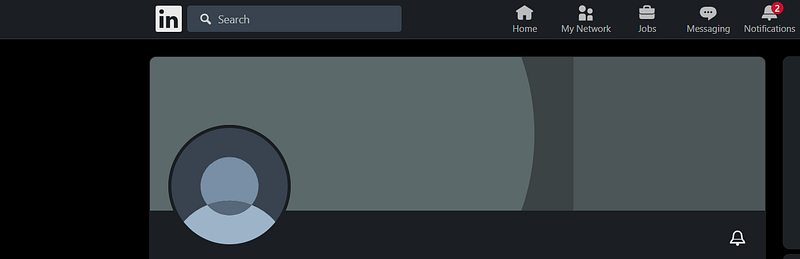
Lastly, this seems to be a step that a lot of people actually forget about or simply neglect.
Your LinkedIn profile actually comes with a banner, which is the background image that your profile picture sits on top of.
Many people simply have this as the default, even though it’s something that takes just a couple minutes to fix, and makes a pretty big difference to the overall appeal of your LinkedIn profile.
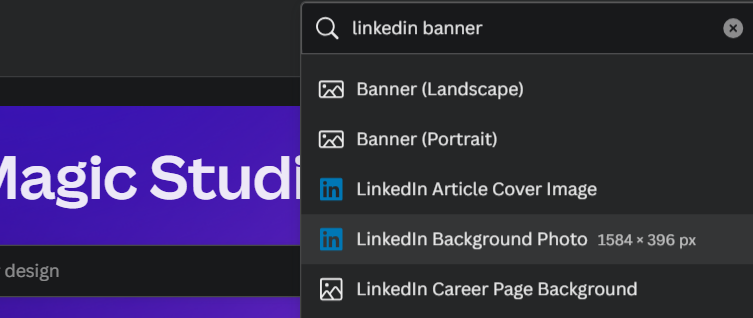
To give yourself a nice banner, you can simply head to Canva and search: ‘LinkedIn Banner’ to create a new design, it should be the one with the dimensions: 1584 x 396 px.
There are lots of premade templates you can use, otherwise you can simply just paste in a nice photo of a big city like the New York or Sydney city centers.
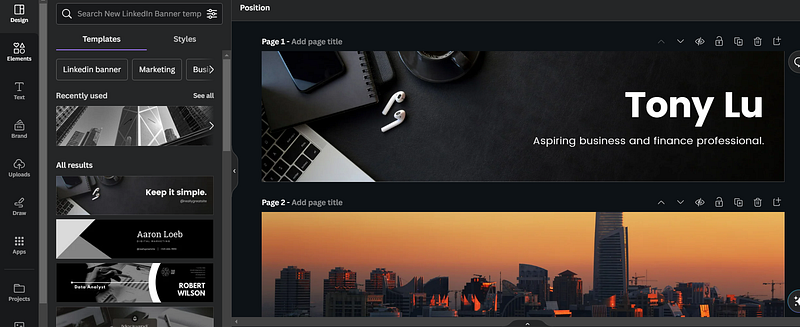
Adding a nice banner like this will certainly add more bling to your profile, and although it’s something that not many people tend to focus very much on, it definitely does make a difference to the overall approachability of your profile.
By following these tips when creating your LinkedIn profile, you can present and market yourself to the world professionally, in the best possible light!
And hopefully, ahead of all the other candidates shooting for the same opportunities as well.
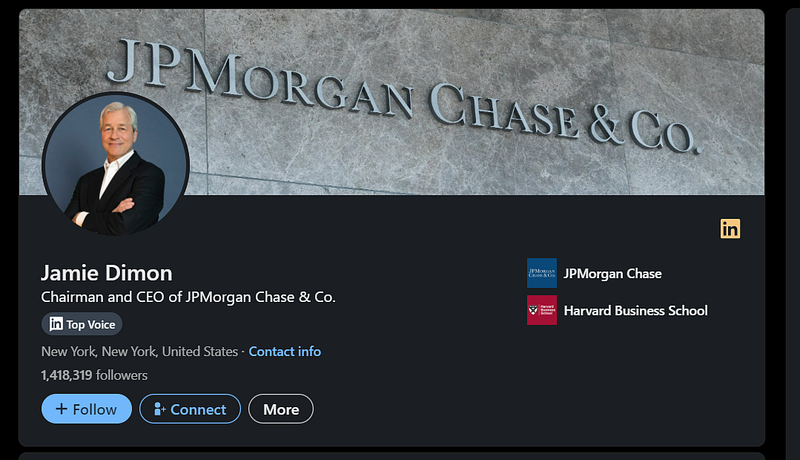
To give you a good example, here’s the LinkedIn profile of Jamie Dimon, who happens to be the CEO and chairman of US financial services giant, JPMorgan Chase & Co.
Learn to Make Use of LinkedIn Groups
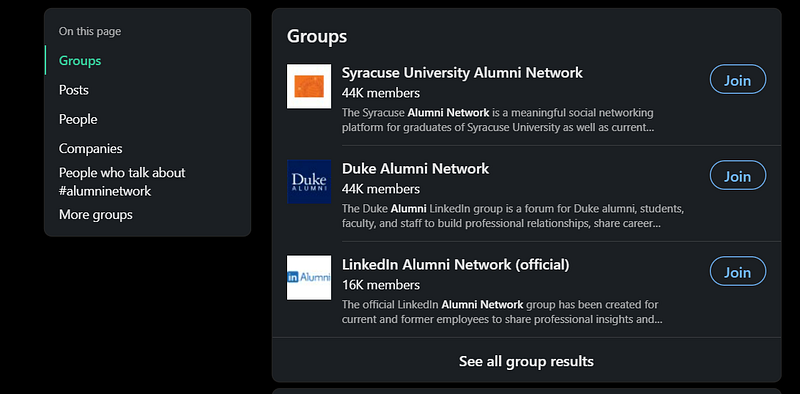
LinkedIn offers a huge range of networking opportunities you can take advantage of, and one of the most effective ways to expand your network is by joining relevant groups that you have some sort of connection with.
These groups are effectively a way for professionals from all kinds of different background, who share a common interest or goal, to connect with each other.
As a student, I know it’s difficult to establish your own network, as you haven’t really met anyone outside of your school network yet.
However, there’s absolutely nothing stopping you from joining relevant groups that you’re connected in some way with, such as the alumni network for your business school, or the LinkedIn group for the national finance network in your country, such as the INFINZ in New Zealand.
Joining these groups will give you access to their members, many of which will be finance and business professionals who have done something to similar to what you’re wanting to achieve.
I’ll tell you a story.
When I was still in high school, I wanted to start reaching out to people from the university I was going to be attending, to ask for some advice as to what they did during their time in university to be able to achieve what they did.
However, given that I was still in high school, I obviously wasn’t connected with anyone.
I found the alumni network group on LinkedIn for my university’s business school, and requested to join it.
Thankfully they accepted me into the group (though, to this day I still have no idea why), and that gave me access to a bunch of the university graduates from my business school who had gone on to do all sorts of different things.
I found people who had gone into marketing, gone on to be CFOs, management consultants, investment bankers, venture capitalists, etc.
All of these people were in one place, and I started reaching out to them all, asking them questions about how I could best structure my degree and spend my time in university to eventually be able to land the job offers they’d managed to.
I found investment bankers who’d made it into the big New York offices, alumni who had gone on to be managing partners and directors at local firms, and everything in between as well.
This helped boost my confidence in knowing that people had already done what I was trying to do, and that there were people I could look to for support and inspiration.
I was able to ask about joining relevant university clubs and societies, going to networking events, application processes for internships and graduate programs, etc.
I’d gone from a high school student with no connections whatsoever, to being able to chat and even meet with some of the business school alumni who had been able to do what I was wanting to do, all thanks to that alumni group on LinkedIn.
So yes, definitely do look to make use of LinkedIn’s group features.
Reach Out With Cold Messages
Be strategic about who you reach out to, make sure you’re connected to them in some way (such as you went to the same school, are part of the same LinkedIn group, grew up in the same area), etc.
That way, you’ll boost your chances of getting a reply and having people want to help you out.
When sending messages on LinkedIn, make sure to personalize each invitation to connect with someone else by referencing something specific about their profile or recent activities.
This shows that you have taken the time to research them and are genuinely interested in connecting, instead of giving off the impression that you’re just randomly pressing the ‘connect’ button so that you can feel popular.

To save time, if you’re simply scrolling through the members of a group you’re a part of and they all share a common interest (such as coming from the same business school), you can get away with using a generic message that you can copy and paste into each invitation.
For example, here was mine when I was reaching out to people from my future business school while I was still in high school:
“Hi [first name],
I’m Tony, a year 13 [or your country’s equivalent of final year high school student] student planning to study Finance in 2024 at [your university]. I came across your profile and thought what you’ve achieved was very impressive! Mind if we connect and I ask you some quick questions about what you did during university to get to where you are now?
Thanks, Tony”
Short, sweet and simple.
It got the message across, acknowledged and congratulated the achievements of the other person, and also made your intentions with the connection invitation clear.
When I was using this message, it was actually pretty successful in getting responses, and more often than not, people were more than happy to help me out.
Of course, always remember to be polite and write your messages with the right, friendly tone.
Now, as a student, chances are, you won’t have much to offer in return for the other person’s time if you’re engaging in a connection invitation and conversation.
However, just make sure that you’re always polite and talk in an engaging manner, so that you are able to come across as a person that they want to stay connected with and keep within their network.
Always show your gratitude towards the other person for lending you their time.
Because chances are, if they’re a professional in the finance of investment banking industries, they don’t have a lot of it for themselves!
Attend In-Person Events
That’s right, you can actually leave your house and go to meet people at networking events in person!
While LinkedIn certainly does provide a convenient way of connecting virtually and online, face-to-face interactions at alumni conferences or business/finance industry events can be incredibly beneficial as well.
It’s generally a pretty good idea to use LinkedIn as a tool before attending these events.

Take the time to research some of the attendees at the events beforehand so you know who would be valuable contacts, and who you want to be approaching.
By utilizing LinkedIn effectively, you can literally open doors not only for job opportunities but also for mentorships and professional growth that you otherwise never would’ve had.
Take advantage of this powerful networking platform to expand your reach, build relationships, and break into the coveted world of investment banking!
Closing Thoughts
Today’s job market is extremely competitive.
Especially in the world of investment banking, where students are beginning to do preparation for recruiting seasons as early as high school!
It’s not to say that if you don’t make use of LinkedIn, you won’t be able to break into the industry.
That’s not what I’m saying at all.
However, it is vital that you make use of every tool and take advantage of everything you can in order to boost your chances of being able to break into the industry, including LinkedIn.
It can open up a wealth of new doors and opportunities for you if you play your cards right, and I’d hate for you to miss out on opportunities, and have no choice but to keep on wondering what might’ve happened if you made more use of LinkedIn!
Take my word for it, it’s a good time to start using LinkedIn now if you haven’t already.
I hope you’ve enjoyed reading through this article, and have learnt something from it!
If you’d like to learn more about becoming the highest performing student you can and achieving all your goals, check out the rest of our Medium publication, Grad Excel!
Or if you’d like to learn more about investment banking as a whole, or the other top business career of consulting, check out these links!
Other than that, I’m wishing you nothing but the best for your endeavors and recruiting into the highly coveted world of investment banking.