
I Found the Best Hour for Breakfast. Science Agrees
No more rumbling stomach at 10:30 am.
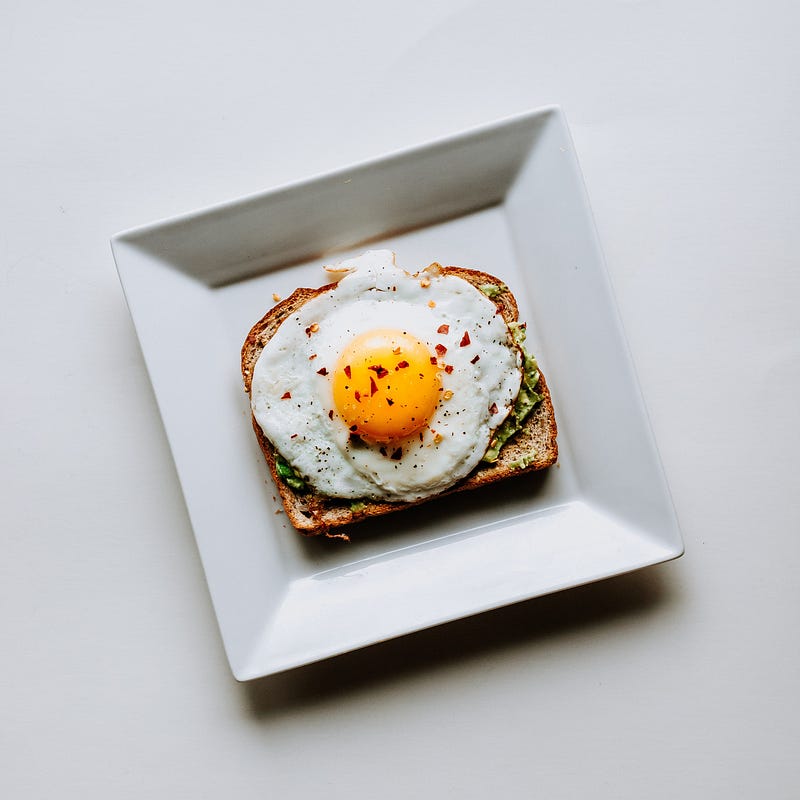
First, I worked on reducing sugar. Then, on the consumption of wholegrain cereals only. After, I tried to restore a connection with my body and its signals of hunger and satiety, through intuitive eating. Even after that I changed my breakfast to something much more nutritious and filling.
It was time to take the next step.
I was raised as a breakfast person. My parents wouldn’t let me go to school on an empty stomach. Even if it was just an apple or a slice of bread, I had to eat something.
But most of the time they didn’t have to fight at all.
I’ve always loved breakfast. From sweet children’s cereals to English muffins, French toasts, and now avocado toasts, fried eggs, or sheep yogurt with muesli, it’s one of my favorite times of the day. Waking up and thinking of nothing else but getting to the kitchen table to refuel before the day begins.
Curiously, my brother turned out to be a no-breakfast person. In fact, he doesn’t eat right away when he wakes up, but a few hours later when he gets hungry.
When he told me this, I began to see the major problem lodged in my own breakfast habit.
My perfect morning has looked like that for the past few days. I would wake up naturally, make coffee, add a splash of milk, and sip it quietly on the couch while reading a book.
4 mornings out of 5, I’m not hungry at all
The fact that my brother waited for hunger to arrive before eating breakfast highlighted the fact that I wasn’t hungry when I sat at the table in the morning.
4 times out of 5 I ate food out of habit and not out of hunger.
This posed two problems.
Firstly, I couldn’t rely on my feeling of satiety to stop eating, as I was already full before I even started.
Secondly, I would always find myself starving by mid-morning. My stomach would rumble, I would lack energy. It was as if I was feeding my body at the wrong time, which is probably what I was doing.
Logical conclusion: I decided to stop eating in the morning. At least not right away. Problem: I woke up and didn’t know what else to do. I found myself going around in circles, the whole beginning of my day was turned upside down, which had an impact on my mood as well as my work.
Habits are hard to break.
Over the last few years, I’ve learned that things take time to change. They only change when they are mature enough. To become mature enough, they have to turn around in your head for a while. Then, change happens slowly, with small actions repeated regularly.
While waiting for this to happen, I turned to science to see what was being said about breakfast.
Is breakfast really the most important meal of the day?
You’ve heard this saying before. It is as true as it is false. Explanations :
“Daily breakfast leads to greater physical activity during the morning, whereas morning fasting results in partial dietary compensation (i.e., greater energy intake) later in the day”, states a study published in the American Journal of Clinical Nutrition
“In my practice, I find that clients who skip their morning meal tend to overeat in the evening, when they’re less active and less likely to burn off the extra food. In fact, that recent UK study backed up my observations: It found that breakfast skippers had higher calorie intakes later in the day, while breakfast eaters were more physically active in the morning”, says Cynthia Sass, MPH and RD, in an article for Health
“Eating the moment you wake up isn’t necessary, but research is strong for the benefits of eating a morning meal. Your metabolism can get a boost from eating in the morning and a nutritious choice will set the pace for the rest of your day”, explains Olivia Brant, a registered dietitian certified in sports dietetics, in an article for My Fitness Pal
Breakfast would therefore increase your energy level in the morning. Which makes sense: your car can only run if you put petrol in it. If you have an empty stomach, you consume the calories from the day before, which may sound great for weight loss, but it often results in a higher calorie intake later in the day.
As Olivia Brant says, you don’t have to eat breakfast right when you wake up. That leaves the door open to find the perfect time to eat it, which is probably why you’re reading this.
Actually, it was pretty obvious. It’s even been right in front of us from the beginning. When do you have lunch? When you’re hungry? Great, me too. What about your snacks? What about dinner? Exactly. When you’re hungry.
There is no reason why breakfast should not work in the same way.
The best time to have breakfast is when I’m hungry. Not later, not earlier.
“Great, but not everyone works at home like you!”
I can hear you coming… “It’s easy for you, you work at home, you have full and free access to your kitchen all day long”. You’re right.
My perfect morning has looked like that for the past few days. I would wake up naturally, make coffee, add a splash of milk, and sip it quietly on the couch while reading a book. Then I would get to work or have breakfast if my appetite had woken up.
But that wasn’t always the case. I was a student and office worker. It means having a precise timing for getting out of bed, eating something, and getting ready. You can’t just see how things are going and eat when you feel like it, or you might have problems with your hierarchy.
The solution is: just prepare something for later.
“If you don’t have time to make even a simple meal, toss a “clean” protein bar in your bag, or make a double portion of your dinner the night before, and eating the second half in the morning for a quick breakfast”, suggests Cynthia Sass.
Sometimes when I wake up late, around 9 o’clock, I end up not having breakfast at all. I eat lunch instead. Unless I’m in the mood for a delicious brunch.
This new habit suits me well. I am no longer hungry in the morning. I no longer wait for lunch in terrible pain as I used to. I can concentrate on my work.
In my overall process of intuitive eating, this has helped me enormously. I couldn’t go back to eating as I used to.
I think it’s like everything else in life. You have to find your rhythm and balance.


