
FRIENDSHIP | COMING OUT
I Finally Found a ‘Lover That Won’t Drive Me Crazy’
But I’m worried my best friends won’t approve
I studied myself in the little visor mirror in my car, unsure of what I was hoping to see. Courage? A glimpse into my soul, perhaps? They say the eyes are the window to the soul, but my gaze didn’t seem to reach that far.
I closed the visor with a satisfying snap and exited the car.
It bothered me that I felt so nervous. My slow, deep breaths stirred the butterflies in my stomach even more, and I wistfully wished I could flutter away with them. As I approached the restaurant, I wasn’t sure I was ready to share my deepest secret with my oldest friends, but it was too late for doubts now.
My friends and I met in the fall of 1978, during my sophomore year in college. By the time we graduated, there wasn’t much we didn’t know about each other.
I have many happy memories involving my friends. Perhaps my fondest involves drinking Miller High Life beer at the lake while sitting in my yellow Ford Pinto after one of us experienced a breakup.
We found comfort in our familiar post-breakup routine. It was a way to drown sorrows and move energy. We’d pop the caps off our beer and queue up Pat Benatar’s “I Need a Lover that Won’t Drive Me Crazy” as loud as my box speakers and built-in tape deck would allow.
We’d shout out the words while the windows of my car vibrated. A beer or two and Pat Benatar’s raspy voice were all we needed to get past our heartache.
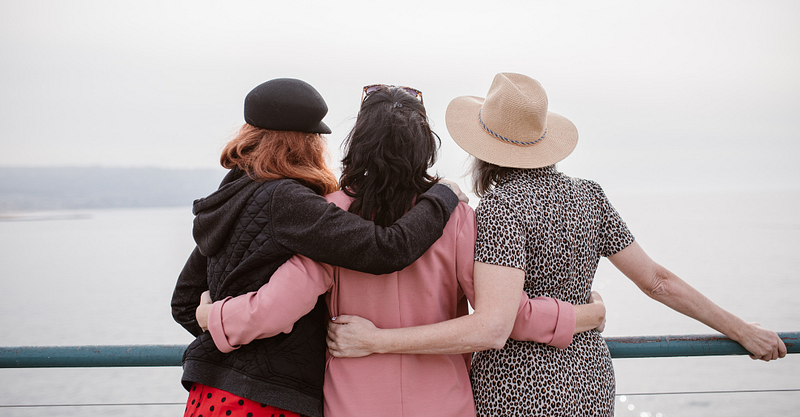
The four of us remained friends long after graduation, even when distance separated us. We all married, had children, and looked forward to reuniting with our families nearly every Holiday season.
But walking into the restaurant that day, the magnitude of my secret caused me to wonder if the bond we shared would weather the turbulence I was about to stir up.
Since childhood, I’ve known I was gay, but I didn’t have the vocabulary to describe my feelings. I grew up in the Pacific Northwest with an alcoholic father and a mother who didn’t appear to give a shit about my older brother or me.
When my dad left for good, the neglect became more severe as my mom began compulsively dating and sleeping around. Between her job and the men, there wasn’t much energy left for us.
As a kid, I felt isolated and on my own. I ran around some with a few kids in my neighborhood, but I remember spending long days home alone.
I never felt close enough or safe enough with anyone to talk about the strange thoughts and feelings swirling inside me. If I had to describe my predominant feeling, it would be that I didn’t belong.
Concealing my same-sex attraction became vital during high school. Not only was being gay not accepted, words like fag and lesbo, were frequently used as slurs.
I wasn’t free to talk about my sexuality and couldn’t fathom experiencing the liberation I longed for.
In college, I drank and partied to pacify my emptiness. I didn’t know anyone at my University who was gay, and while I longed to experience being with a woman, that possibility terrified me.
I worried I’d never be the same if I experienced even a taste of same-sex intimacy.
Like an addict who can’t dabble in their drug of choice, I was frightened that I’d crave another hit of being with a woman. Living with the white-hot desire I felt was agonizing.
Not feeling safe enough to share my secret was unbearable.
At the start of my sophomore year, I was a Resident Aide in one of the dorms on campus. I met my three friends the day they moved in, but it took some time before we became close.
I was a party girl, and they were involved in a large Christian group on campus, making us unlikely pals. I remember them leaving the dorm on Friday nights, Bibles tucked to their sides, headed for the weekly campus fellowship meeting.
I couldn’t imagine why anyone would give up a Friday night of partying for a church service.
Though we had differences, we connected through our shared humor and love for music. I was surprised that I enjoyed hanging out with them, and more than once, I wondered why they didn’t seem offended by my salty language or penchant for partying.
Years later, I learned they initially befriended me in the hope that I might find God, and that’s precisely what happened.
My desire to be with a woman tormented me, and I’d been searching for something to take the place of that desire. Based on my friends’ overall happiness, I thought God might be an excellent substitute.
I threw myself into Christianity, and the campus evangelical group became my lifeblood. The loving atmosphere was enticing. The feeling of acceptance was intoxicating. But because evangelicals considered homosexuality a sin, I burrowed further into the closet, causing me to feel internally fractured.
Though my three friends were on the wilder side of Christianity, I wasn’t comfortable sharing my secret with them. These were women who vowed to wait until marriage to have sex, so I couldn’t imagine they would accept me being a lesbian.
Never believing I could have the life I desired, I tried to make the most of the life I had. I started dating seriously the year after I graduated. The constraints of evangelicalism worked well for me throughout my dating experiences.
I righteously clung to purity mandates, even refusing to kiss my most serious boyfriend until we were engaged. While my friends struggled to remain pure, I was grateful to wait as long as possible to have sex with a man.
For twenty-five years, I endured an unfulfilling marriage while secretly fantasizing about what it would feel like to be with a woman.
Denying my sexuality took a toll on my mental and emotional wellbeing. Keeping my secret began to feel like a personal betrayal, and in my forties, I plunged into a depression that wouldn’t lift.
A few years later, living a lie became unbearable. I unexplainably lost weight, had trouble sleeping, and struggled with chronic pain. Toward the end of my forties, I found myself contemplating suicide.
That’s when I finally decided to prioritize my mental health by leaving my stagnant marriage and disclosing my sexuality. Then, shortly before I turned 50, I became infatuated with a woman at work.
Suddenly, my heart began to hope for the first time. That glimmer of hope was terrifying because it was wooing me to act.
Like a rock climber letting go of one handhold to reach for the next, I let go of my secret and reached for the life I had longed to experience. It was exhilarating and terrifying, and now it was time to share it with my friends.
As I approached the restaurant to meet my friends that day, I knew I had to trust them. I had rehearsed this conversation many times, but it went differently than I expected.
Sitting in the restaurant booth, I could hear my blood whooshing through my ears as my heart thudded against my ribs. I was talking fast and using too many words to describe how my week was going.
My voice was shaking as I started telling them about spending time with my “work friend.” As I talked, I kept my eyes transfixed on the ice in my Iced Tea as I swirled it with my straw.
When my friend interrupted me with a question I wasn’t expecting, it felt like the oxygen was sucked out of the restaurant, and I couldn’t breathe.
“Is she your girlfriend?” Janet asked.
Slowly, I lifted my eyes from my drink and saw a genuine and slightly mischievous smile on her face. I felt the blood rushing to my cheeks, and the butterflies in my stomach were fluttering again.
Janet covered my hand with hers and expressed genuine excitement when I told them she was indeed my girlfriend. As I continued, they listened intently as though trying to absorb my fear and nervousness.
They admitted they had sensed that I was interested in women and had planned to ask me about it during lunch. I guess I shouldn’t have been surprised. These were my oldest friends, after all.
I felt profoundly valued and accepted when I left the restaurant that day more than ten years ago. My cohort continued to stand by me as I came out to others, offering support and encouragement along the way.
Coming out has been a rollercoaster ride, as it is for many.
From the excitement of attending my first Pride Parade to losing my good standing in my evangelical church, I’ve experienced the joy and pain of turning my life upside down for the sake of living genuinely.
Through it all, the friends I met nearly 45 years ago have stood by my side. These days, we aren’t searching for lovers who won’t drive us crazy, but we still enjoy singing along with Pat Benatar while sipping a lovely Cabernet.
©Kim Kelly Stamp, all rights reserved.
Thank you for taking the time to read my story. Feel free to share a time when you felt supported by your friends.
This story is an adaptation of an essay I originally wrote for Shondaland Magazine.