Wildlife, Wilderness, Nature, and National Parks
I Experienced the Thrills of Life in Death Valley
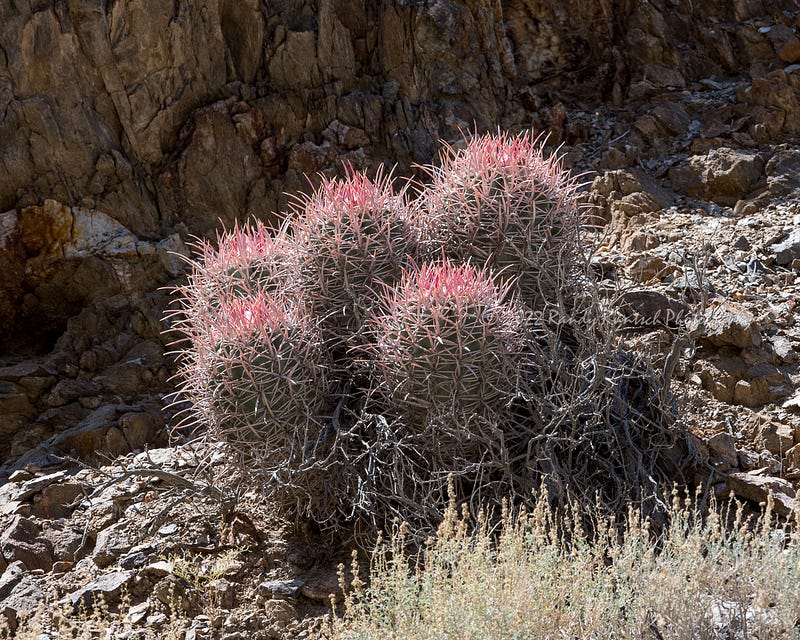
The place we call Death Valley is filled with life
“To the complaint, ‘There are no people in these photographs,’ I respond, There are always two people: the photographer and the viewer.” ― Ansel Adams
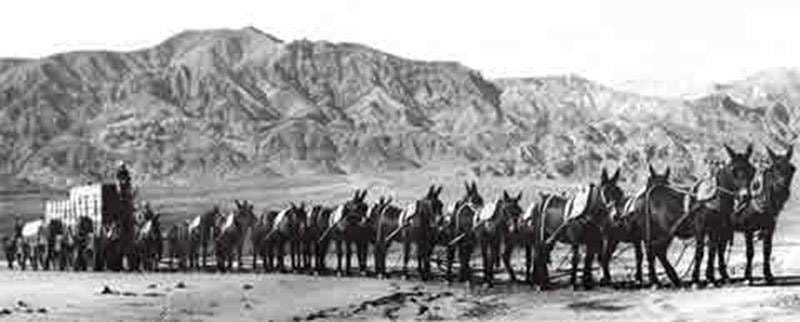
When I was a little boy, 1950’s reruns of the Death Valley Days television program etched images of Death Valley and Ronald Reagan into my mind. Reagan was the host of the show. During commercial breaks, he also pitched Boraxo, a soap produced by the Pacific Coast Borax Company. Shown in black and white on an old tube TV, Death Valley appeared devoid of life, except for the twenty-mule team that hauled borax mined in the valley, the wagon drivers, and the B movie actor who would become US president. In contrast to the image in my mind’s eye, during my first visit to Death Valley, life displayed itself in full color for all to see.
Death Valley covers about 3,000 square miles (7,800 km2). The valley is located in Eastern California between the Sierra Nevada mountain range and Las Vegas, Nevada. Part of the Mojave Desert, it borders the Great Basin Desert. And, in summer, it is among the hottest places on Earth.
Death Valley is a land of contrasts and extremes. Its lowest point is Badwater Basin, at 282 feet (86 m) below sea level. Mount Whitney, 85 miles away, is the highest point in the lower 48 United States, at 14,505 feet (4,421 m) in elevation. Even with its heat, a great diversity of life survives in Death Valley.
I planned my first trip to Death Valley National Park over a long Memorial Day weekend in May. While springtime, I expected hot and dry weather, so I packed light clothing, hiking boots, and my most lightweight sleeping bag, along with other camping gear.
Journey and Arrival
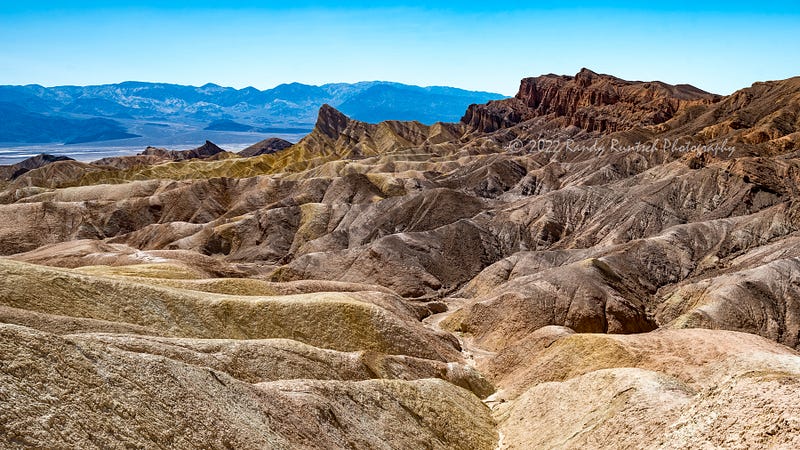
As the airliner flew from Minneapolis, Minnesota, to Las Vegas, the scenery below transitioned from Midwest farm fields to the rugged Rocky Mountains and finally to the deserts of the American Southwest. After picking up the rental car at the airport in Las Vegas, I drove west for two hours and entered Death Valley National Park. I stopped at Zabriskie Point to admire the colors and contours of the landscape. Finally, I continued to Furnace Creek Campground, my destination for the night.
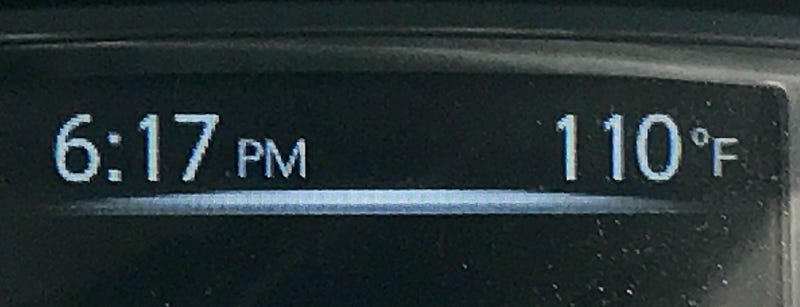
The name Furnace Creek packs meaning. The air at suppertime felt like a furnace. The temperature on the rental car dashboard read 110 °F (43.3 °C). After all, the place holds the record for the highest recorded air temperature on Earth at 134 °F (56.7 °C) on July 10, 1913.
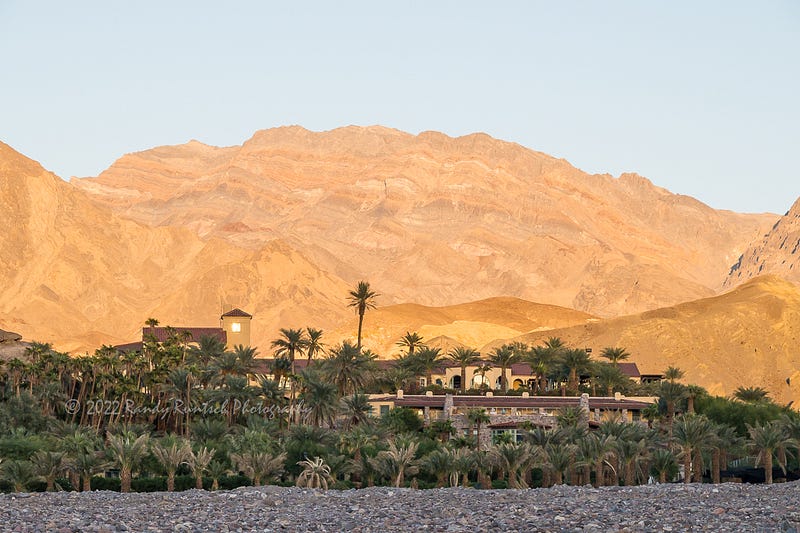
Believe it or not, Furnace Creek had a population of 24 on the 2010 census. The village is situated 196 feet below sea level. But less than one mile away, The Inn at Death Valley presents an oasis-like look as it glistens in the sun.
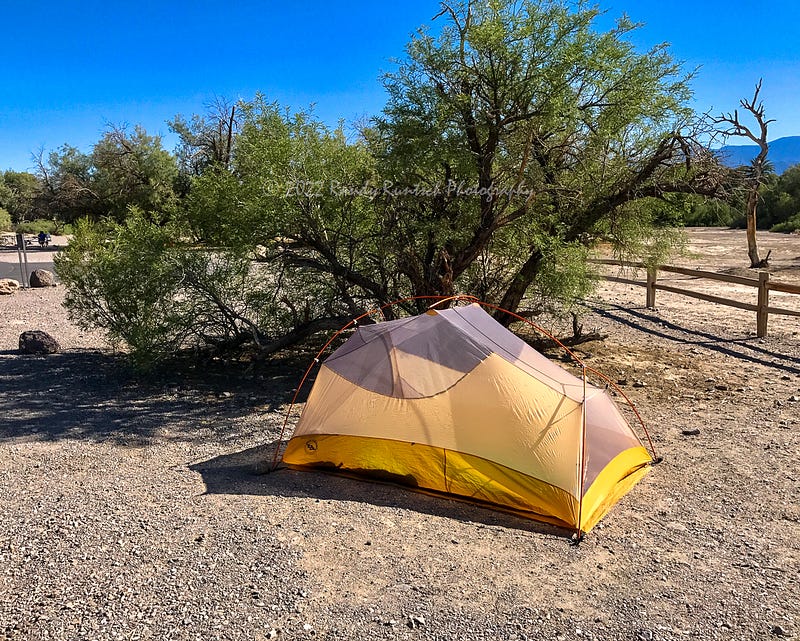
When I set up the tent at the campsite, I left the rainfly in the car. While the shelter was essentially a screen tent, it baked in the evening sun with no wind or shade. Shortly after sunset, I entered the tent, stripped down to shorts, and laid on the sleeping bag.
After relaxing my muscles, closing my eyes, and imagining a black sky, I typically fall asleep within one minute. I learned this technique years ago, and it has served me well. But at Furnace Creek, I could think only of stifling heat. Even so, sleep finally arrived, and I woke up refreshed.
I searched for other campgrounds on the park map at breakfast. At 4,100 feet (1,250 m) elevation, Wildrose Campground seemed promising. I imagined that it must be cooler there, night and day, than at Furnace Creek. Its fee-free campsites sounded good when contrasted to Furnace Creek’s $22 nightly fee, too. Thorndike and Mahogany Flat campgrounds, located in the high country at 7,400 feet and 8,200 feet elevation, respectively, might be colder than I had prepared for. So, I decided that I would camp at Wildwood on the second night.
After taking the tent down and packing the car, I explored the park. Following are some highlights.
Badwater Basin
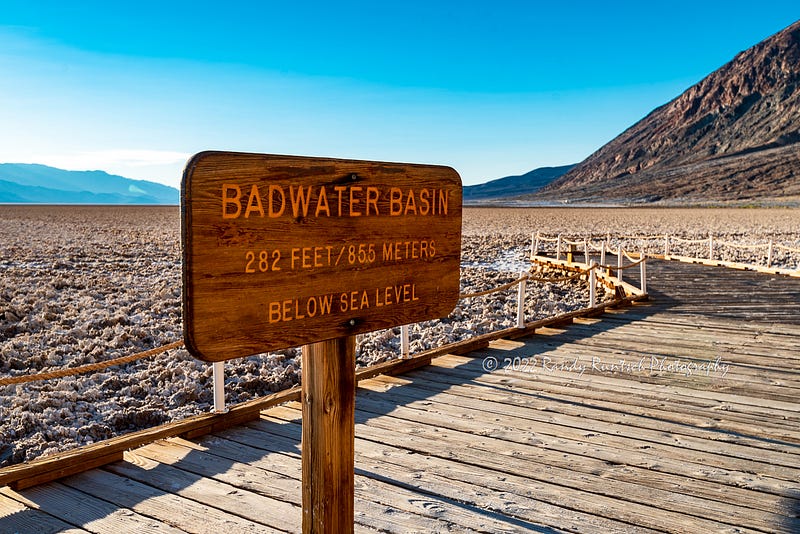
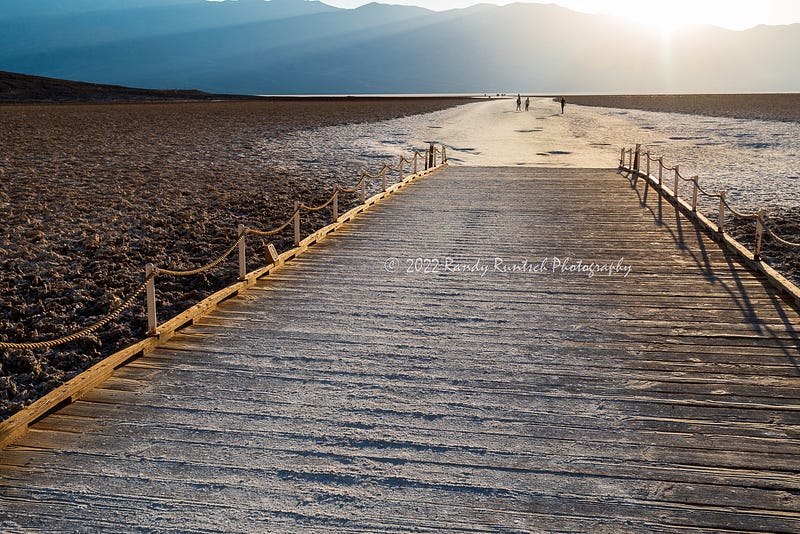
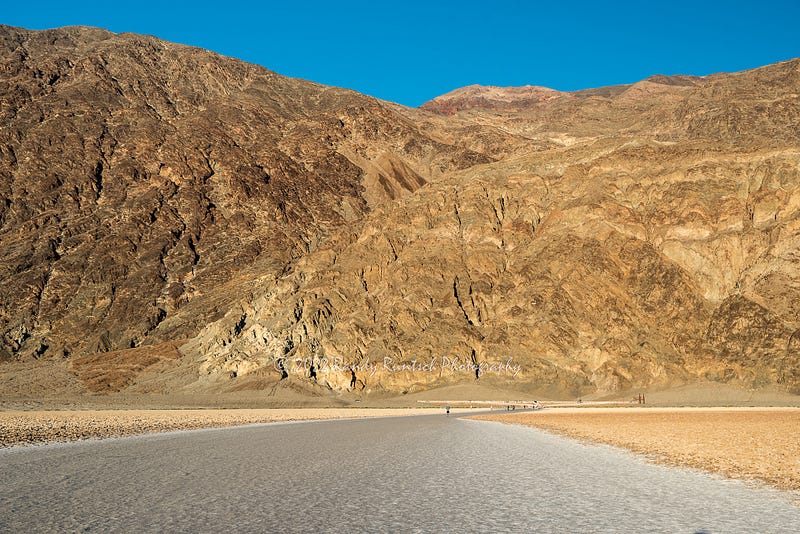
The lowest place in North America, at 282 feet (86 m) below sea level, Badwater Basin is a landscape of vast salt flats. Sometimes wet, hikers start to explore the flats on a wooden boardwalk.
Artists Drive
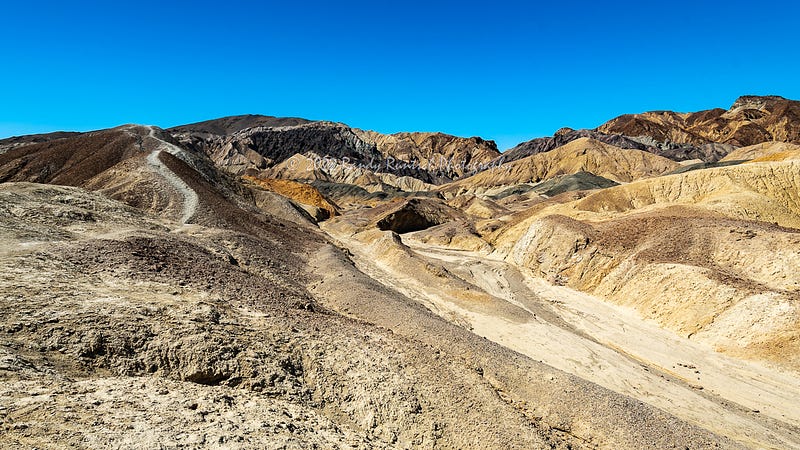
Artists Drive passes 9 miles (14.5 km) through a multi-colored landscape.
Zabriskie Point
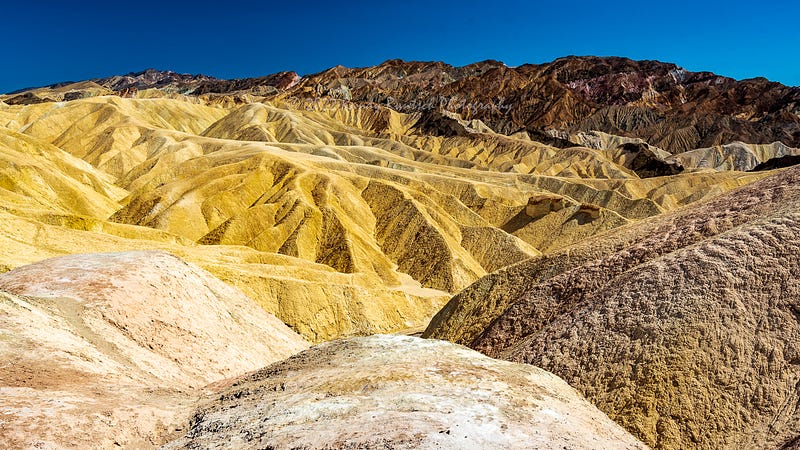
While I had stopped at Zabriskie Point on my way into the park, I returned the following day. I missed the view at sunrise but was told that the morning sun adds depth and vibrance to the point’s contours and colors.
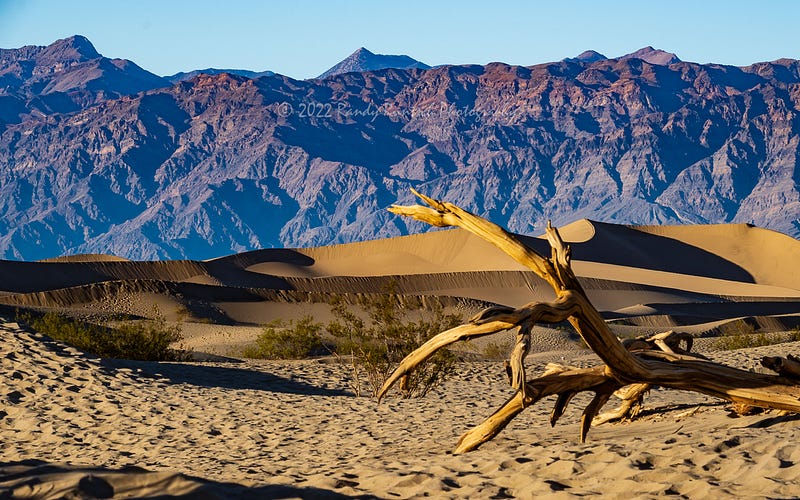
Mesquite Flat Sand Dunes
Late in the afternoon, I passed the Mesquite Flat Sand Dunes on the way to Wild Rose Campground. The dunes rise 100 feet (30 m) above Mesquite Flat. While the dunes can be seen from the car, I would return to hike across their ridges in the evening.
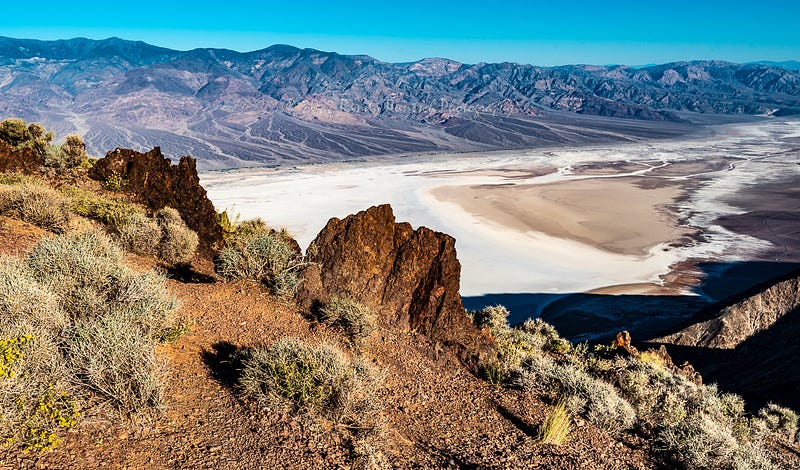
Dante’s View
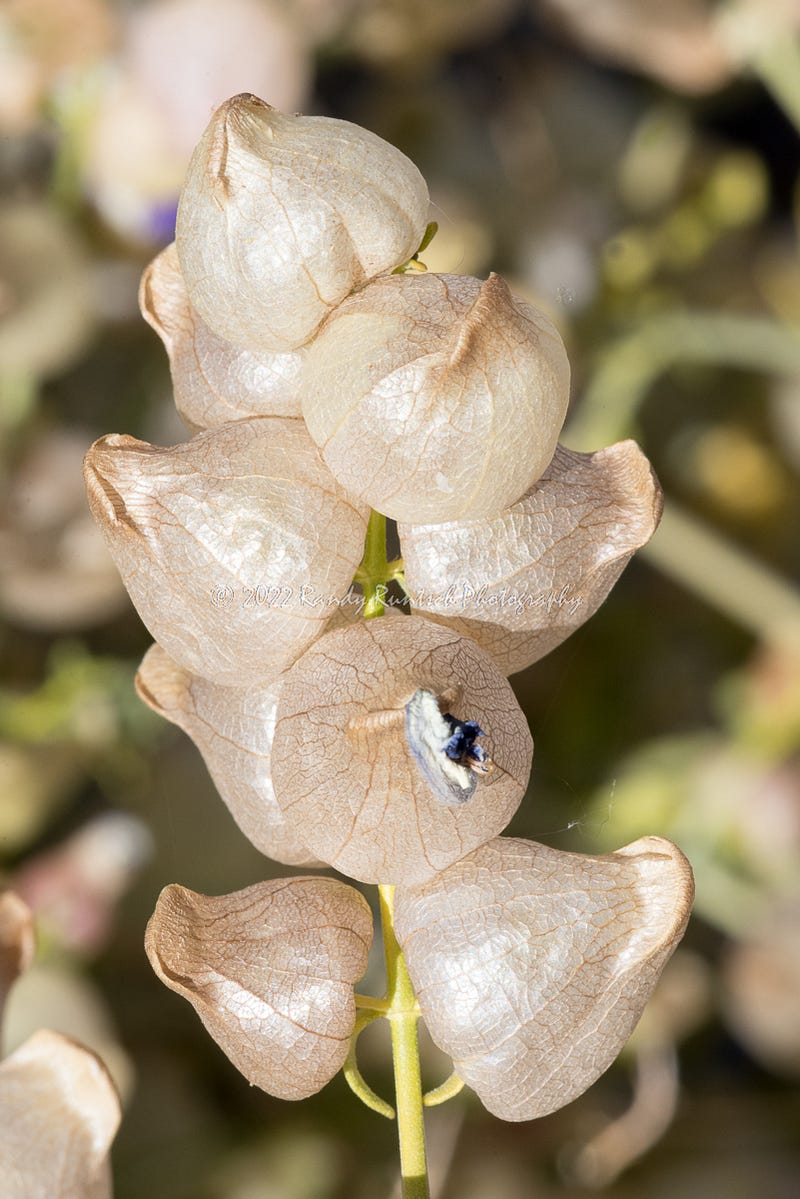
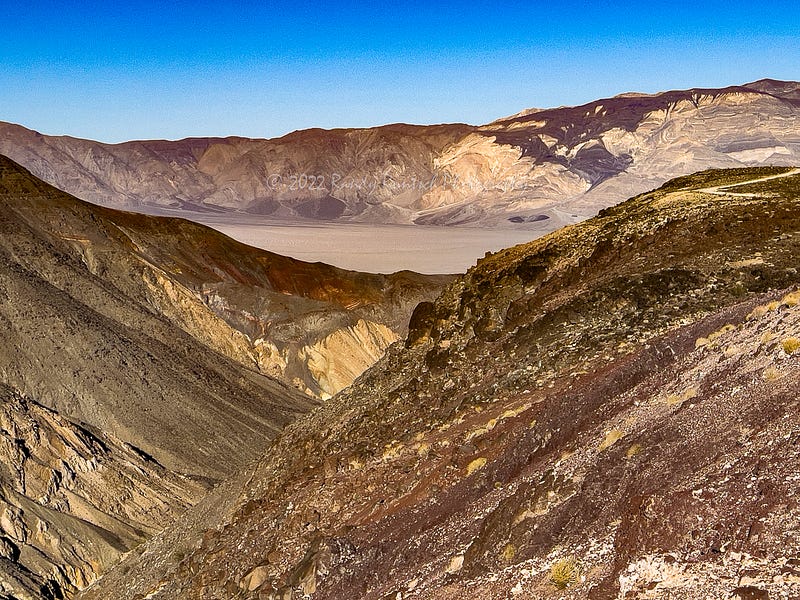
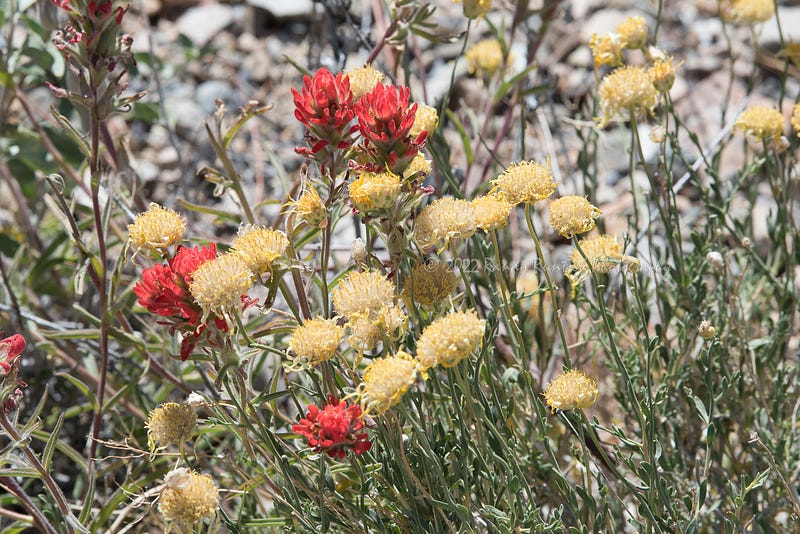
At over 5,000 feet (1,500 m) above Death Valley, Dante’s View offers breathtaking views of the valley below. The wind blew wildflowers around on its rugged slopes, too.
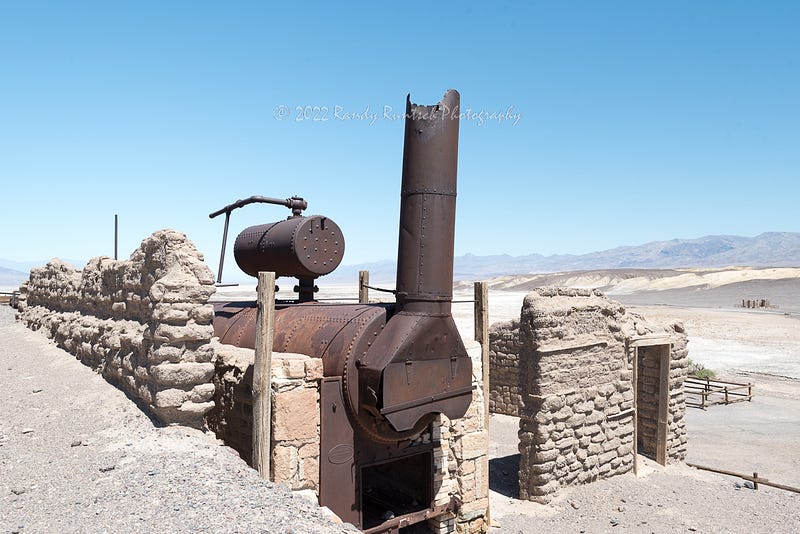
Harmony Borax Works
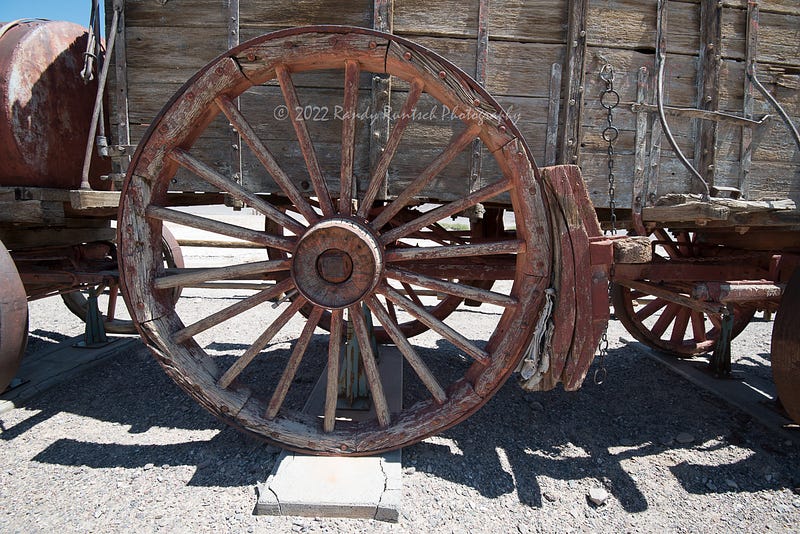
Harmony Borax Works was a borax refinery that was part of a borax mining operation active from 1883 to 1889. Twenty-mule teams hauled double wagons filled with refined borax from the site to the nearest railroad in Mojave, California.
Father Crowley Vista Point
Father Crowley Vista Point offers views of a landscape filled with lava flows and volcanic cylinders. These give way to Rainbow Canyon.
Color and Life at Wildrose
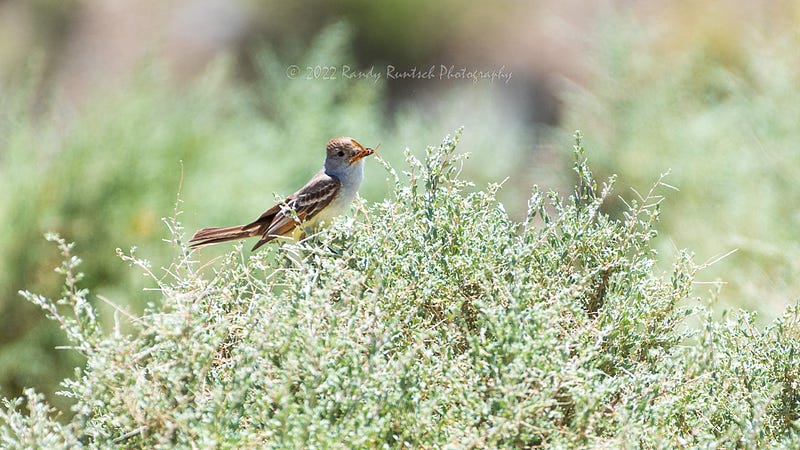
The road climbed as I drove to Wildrose Campground. Gradually, fields filled with grasses and wildflowers. Birds perched in the grass, and trees grew taller as the road ascended.
The campground appeared to be more gravel parking lot than a campground. It featured a water faucet, a plastic outhouse, picnic tables, and fire grates. After setting up camp, a neighbor gave me a bundle of firewood. I appreciated the gift since it fueled a fire that warmed me later under a starlit sky.
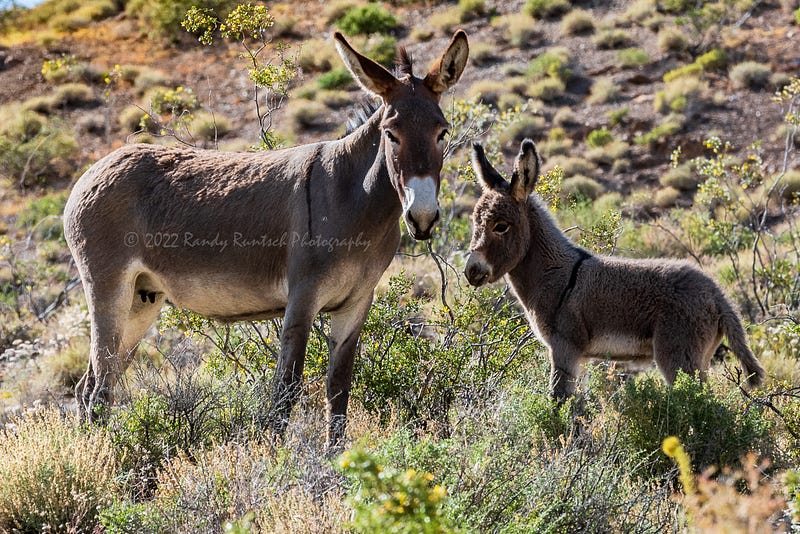
While I ate supper, several wild burros made hee-haw noises as they climbed the neighboring hillside. Later, on the drive back to Mesquite Flat Sand Dunes for an evening hike, I watched burros as they wandered through and grazed in the scrub. According to the National Park Service, the first invasive burros like these were brought to North America by Christopher Columbus in 1495. During the God Rush, Spanish explorers brought them to the American West, and some either escaped or were abandoned. Unfortunately, the burros consume lots of vegetation and negatively affect native species, including bighorn sheep.
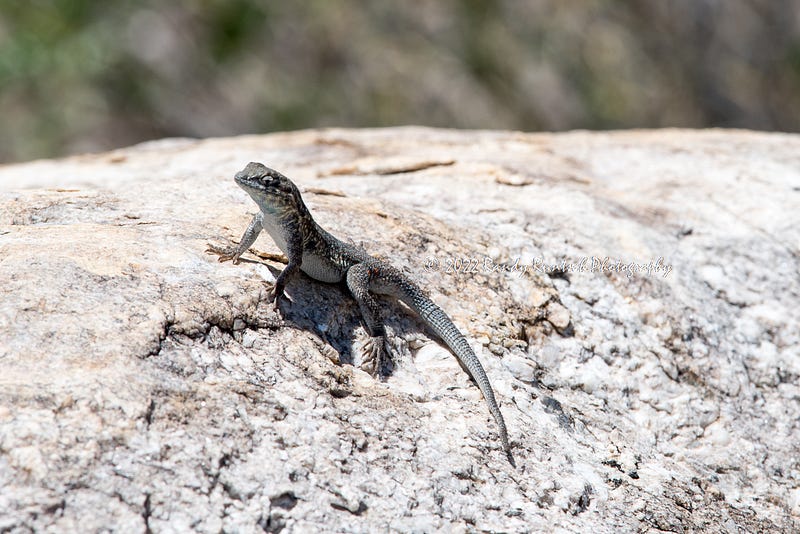
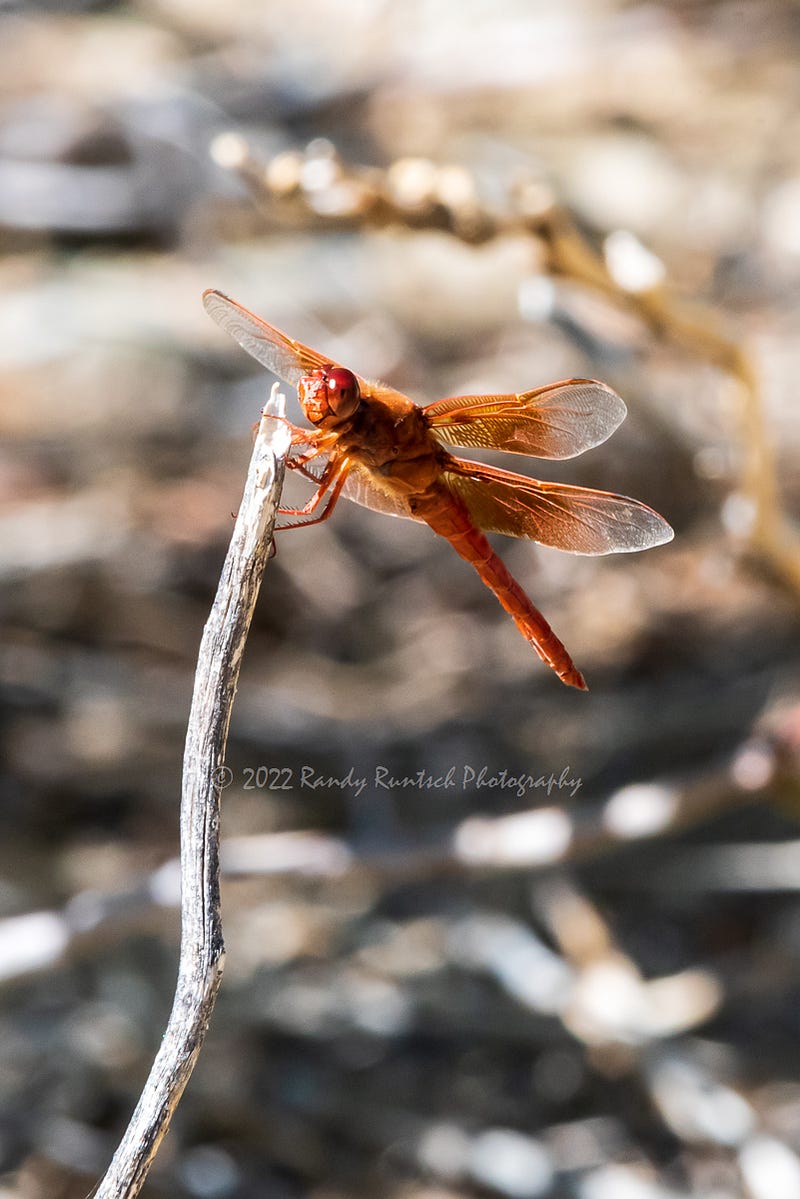
I slept well inside of the sleeping bag at the Wildrose campsite. The temperature was as much as 40 °F (16 °C) cooler than Furnace Creek. In the morning, I hiked along a creek in a nearby ravine. The abundant life surprised me and included green grass, cottonwood trees, frogs, dragonflies, damselflies, and lizards.
If I ever return to Death Valley National Park, I will plan to visit the same sites again. But I will also visit sites new to me, including the Keane Wonder Mine, which is a historic gold mine with an aerial tramway, Ubehebe Crater, which was caused by a volcanic explosion, and the Charcoal Kilns, which mine operators built in 1876 to provide fuel to process silver and lead ore.
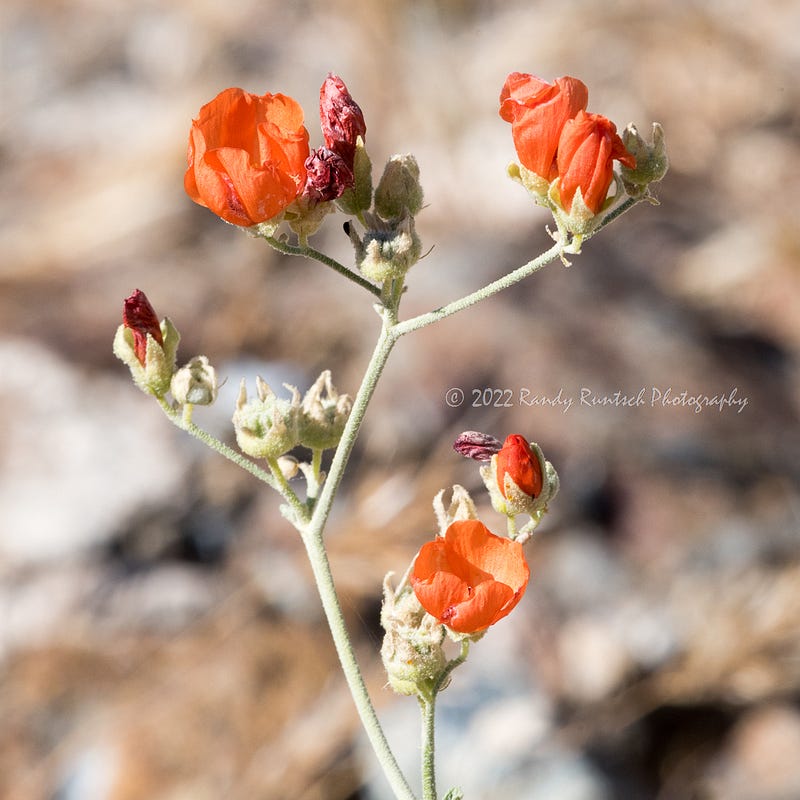
I developed an admiration for Death Valley during my stay. The varied landscapes and colors surprised me. But most of all, its flora and fauna delighted me.