
I Eat at an Old-People Restaurant
I’m a mid-level food snob. When I cook I season with freshly ground pepper and pinches of kosher salt from my forty-dollar ceramic salt pig. I study restaurant reviews, overpay for allegedly farm-fresh produce, take risks at grungy food carts hoping to find a diamond in the rough and I write snarky comments online when a high-priced chef doesn’t live up to my expectations.
Lately, however, my wife and I have been going to a kind of place I swore I would never go.
The restaurant is called Heidi’s. Heidi’s presents itself to passing motorists as a kitschy tribute to Bavarian cuisine, but the locals know what it really serves. It serves the subgenre of American cuisine that is never spoken of.
Heidi’s makes food for old people.
I didn’t make plans for growing old, and if I had, those plans would not have included Heidi’s. Yet here I sit.
It started innocently enough. Several years ago my wife and I were in the car, bored and hungry, and there it was. We knew Heidi’s reputation. We told ourselves that we were going there ironically — to eat and gently mock the food and the clientele. We would be dismissive and condescending. We would only do it once.
Little did we know that Heidi’s was the culinary version of the Hotel California. “You can check-out any time you like, but you can never leave!”
Several months after our first visit, we were having one of those conversations in which each of us tried to convince the other to choose the restaurant. This one had gone on longer than usual when I blurted out in frustration, “Oh hell, let’s just go to Heidi’s.”
Five years later, the arguments about where to go are gone. When it is time to go out to eat — unless one of us asserts a burning desire to go somewhere else — our car takes us, naturally and effortlessly, to Heidi’s.
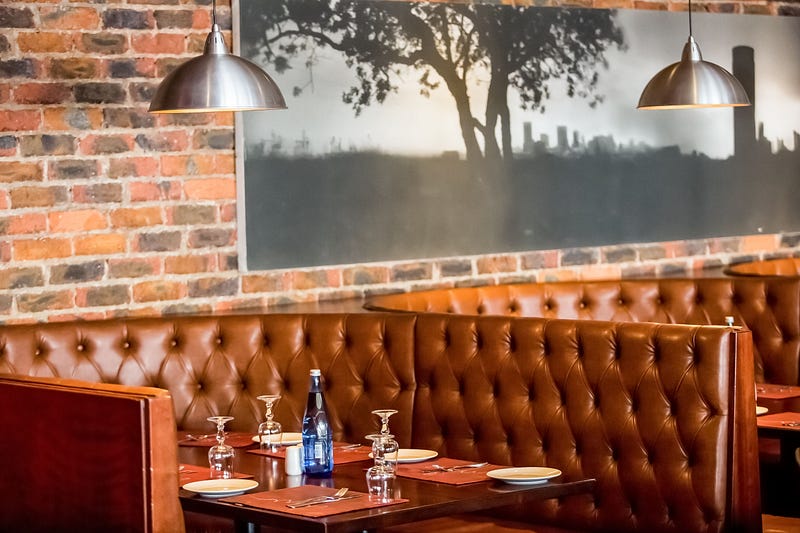
At Heidi’s we sit in booths. There are tables, but nobody uses a table unless all the booths are full. The greatest hits of the seventies recycle quietly through an invisible sound system. My wife and I talk about the trials and tribulations in our family or where we should go on our next road trip. If I crane my neck and look over the high back of the booth, I see a room filled with other old people talking about their own families and travels.
The waitresses at Heidi’s are old. They aren’t old enough to eat there, but they are older than the perky twenty-year-olds who sling pizza and beer at the brewpub down the street. They are career waitresses who are prone to calling their customers “sweetie” or “honey.”
One of the quirks in the universe is that Heidi’s — an establishment that specializes in serving seniors — has a special section of the menu called the Seniors Menu. I know because I often order from it. The Seniors Menu has the same food as the regular menu, but slightly smaller portions to accommodate slowing metabolisms. I remember a time when I patronized buffets and chuck wagons because the plates at ordinary restaurants weren’t piled high enough with food. That hasn’t been my problem for years. Nowadays my wife and I get our senior portion and wonder if we will finish even that.
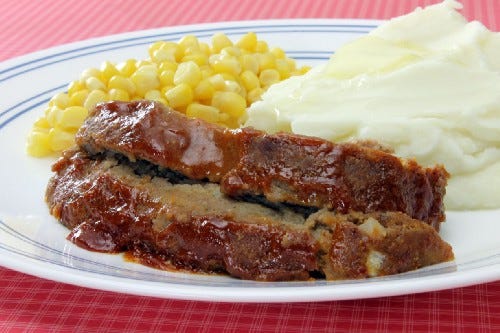
The food isn’t good, but it is familiar and comforting. It is the culinary equivalent of nostalgia, harkening back to restaurants my parents took me to when I was a child. My wife is partial to the open-face turkey sandwich — sliced turkey, poultry gravy, and cranberry sauce. My guilty pleasure is the meatloaf. Under-seasoned ground beef, salty beef gravy, and mashed potatoes. My wife thinks it is disgusting, but who is she to criticize with a slice of steamed turkey on her plate. Our meal comes with a pillowy dinner roll the size of a tennis ball and pats of butter wrapped in foil. The soup on Fridays is an overly thickened clam chowder. Old-people restaurants always serve clam chowder on Friday.
Day-to-day decision making often involves the choice of whether to explore or exploit. In the world of food, to explore is to ignore a natural uneasiness with the unknown and venture into that new Ukranian food cart across from city hall. When you explore, you risk an unpleasant experience. That risk is one you take in order to expand and maybe enrich your world. To exploit is to reap the benefit of exploration and return to a place where you found satisfaction before and are reasonably certain to find it again. Today, as the end of my time on earth looms and the beginning seems like a long time ago, I am inclined to more often reap the rewards of past explorations than to begin new ones.
I have a birthday coming up. I will turn seventy. We plan to eat at a place recently opened by a local chef with an excellent reputation. I looked at the menu online. If I don’t order one of the specials, I will order the pear salad and the lobster bouillabaisse. My wife and I will dress for the event, and we will sit at tables. It has been a while since I have experienced fine dining and I have high expectations.
After my birthday, we will return to our routine. Meals cooked by chefs who come and talk to you at the table are not something we eat often. We will have regular non-birthday days when we don’t want to cook. On those days, the discussion about where to go will most often end with a trip to Heidi’s, where we will sit among other old people and order from the senior menu.
After all, I am old now. It is okay for me to eat at Heidi’s.