
I Don’t Want My Daughter to Be a “Good Girl”
I want her to get in good trouble
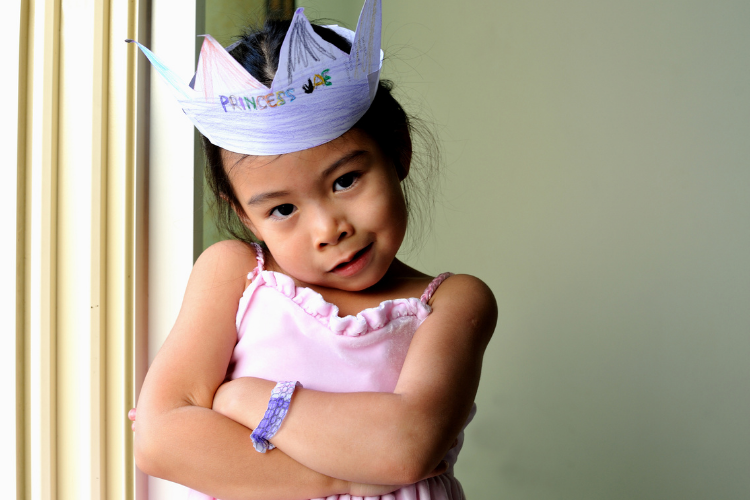
When my daughter started kindergarten, I breathed a sigh of relief. For years, I had been worried that she would be The Bad Kid, the one who was incapable of following The Rules. I imagined the whole class seated in a perfect ring at circle time, while my daughter darted wildly around the fringes.
I needn’t have worried. She took to school immediately. For an extroverted, active, sensory-seeking child, the school was a haven. The hallways were large and sprawling, the air buzzing with shouts, school bells, and slamming locker doors. School was her space to shine. She frequently liked to point out that she was the tallest child in her class and the fastest runner.
During conferences, her teachers gushed. “Your daughter is really something,” they said.
I beamed with pride, though it was tinged at the edges with mild irritation. As I’d long suspected, my daughter wasn’t incapable of following rules; it was just that at home, she chose not to accept them. No running in the school hallway? Reasonable. No cookies before dinner? Arbitrary, rooted in questionable science, and completely unfair.
For years, my husband had been telling me that our daughter had a “listening problem.” He was known to mutter occasionally under his breath: What she needs is a good spanking. As a child, he had called his mother Ma’am. When he got out of line, he had been struck with leather belts, willow branches, and bare hands.
I grew up in a less stringent home. My parents never spanked me. I called them Mom and Dad and sometimes Buttface. They did set boundaries, and I was sent to my room on occasion (three occasions, to be exact), but they didn’t have to work too hard to keep me in line.
Whether at school, at home or at a pool on a summer afternoon, I was terrified of getting in trouble. I feared lifeguards like other kids feared Freddy Krueger. They patrolled the pools, whistles poised at their lips, ready to pounce and humiliate.
That’s not to say I never broke The Rules, but when I did I made absolutely sure my game was air-tight. I was an expert in not getting caught.
I wasn’t quite prepared, then, for my daughter’s open defiance. It all started when she positioned herself feet first down the birth canal. In those early days, she lorded over our home, glowering and squawking her dissent when we attempted to confine her in any way — whether in a playpen, a stroller, or worst of all, her crib. She considered her crib to be a prison in which her merciless parents unjustly caged her on a daily and nightly basis without even so much as a trial.
In the hospital, the day after she was born, I watched her squirm endlessly, her hands forever outstretched and lost in a blur of motion.
The nurse told me: “She’s trying to find the boundaries of her universe.”
When she could crawl, then walk, then run, her universe became that much larger. All the excitement was inevitably happening somewhere “over there.” The Place to Be was never on mom’s picnic blanket or next to her in the grocery store aisle or behind the playground fence. Parenting her was one big game of chase, and when (if) I caught up to her, always slightly out of breath, the screams would begin.
It was exhausting, and kind of embarrassing. All I wanted was for my daughter to be a “good girl.”
Or did I?
There are some children who look around them and see a universe with boundaries as distant as the horizon line. Maybe they can’t eat cookies before dinner, but they can still stretch out their hands and find nothing but wide open space.
As a biracial girl, my daughter finds herself in a universe whose boundaries loom much closer. They are almost palpable. At nine years old, while she still expends an inordinate amount of energy challenging the injustice of the parental hierarchy, she is just now on the cusp of understanding the injustices she will face outside her home.
She is coming to see that challenging the boundaries of her universe, the boundaries imposed on her by virtue of her gender and skin color, will be a lifelong quest.
I think of all the years I’ve spent telling her:
Follow the rules Sit still Be quiet Don’t run
I think of all the times I’ve felt sheepish in public because my daughter was being unruly. I think of all the apologies I’ve made. I think of all the shame I’ve carried for being unable to tame her wild nature and impose my will.
Children need limits, yes. They need some semblance of structure. They need a moral compass. But as parents, teachers, and caretakers of the next generation, how much energy do we expend coercing children into following The Rules, and how much energy do we expend explaining the rules, dissecting the rules, challenging the rules?
My daughter should be spending less time blindly following, and more time asking questions. Such as:
Why were the rules created? Who created the rules? Who benefits if I follow the rules?
There are The Rules posted on the swimming pool fence, which are often reasonable enough, despite the fact that they are enforced by ruthless whistle-wielding lifeguards who are hell-bent on ruining all our fun.
Then there are The Rules that govern our lives, the largely unspoken rules that determine who has access, privilege, power.
Make no mistake: If you’re Black, Indigenous, LGBTQ+, a person of color, a woman, or any combination thereof, the rules do not benefit you. Every single system that shapes our lives — our political system, justice system, economic system, healthcare system, education system — was created and defined by people who considered us “less than.” We were excluded by design. Any gains we have made when it comes to co-creating, benefiting from, or redefining The Rules have been hard-fought and stained with blood.
And yet still, we teach our children:
Follow the rules Sit still Be quiet Don’t run
There was a moment, over seven years ago, when I first glimpsed my daughter in a universe unconstrained by boundaries. It was during one of our early beach excursions, and she was just over two years old. She was at first intimidated by the ocean, by its vastness and power and the roaring noise it emitted just before crashing itself against the shore.
“Play with me,” it said. “But don’t forget, I can swallow you whole.”
As the waves retreated, she ventured out to the ocean’s frothy lips, watched it gather itself, and slowly rise. Then she ran like hell, screaming, until she reached me, her face flushed, her eyes sparkling, her curls wild, her body flecked with ocean spray. “Again!” she squealed, breathlessly.
Since that day, my daughter and the ocean have been the best of friends. When she tires of running from waves, she retreats into her own world, carrying on conversations with her imaginary beach companions, plunging her hands into the sand, and enjoying a world where everything seems limitless, where sand, water, and sky stretch into infinity.
Watching my daughter on the beach is almost like observing an animal in its natural habitat. More accurately, it is like observing a caged animal return to its natural habitat. She retreats immediately into her ocean world. There is no defiance, no sullenness, no boredom, no furrowed brows.
We are all caged animals. Caged by history and social norms and prejudice and fear. I spent nearly half of my adult life accepting the bars that confined me and obscured my view, believing it was “the way things were” and it was easier for everyone if I just stayed out of trouble. Did what was expected of me. Only occasionally complained.
It was my daughter, with her frantic hands and restless legs, who inspired me to explore the boundaries of my universe.
I don’t need her to be a good girl. I need her to get in good trouble. And no one ever gets in good trouble by following The Rules.
Thanks for reading! If you enjoyed this story, you might also enjoy:


