
I (Don’t) Remember: My Struggles With Memory Loss
Do any of us actually remember anything?
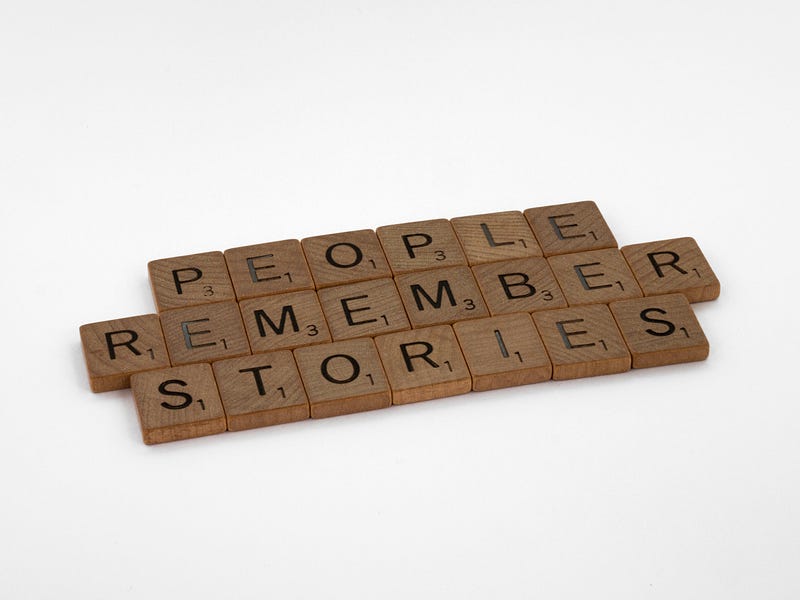
My partner has a fantastic memory. She remembers things that happened to her from decades ago with a fair bit of clarity. Generally speaking, she’s got a much better memory than I do. My memory sucks.
Honestly, I have very few memories beyond a few years ago. Pretty much my entire life from birth through about my early 30s is gone, with a few fragments here and there. Honestly, my memory of recent years isn’t that great either. So, when asked if I remember something, the answer is probably no.
I don’t know what causes that. It may be a symptom of my bipolar. It could be a side effect of trauma (although trauma is often something that encodes memories, it can do either). I could just be wired that way. I dunno.
“But Matthew,” you might say, “you tell stories from your past all the time! What gives?”
At this point, I acknowledge one thing about the stories that I tell: they’re stories. I have told them so much that I know the story by rote, even if I don’t actually have the memory anymore. Honestly, with almost all of my stories from the past, all I have is the story — the actual memory is gone.
And, considering that the story is all that’s left, I don’t even know how accurate it is. It’s like I’ve played a game of telephone with myself. Is the story representative of what actually happened? Or have I embellished it beyond all recognition? I wish I could tell you, but I don’t know.
There are a handful of memories that stick out to me. I remember telling my partner that I loved her for the first time. I remember proposing to her. I remember our wedding day.
I also remember feeling suicidal on the drive to my mother-in-law’s house. I remember my mother insulting my partner and her family in a restaurant, and I remember leaving in a huff. I remember holding my partner as I cried — once over my cat that had just died, once after said incident with my mother. I remember a float trip where my partner almost died.
As I said, trauma tends to encode memories pretty strongly.
On a happier note, I have two other bits where my memory works well. First off, I tend to get memories associated with music. They’re never much — more like an amalgam of feelings. Driving down the highway, blasting American Idiot by Green Day with a friend. Making anime music videos on my family’s iMac. Karaoke in a crappy, smoke-filled bar.
The other area where I have a good memory is when it comes to spatial awareness. I remember the layout of the room in high school where I had my anger management groups. I remember the smoke-filled karaoke bar. I remember the room that my parents built off the dining room where the computer was located.
I also remember directions well. Generally, if I’ve driven somewhere two or three times, I can get back there again without a map. When getting driving directions, I tend to look at the map once before I leave and then not looking again because I’ve encoded the directions. I’ve looked at directions and realized that, based on my past driving, I’d been near enough to get there that I could manage without the directions.
Honestly, I really like maps. Having an understanding of the layout of a place is oddly comforting to me, and maps can tell you a lot about a place.
Interestingly, my memory of these things has no visual component. I have aphantasia, which in a nutshell means that I do not have a visual brain and can’t get mental images. My “mind’s eye” is blind, so to speak. Rather, my spatial memory is based entirely on feel — just the general sense of where things are in a space. It’s like when you walk into a familiar room where it’s dark but you still know where everything is.
My navigation sense is similarly stunted by a lack of visuals, but I compensate by using landmarks and remembering how many streets before I turn. My driving directions tend to be along the lines of “get off at Exit 125, take the third right, drive until you see a McDonalds, turn left at the light, then make the second left.”
I’m horrible with street names as well — I can remember a handful of major street names in my area, but as far as my neighborhood goes, I navigate by feel. I’ve never understood how my father can remember every single street name in a five-mile radius of his house when I can barely remember the name of the only other street in my subdivision.
In an odd confluence of memories, I remember a customer at the grocery store I worked at asking for directions somewhere. I gave him some meandering directions that included something like “drive over the highway and turn right on the first street you see.” The customer asked the name of the street, to which I responded “I think it’s Gary? I don’t remember, but it’s a four-letter man’s name.” They were very confused. I hope they got there.
(The street was named “Dale,” so I was technically right.)
Sometimes, I envy people with good memory. There are probably many things that happened in my life that I would like to remember. On the other hand, with the vague, foggy memories and often-told stories I have, I tend to think everything before college was terrible and I’m better off not remembering it. Honestly, a lot of my college life was pretty questionable too.
Anyway, at this point in my life, I’m okay with what I’ve got. I’m so used to not remembering things that I don’t know any other way to live. Yes, I’ve got some traumatic memories, but I’ve also got some good ones — particularly with my partner. And you know what? I’m happy with that.
If you liked this, please subscribe to my publication, Thing a Day. I publish something every day on a variety of topics, so you never know what you’re going to see!
Here are some other things I’ve written:


