
I Don’t Know Where I Fit in As A Christian
Churches are devising doctrines, litmus tests and platforms that go beyond the teachings of Christ.
My partner and I were talking yesterday about the biggest differences the pandemic had made in our lives.
He mentioned not going out with friends, not going to restaurants and not traveling.
Those changes are real and valid, and I feel them, too. But they aren’t forever (hopefully). All pandemics come to an end. Life resumes. People will go to restaurants, meet with friends, travel again.
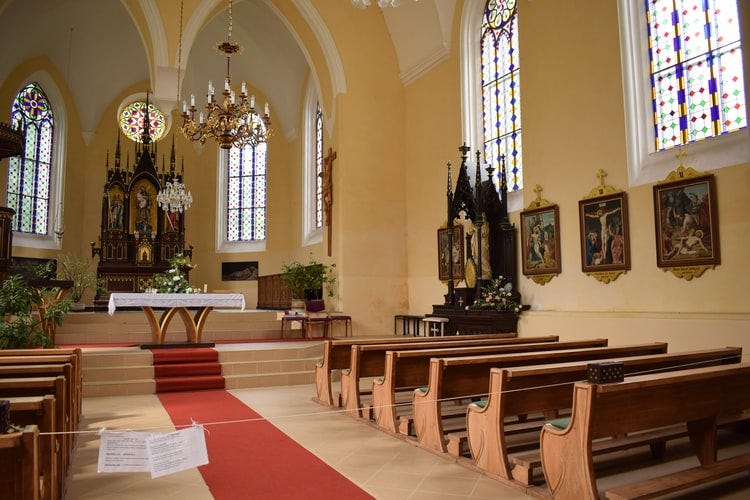
But the one significant way my life might not return to normal is in my relationship with the church. I haven’t been in almost a year, even though the church has made sporadic attempts at reopening. But attendance isn’t what I’m talking about.
Being away from church has given me more time and inclination to look into church policies, to hear online ministers from a wide variety of denominations, and to pay closer attention to how our church leaders and members have been responding to the pandemic, politics and other issues.
What I see is a church divided, with neither side representing my idea of what it means to live out a personal relationship with Christ in a diverse, politically divided and challenging world.
The Evangelicals
On one side, there are the church conservatives or evangelicals. They continue to maintain that Trump won the election, some even believing he will somehow magically be reinstated as president. Dare to criticize Trump, and it’s almost as if you have criticized Jesus Christ.
They believe, erroneously, that biblical and moral values can be legislated if the “right” political party is in power. This idea has been disproven over and over again, as seen in the failures of the Moral Majority and the Tea Party to make significant cultural changes through politics. People spearheading those movements believed Jesus was on their side because they believed they were on the right side.
The Progressive Christians
But there are also the Christian liberals, or progressives. These churchgoers and church leaders have vilified and hated Trump with a rabid hatred that goes against the tenets of the Christian faith.
Some doctrines and policies of more liberal churches sound like a political party platform rather than a way of drawing people toward a closer relationship with Christ and toward sacrifical service. And despite bibilical warnings against judgmentalism, advocates of these platforms are harshly judgmental.
I read an article in The United Methodist Insight, titled, “Bible believing Christians who aren’t Socialists are Liars.”
Really? Liars? This is painting with a broad brush, inferring that a person can’t be a Christian without being a socialist. I always thought being a Christian meant professing faith in Jesus, then expressing that faith through actions that flow from a transformed heart.
A person can be a socialist or a communist or a capitalist and still be a Bible believing Christian. How we live in response to faith is more of an indication of our beliefs than an affiliation with any particular economic or political system.
It seems churches are devising doctrines, litmus tests and platforms that go beyond the teachings of Christ.
Churches have never done well when they become involved in political movements. The Tea Party and Moral Majority are glaring examples. So is the division in mainstream churches over full participation of gays and women. These issues loom on the horizon, ready to become controversial again as soon as churches reconvene, the virus wanes, and church leaders are able to hold their endless, contentious conferences.
But what did Jesus have to say about the matter? “Come to me, all you who are heavy laden, and I will give you rest. Take my yoke upon you and learn from me, for I am gently and humble in heart, and you will find rest for your souls. For my yoke is easy and my burden is light.” (Matthew 11:28–30).
Jesus invites all of us into a faith relationship. He doesn’t issue a litmus test. We don’t have to belong to a certain political party, or believe a certain doctrine, or conform to what our bishops have decided is the appropriate way forward.
Another Eye Opener
Church closures during the pandemic have also been an eye opener about the weakness of church ties that I used to consider strong and significant. I dropped our of a small church group, which had gone to Zoom meetings and email updates. When this group considered reconvening in person, I responded with a note saying I wouldn’t be participating, because during this period of my life I am caring for my elderly mother, among other considerations.
I never received a response, either written or spoken, from anyone. Surely your friends would say, “How are you? How is your mother? We’ll miss you.” Maybe I was expecting too much, but I am evidently not the only one who has felt this church estrangement in the past year.
I read an interesting blog the other day. A minister had written to describe and categorize the people he believed would not return to church after the prolonged pandemic church closures.
According to this minister, people who won’t return fall into one of the following groups: the first group consists of those who have only been nominal Christians and are looking for any excuse to fall away; people who were C & E Christians (church jargon for people who only attend church on Christmas and Easter). They are Christians who discovered during the pandemic that they prefer to sleep in rather than go to church.
The second group, according to this minister, is made up of people who have always been hyper-critical of the church and have been looking for any excuse to fall away; those who have nothing better to do than criticize sermons or anything else they are dissatisfied with.
In other words, lazy, nominal Christians. Not true believers.
I don’t know if this minister expected wholesale agreement with his opinions, but he was deluged with comments from church members from all over the country, and their overwhelming response was that the church had failed them.
Many wrote to say they had not heard from anyone on the church staff or from any church members during long months of the pandemic. Many of them were isolated, separated from family and friends. They were formerly active members. This is only a sampling of the comments that poured in:
“I lost my job and no one reached out…”
“The only communication I received was how to continue giving online…”
“I have been active in church and will never return. My reason fits none of your categories.”
“You missed the biggest reason why many Christians won’t return to church. We are tired of dead, powerless, compromised seeker-friendly churches where the Holy Ghost is not welcome…”
The comments went on and on, causing me to wonder if the pastor who wrote the article will change his theories or readjust his categories.
What Next?
I am still a Jesus follower. And as a Jesus follower, I’m called to love, to serve, to forgive, and not to judge. Church is an arena for love and service, and Jesus cannot accomplish as much through the church if his followers are not there.
The church needs us, and we need the church. There is a certain renewal that comes from corporate worship. Christians meeting together feed the soul and the spirit in a way that watching a live-streamed service from my couch could never do.
Yet I have these issues; this disconnect.
For now, I don’t need to decide anything. I am still drifting in pandemic limbo, not inclined to attend church while Covid-19 numbers are escalating and while I am caring for my elderly mother.
But I am listening, and watching, and waiting, and, more importantly, praying. I want to be in community. I want to serve and worship. But I am not anxious to go back to the old ways. I am wondering, more than ever before, where I fit in as a Christian.