
I Didn’t Expect to Die That Day
But it felt alright.
(Content Warning: Suicide, post-natal depression)
In April 1976, I was in hospital recovering from the birth of my first child.
I was twenty-four and had been married for four years. My son’s arrival was the best experience I ever had. Pain, yes, but also euphoria. In those days, you were kept in hospital for a few days until your Ob/Gyn felt you were both okay to go home. Everything was perfect, and I felt desperate to leave and start raising my family.
On the third day, I woke to a man in the room, opening and closing my window. It was an old hospital in the middle of Sydney, refurbished it seemed, except for the windows, that pushed up to open wide. He shut them firmly and fiddled with the latches for a while. I fell asleep.
Later in the morning, a nurse brought my son to me.
As I fed him I wondered how I could have had such a beautiful child. The nurse sat with me, and I mentioned the man ‘fixing’ the windows.
She told me what had happened overnight. A new mother on a higher floor had thrown her baby out of the window and then jumped. The nurse was obviously shaken, and I immediately held my baby even closer.
It was my first brush with post-natal depression.
In February 1978, I was in the same hospital after the birth of my second child.
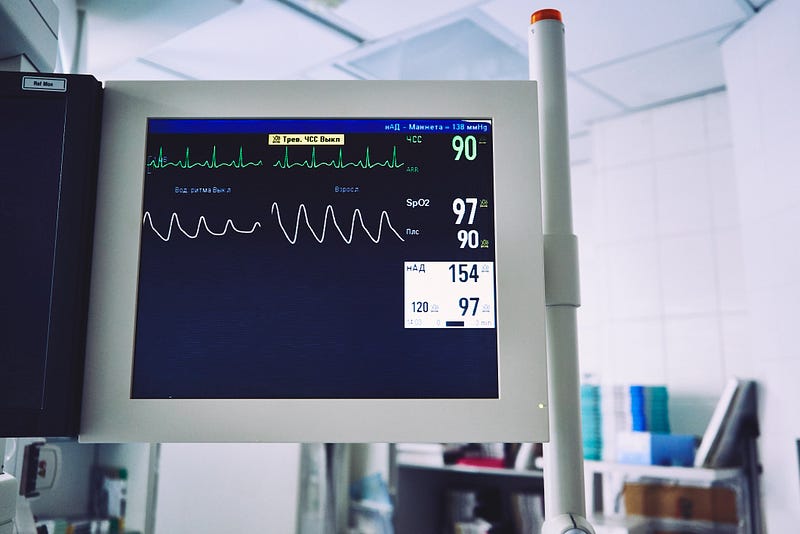
It was a very fraught Caesarian birth. I lost a dangerous amount of blood and was anaemic, but AIDS was rampant, and the doctor refused to risk a blood transfusion. He ordered an iron infusion instead, and it was set up next to my bed. The electronic monitor chirped happily as the infusion entered through my hand. And then disaster.
A burning heat surged through my body, and I had a terrible pain down my spine. I immediately screamed out to the assembled doctor and nurses looking on. The beep of the monitor slowed down, and I watched the continuously blipping line until I noticed the horror on the nurses’ faces.
Someone yelled, Get the crash cart, get the cart. I clearly remember thinking
I didn’t know I was going to die today, but it feels alright.
As a nurse ran out of the room to find a crash cart, I heard the monitor make that flatline noise you hear in television hospital dramas, and when the monitor stopped beeping altogether, everything went black.
The next thing I remember was feeling ice-cold and shivering violently.
A nurse was laying in the bed with me, under a half-dozen blankets, cuddling to help warm me up. It felt the way I remembered as a child, laying in my mother’s big bed, her warmth and closeness keeping me safe. After a while, I felt ‘normal’ again and was asked if I wanted a visitor.
My mother-in-law came into the room, and she was pale, with eyes as big as dinner plates. She looked so anxious. We didn’t get along but her compassion told me something big, and awful, must have had happened to me.
They told me you nearly died, she said, and burst into tears.
My daughter’s early years accompanied many random bouts of post-natal depression.
It may have been the traumatic birth, the near-death experience, or the delayed bonding period. I’ll never know because I never addressed it. I had, occasionally, reflected on the mother who threw her baby out the window and then jumped. I always felt ashamed and embarrassed when I compared my random periods of self-pitying sadness, with that poor mother’s utter, suicidal desperation.
I did not understand that all depression is valid and relevant.
That untreated depression, no matter the cause, robs you of hope and the chance to live a full and happy life. My unresolved post-natal depression interfered with my personal relationships and with my ability to function as a loving parent.
It was luck that I had, and still have, a fabulous mother on whom I could rest my depression when it became too heavy to carry. She had a wisdom that both understood me and saved me, and although it sounds trite and obvious in the telling, the following words spoken by the right person at the right moment can have a positive impact.
Her advice went something like this:
I know this time of your life is extremely hard, but it is the time when you are supposed to be doing this, to be who and what you are, where you are. Life has a time for everything, and now is that time to be this.
Soon it will change and it will be time for something else for you. And that might bring challenges, but it is supposed to be that way. And we can’t change it. We just have to go along and do the best we can to be happy. Do not throw your life away trying to avoid your time, or wishing it away. Just accept it and live it, one day at a time.
My daughter and I got through the worst times of our relationship and now we could not be any closer. I have passed my mother’s philosophy on to anyone that seems in need of it, and we will celebrate her ninety-sixth birthday next Sunday.
Get professional help for any form of depression.
Of course, the first best response to any form of depression is to seek professional help, and here are some useful links if you live in Australia.


