
I Did an Experiment on Twitter with Viral Results
I’ve been on Twitter for many years now, with the most active being since 2019. During that time, I’ve learned a lot about engagement — what works and what doesn’t. A few days ago, I decided to run a little experiment to see how well I understood the nature of the beast. Keep reading to find out what I did and how my results went viral.
Prior to the start of this experiment I was floating just below 20k followers. I had amassed these followers through regular and organic interaction with other writers, most especially those using the hashtag #WritingCommunity. It took time and effort to get there, but that’s really a topic for another article.
The Experiment
As a self-published author, I’ve realized over time that people on Twitter pretty much ignore any and all sales pitches of books. You’ll see threads of people claiming they are looking for books, but they’re really just seeking engagement. Those tweets get a lot of responses but no sales for the authors. Again, this is a topic for another article, but this knowledge is required to set up my experiment.
Every time I tweet about my book, it’s crickets. I have that many followers but engagement on my books is so low, you’d think I only had 10 followers. The tweets with the highest engagement are either selfies of me or questions I ask that elicit a response from those scrolling by.
I decided to run an experiment to prove this phenomenon once and for all. I would tweet two different types of tweets in the same day and gauge their engagement.
I used Tuesday, a fairly active twitter day. Everyone has gotten over the craziness of Monday but they’re not quite in the looking-for-the-weekend-mode. I decided to post them at two different times of the day, both of which are considered to be active times. One in the morning and one in the early afternoon (when people are bored at work or on their break).
The Tweets
The morning tweet was a pitch for my novel Her Heart in Chains.
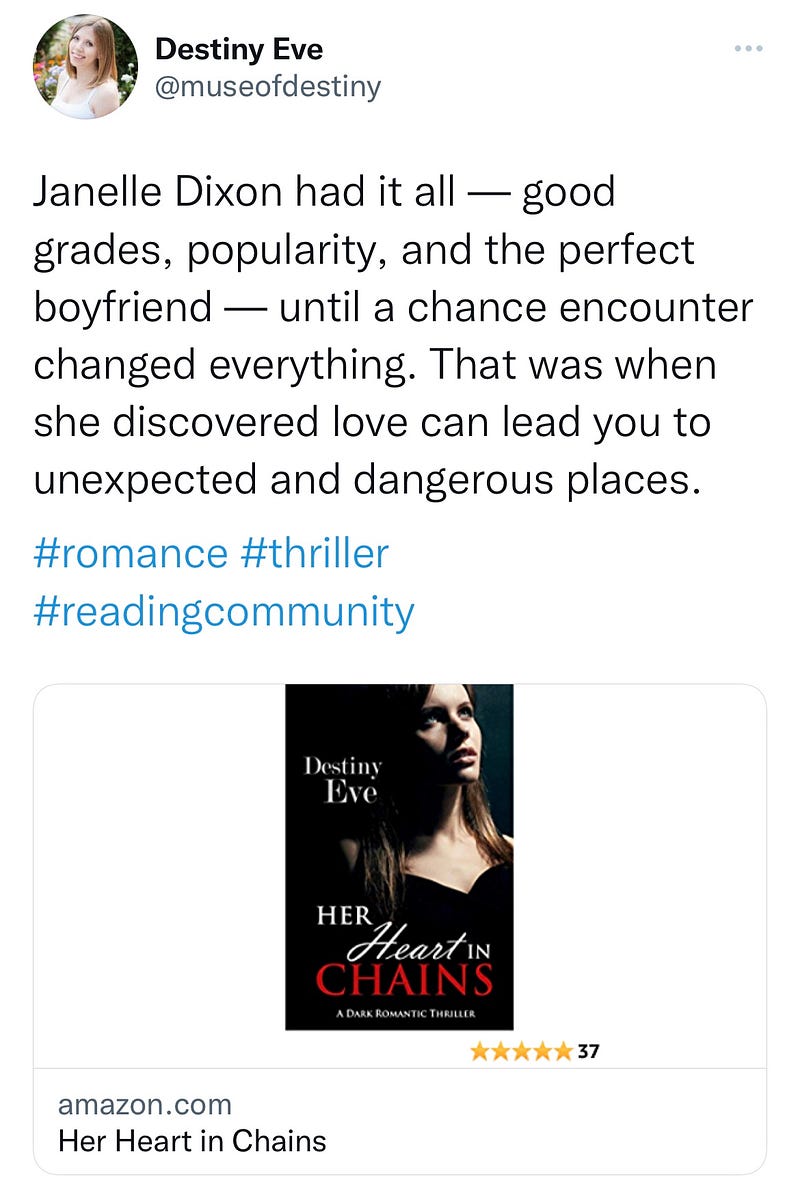
I’ve used the same pitch before, and I’ve used many others, including some sourcing the very positive reviews I’ve received. They all get the same results. A like or two, maybe a comment or a friendly retweet from a supportive friend. Zero sales. Very low interaction.
The afternoon tweet was an incredibly random, pulled out of my ass kind of tweet. The key to this tweet was that it was a question that would make people want to answer.
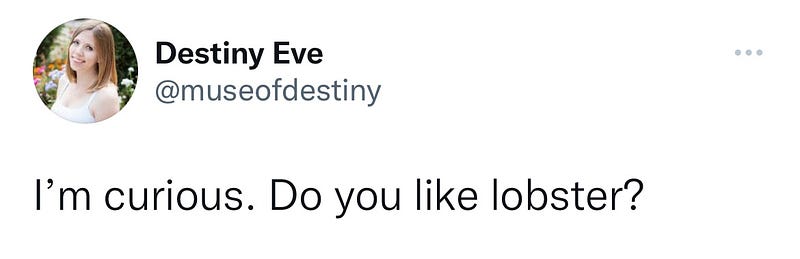
That’s it. Nothing profound or earth-shattering. Just a random question.
The Results
One of these two tweets went viral. I’m sure it didn’t take you long to figure out which one.
I’ve had some pretty high engagement in the past with similar answer-provoking tweets. None of them came close to what occurred with the lobster tweet. As of this writing, I am still getting engagement on that tweet. It’s been three days. That’s ancient in Twitter terms where everything is “here and now.”
The lobster tweet has been seen a whopping 224,000 times. It currently has 2,789 Comments, 3,700 Likes, and 294 Retweets. Two thousand people viewed my profile and I gained approximately 200 new followers because of it.
How about my book tweet? Total impressions were 643. It received 5 retweets and 5 likes. That’s it. And one of each of those was my fiancé.
Conclusion
There’s great camaraderie amongst the writers of Twitter but this experience (and my years on the app) has taught me that it’s not the best platform for selling books. I’ve heard many authors have better success on Instagram and TikTok. I can’t speak for these avenues myself as I haven’t really done much marketing on either of them. All I know is the Twitter algorithm and the nature of the social media’s users are not conducive to selling books. However, if you want to tweet about random stuff and connect with like-minded individuals, it’s the perfect place to be!