I Created An AI Album And Got 38,562 Streams on Spotify and YouTube
Results from my two-year experiment with Boomy
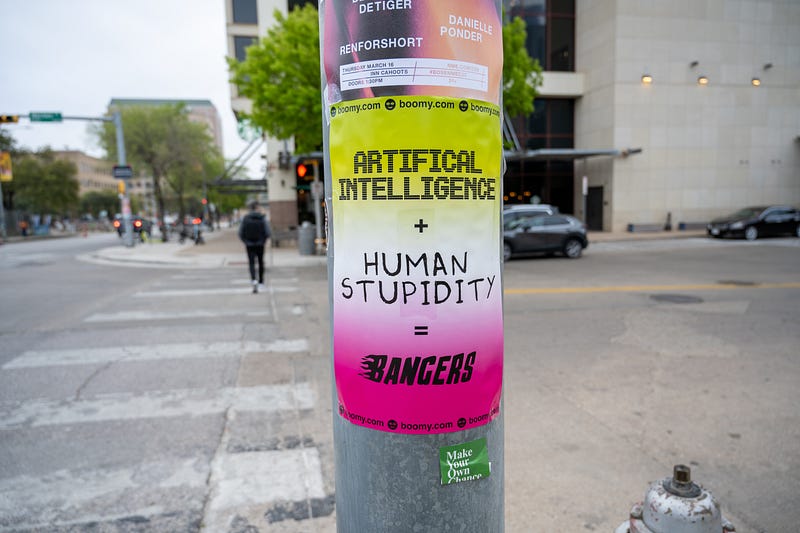
Have you ever dreamed of getting your music onto Spotify? Maybe you thought about starting a band in your garage, recording a hit single, and soaring to the top of the charts?
AI might soon make that process a lot easier. I’m now officially an artist with tens of thousands of streams on YouTube Music and Spotify. But getting there didn’t require using my mad ukulele skills, or actually any musical talent at all.
Instead, all I had to do was push a button and let AI do the rest.
That’s because over the past two years, I’ve been testing the AI music generation platform Boomy. Boomy lets you automatically generate a nearly limitless number of songs and post them on leading platforms like Spotify and YouTube Music.
Since I started my experiment in 2021, my AI-generated songs have received a total of 38,562 streams. Here’s a look at the world of AI music generation — and some specific data on how much Boomy paid me for over 30,000 streams.
How Boomy Works
I originally discovered Boomy when I was researching interesting tools for AI creation. The service specifically advertises itself as a way for people to “create original songs in seconds”, even if they’ve “never made music before.”
I signed up for an account and subscribed to their paid plan for several months, which cost $9.99 per month (there’s a Free tier, too).
Creating a song on Boomy is incredibly easy. You begin by selecting the style of the song you’d like to generate. Boomy skews towards electronic music and new-agey songs. You won’t be using it to compose a folk hit or a classical piece. Styles include rap, beats, EDM, meditative music, and more. It also has a “global groove” category that lets you mimic popular styles like reggae.
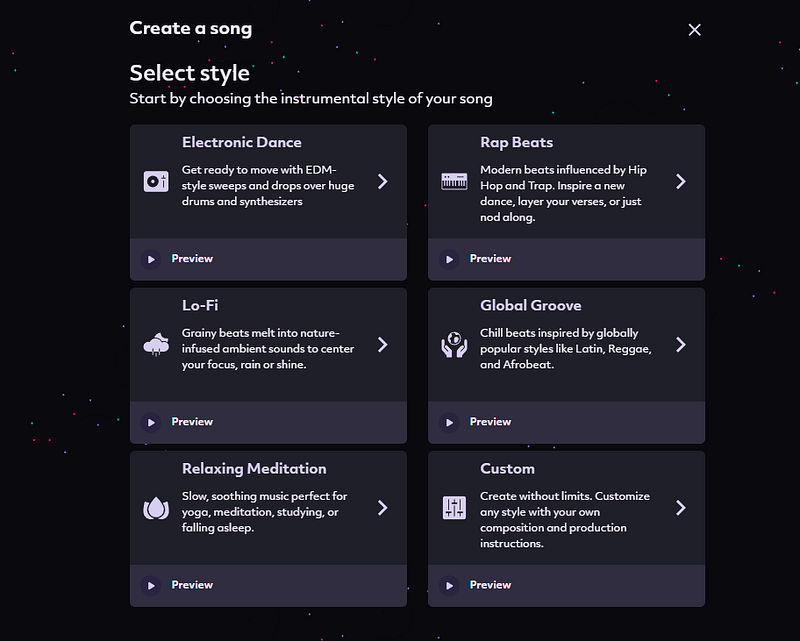
After selecting a musical style, you dial in different parameters for your targeted song. You can choose whether you want a pulsing beat, ambient background music, natural sounds, or more. When you’ve got your settings how you’d like them, you press the “Create a Song” button.
In less than a minute, Boomy uses its AI tech to churn out an original song in the style you selected. You can listen to your new masterpiece and decide if you like it or not.
I found that a lot of Boomy’s songs had weird noises that felt like they didn’t fit with the rest of the beat, and I would skip those. You can hit the create button as many times as you want, listening to the songs Boomy dreams up until you find one that you like.
Once you’ve decided you like a song, you can give it a title, add it to a virtual album, and then prepare it for release.
Boomy lets you name your album and even allows you to create custom album art using photos that it pulls from Unsplash. When your album is ready, you press another button, and Boomy publishes it to Spotify and other streaming platforms.
In a day or two, your songs are on the platform and ready for people to listen.
My Experiment with Boomy
I have used sites like CD Baby to publish actual songs to Spotify before, and the process is time-consuming and expensive. To release a single, you pay about $10. That’s why it seemed really cool to me that Boomy could release massive quantities of music on Spotify and other platforms almost for free, and even help to monetize the songs.
From my conversations with my friend Matt Farley at Motern Media, I know that there is a lot of money to be made in essentially applying SEO to Spotify.
Matt makes a living by writing original songs the traditional way and targeting things that people put into Spotify search. For example, he has hundreds of songs about poop, which are wildly popular, mostly because kids love to search for “poop” on Spotify and YouTube.
In testing Boomy, I thought about what kinds of searches might lead users to the songs that Boomy is good at generating. I realized early on that Boomy is a master at creating the kind of new-age background music you hear in a spa.
Nondescript piano playing, weird interludes of gongs, and vaguely mysterious sitar-esque twanging are all things it excels in creating.
For that reason, I decided to create songs that would be useful as background music. I often listen to this kind of music when I code, so I decided to target the niche of software developers looking for background music that wouldn’t interrupt their programming flow.
To try to get some play on my songs, I decided to be as specific as possible. Using Boomy’s relaxing meditation category, I created a variety of relaxing background songs and gave them highly specific, nerdy titles.
This was back in 2021, when crypto was still all the rage. Many of my songs thus have titles like “Background Music for Bitcoin People” or “Maybe I Should Buy Cardano?”
I also created more pragmatic songs with titles like “Background Music for Python Coding.”
I tried to listen to each song Boomy created and then think about what kind of tasks it would be good to accompany. I then titled the song based on those tasks, or gave it an obscure joke name that would be meaningful to coders.
I organized my AI-generated music into several album releases and let Boomy publish them to Spotify, YouTube, and other places under the artist name Coder Ambients. I then let them sit for almost two years to see how they would do.
The Results of My Boomy Experiment
As of today, my songs on Boomy have received 38,562 streams. The majority of the streams appear to be happening on YouTube.
The vast majority of my streams are coming from my “Background Music for Python Coding” album. Amazingly, the album is picking up about 10 to 70 streams per day on YouTube, even though I’ve done nothing with it for two years, and I’ve done zero promotion.
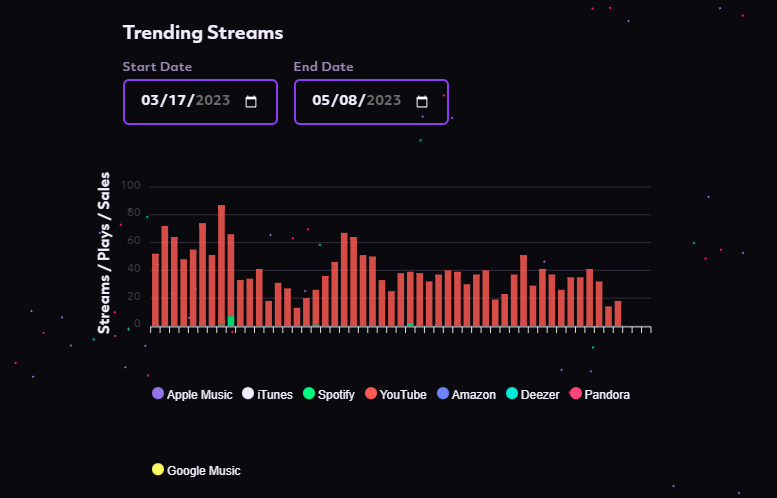
A lot of artists would probably be thrilled to see that their songs were getting thousands of streams per month. It’s amazing, and kind of terrifying, to know that you can achieve that level of listenership using AI.
The popularity of the songs is likely less a testament to the musical quality than to my SEO strategy. “Background Music for Python Coding” is likely a popular enough search term that a certain number of Python developers stumble on my songs just from entering that term into YouTube each day.
So how much have I made from this musical success? To date, Boomy has paid me $12.47 for my streams. I definitely won’t be retiring on my music royalties anytime soon! But still, it’s pretty cool to see my AI musical creations getting some love and some actual playtime on YouTube.
The Future of AI Music
I learned several things from my experiments with AI music generation on Boomy. Firstly, it’s clear that AI will quickly take over the task of generating deliberately nondescript, generic music.
Boomy certainly can’t write an amazing classical piece or even a hit pop tune. But it can certainly bang some virtual gongs with the best of them!
For things like yoga music, or background music for meditation, it does an awesome job. Anyone who puts real-life time and effort into creating this kind of music should be ready for the fact that AI could easily steal their thunder in the very short term. Elevator music creators, beware!
My experiment also made it clear to me that, unless you’re Taylor Swift and have a dedicated following already, search traffic is a big driver of musical popularity.
My Boomy songs probably got streams only because they fit with the highly pragmatic need of a super niche audience, and their titles incorporated a popular search term with low competition. Most actual artists probably wouldn’t be happy turning out endless background songs for coders. But any creator or artist can learn from the lesson that, in today’s digital streaming world, song titles and searchability matter.
My experiment also demonstrated how broken compensation models in music streaming are. For an actual musician, getting a stadium’s worth of people to listen to their songs would be a major accomplishment. But for all that effort, they end up with less than 15 bucks.
Unless you’re a superstar in the top 1% of musicians, you’re probably not going to make any money from music streaming, whether you generate your songs with AI or not.
Overall, I doubt that Spotify and YouTube will be taken over by Boomy-generated music. Boomy says that its creators have generated over 14 million songs, or about 13% of the world’s recorded music. I doubt most of those songs get any streams, though.
Spotify is also reportedly cracking down on AI-generated music, and has already culled millions of Boomy songs from its service.
Still, despite those caveats, I do see a few compelling use cases for Boomy’s tech.
Video creators often want to include background music in their videos. Licensing that music, however, can get expensive. You can buy royalty-free collections of music, but then you end up using the same handful of songs as everybody else.
Boomy is neat because it allows you to generate a potentially limitless number of original background songs. If you’re the kind of creator who needs a lot of background music, subscribing to Boomy and creating your own background tracks could be very worthwhile.
I’ve also heard of artists using Boomy as a jumping-off point for musical inspiration. Rappers reportedly use the tracks to get inspiration for new beats, which they can use their human intuition to modify and improve. It’s a bit like the musical equivalent of asking ChatGPT to write an article on a topic and then mining its output for useful ideas that you can work into a human-written blog post.
I doubt that I will be creating any more AI music on Boomy in the near term. It’s a lot more fun to play real music in the real world. But if you need royalty-free background music, want to experiment with AI music generation, or just want the vanity factor of having something you created stream on Spotify, you should definitely check Boomy out.
Their free tier makes it easy to get started, and for a little more, you get broader distribution and the rights to download your songs.
If you enjoy the process of creating songs, though, maybe think about buying a real instrument and learning to create something that takes a bit more effort than pressing a big blue button.
I’ve tested thousands of ChatGPT prompts over the last year. As a full-time creator, there are a handful I come back to every day. I compiled them into a free guide, 7 Enormously Useful ChatGPT Prompts For Creators. Grab your copy today!