avatarTimothy Ugbaja

Free AI web copilot to create summaries, insights and extended knowledge, download it at here

2704

Abstract

s-string">'http://vault:8200'</span>) client.auth_approle(<span class="hljs-string">'my-app'</span>, <span class="hljs-string">'my-app-role-id'</span>, <span class="hljs-string">'my-app-secret-id'</span>)

<span class="hljs-comment"># Read a secret</span> secret = client.read(<span class="hljs-string">'secret/my-app'</span>)

<span class="hljs-comment"># Access the secret value</span> db_password = secret[<span class="hljs-string">'data'</span>][<span class="hljs-string">'db_password'</span>]</pre></div><p id="470d">In a project, our microservices required access to a database. Storing the database credentials in HashiCorp Vault ensures they are well protected. Our services authenticated to Vault and retrieved secrets as needed. It’s akin to locking away your most valuable treasures in a vault protected by layers of security.</p><h2 id="94a1">3. Network Segmentation: Guarding the Castle Gates</h2><p id="485b">Network segmentation is essential to control communication in your microservices architecture. Kubernetes Network Policies were the answer. Here’s a real-world scenario:</p><div id="e4a7"><pre><span class="hljs-attr">apiVersion:</span> <span class="hljs-string">networking.k8s.io/v1</span> <span class="hljs-attr">kind:</span> <span class="hljs-string">NetworkPolicy</span> <span class="hljs-attr">metadata:</span> <span class="hljs-attr">name:</span> <span class="hljs-string">allow-db</span> <span class="hljs-attr">spec:</span> <span class="hljs-attr">podSelector:</span> <span class="hljs-attr">matchLabels:</span> <span class="hljs-attr">app:</span> <span class="hljs-string">database</span> <span class="hljs-attr">ingress:</span> <span class="hljs-bullet">-</span> <span class="hljs-attr">from:</span> <span class="hljs-bullet">-</span> <span class="hljs-attr">podSelector:</span> <span class="hljs-attr">matchLabels:</span> <span class="hljs-attr">app:</span> <span class="hljs-string">web</span></pre></div><p id="75c1">In a sprawling microservices environment, we wanted to ensure that only authorized services could access our database service. Implementing network policies like the one I’ve shown limited access to the database service to only those services that needed it. It’s like having guards at the gate, allowing only trusted visitors into your castle.</p><h2 id="0f0b">4. Secure Communication: Encrypting Messages</h2><p id="7273">Secure communication through HTTPS was a must. Nginx served as our sentinel, ensuring encrypted communication. Here’s a personal scenario:</p><div id="3ec2"><pre>server { listen 443 ssl; server_name your-service.com;

ssl_certificate /etc/nginx/ssl/your-service.crt;

Options

ssl_certificate_key /etc/nginx/ssl/your-service.key;

location / {
    proxy_pass http://your-service:80;
}

}</pre></div><p id="2024">We had a web application deployed using containers. By configuring Nginx to use SSL certificates, we encrypted traffic between clients and our application, ensuring data privacy. It’s like sending secret messages in a locked box, where only the intended recipient can access the information.</p><h2 id="2232">5. Authentication and Authorization: Granting Access Keys</h2><p id="f4b8">Lastly, we addressed authentication and authorization using JWT (JSON Web Tokens) for authentication and role-based access control (RBAC) for authorization. Here’s how these came into play:</p><div id="0632"><pre><span class="hljs-keyword">const</span> <span class="hljs-variable constant_">jwt</span> = <span class="hljs-keyword">require</span>(<span class="hljs-string">'jsonwebtoken'</span>);

<span class="hljs-comment">// Generate a JWT token</span> <span class="hljs-keyword">const</span> <span class="hljs-variable constant_">token</span> = jwt.<span class="hljs-title function_ invoke__">sign</span>({ <span class="hljs-attr">user</span>: <span class="hljs-string">'john.doe'</span> }, <span class="hljs-string">'your-secret-key'</span>, { <span class="hljs-attr">expiresIn</span>: <span class="hljs-string">'1h'</span> });</pre></div><p id="2ef8">In an API gateway project, we used JWT for authentication. Clients could securely access our microservices, and RBAC controlled what specific users or roles could do within these services. It’s like granting access keys to trusted individuals and providing them access only to the areas they are authorized to enter.</p><p id="1d34">My journey to develop this comprehensive security framework has been both challenging and rewarding. As I’ve shared my experiences and insights, I hope you can see the importance of each aspect in securing microservices in containers. In the ever-evolving landscape of IT, staying ahead and adapting to new technologies and security practices is vital. And, as a tutor and mentor, I’m excited to pass on this knowledge to my students, helping them navigate the fascinating world of microservices and containerization securely.</p><p id="2409">Remember, the world of technology never stands still. Embrace the journey of learning and discovery, and keep fortifying your knowledge and skills.</p><div id="1069"><pre>Want to connect? https:<span class="hljs-comment">//www.linkedin.com/in/timothy-ugbaja-acfellow-osl-006b111a/</span> Contact me <span class="hljs-keyword">if</span> you have any issue <span class="hljs-keyword">for</span> further assistance.</pre></div></article></body>

I Crafted a Robust Security Framework for Microservices in Containers

A Personal Journey in Securing Modern Applications

As a seasoned IT professional with more than two decades of experience, my journey in the IT world has been marked by a continuous exploration of the immense potential of artificial intelligence (AI). Alongside AI, I’ve delved into the development of innovative machine learning algorithms and the creation of intelligent systems that enhance and optimize business processes. My track record in deploying AI solutions spans across diverse industries.

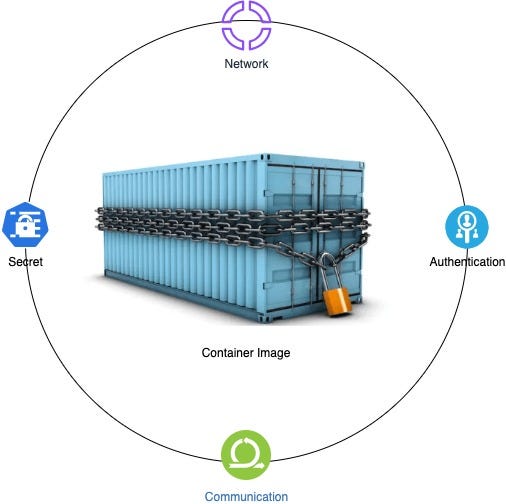
One of my passions lies in solution architecture, where I leverage my in-depth knowledge of various technologies to design holistic and efficient solutions that cater to specific business needs. However, the fast-evolving landscape of technology requires staying updated with the latest advancements. In this article, I’ll take you through a personal journey I embarked on to develop a comprehensive security framework for microservices deployed in containers. This framework is crucial to ensure the security of modern applications.

1. Container Image Security: Building the Fortified Foundations

My journey begins with container image security. To ensure that container images are built securely and free from vulnerabilities, I turned to multi-stage Dockerfiles. Here’s an example of how it works:

# Stage 1: Build your application
FROM golang:1.16 AS builder
WORKDIR /app
COPY . .
RUN go build -o myapp

# Stage 2: Create a minimal container
FROM alpine:3.14
COPY --from=builder /app/myapp /myapp
CMD ["/myapp"]

In this scenario, imagine you have a Go application. By using a multi-stage Dockerfile, you ensure that only the necessary files are included in the final image, reducing its attack surface. It’s like building a fortress with only the essential defenses, leaving no room for unnecessary vulnerabilities.

2. Secrets Management: Safeguarding the Crown Jewels

Securing secrets is of paramount importance. For this, I turned to HashiCorp Vault, a trusted tool in the field. Here’s a personal scenario:

import hvac

# Initialize the Vault client
client = hvac.Client(url='http://vault:8200')
client.auth_approle('my-app', 'my-app-role-id', 'my-app-secret-id')

# Read a secret
secret = client.read('secret/my-app')

# Access the secret value
db_password = secret['data']['db_password']

In a project, our microservices required access to a database. Storing the database credentials in HashiCorp Vault ensures they are well protected. Our services authenticated to Vault and retrieved secrets as needed. It’s akin to locking away your most valuable treasures in a vault protected by layers of security.

3. Network Segmentation: Guarding the Castle Gates

Network segmentation is essential to control communication in your microservices architecture. Kubernetes Network Policies were the answer. Here’s a real-world scenario:

apiVersion: networking.k8s.io/v1
kind: NetworkPolicy
metadata:
  name: allow-db
spec:
  podSelector:
    matchLabels:
      app: database
  ingress:
    - from:
      - podSelector:
          matchLabels:
            app: web

In a sprawling microservices environment, we wanted to ensure that only authorized services could access our database service. Implementing network policies like the one I’ve shown limited access to the database service to only those services that needed it. It’s like having guards at the gate, allowing only trusted visitors into your castle.

4. Secure Communication: Encrypting Messages

Secure communication through HTTPS was a must. Nginx served as our sentinel, ensuring encrypted communication. Here’s a personal scenario:

server {
    listen 443 ssl;
    server_name your-service.com;

    ssl_certificate /etc/nginx/ssl/your-service.crt;
    ssl_certificate_key /etc/nginx/ssl/your-service.key;

    location / {
        proxy_pass http://your-service:80;
    }
}

We had a web application deployed using containers. By configuring Nginx to use SSL certificates, we encrypted traffic between clients and our application, ensuring data privacy. It’s like sending secret messages in a locked box, where only the intended recipient can access the information.

5. Authentication and Authorization: Granting Access Keys

Lastly, we addressed authentication and authorization using JWT (JSON Web Tokens) for authentication and role-based access control (RBAC) for authorization. Here’s how these came into play:

const jwt = require('jsonwebtoken');

// Generate a JWT token
const token = jwt.sign({ user: 'john.doe' }, 'your-secret-key', { expiresIn: '1h' });

In an API gateway project, we used JWT for authentication. Clients could securely access our microservices, and RBAC controlled what specific users or roles could do within these services. It’s like granting access keys to trusted individuals and providing them access only to the areas they are authorized to enter.

My journey to develop this comprehensive security framework has been both challenging and rewarding. As I’ve shared my experiences and insights, I hope you can see the importance of each aspect in securing microservices in containers. In the ever-evolving landscape of IT, staying ahead and adapting to new technologies and security practices is vital. And, as a tutor and mentor, I’m excited to pass on this knowledge to my students, helping them navigate the fascinating world of microservices and containerization securely.

Remember, the world of technology never stands still. Embrace the journey of learning and discovery, and keep fortifying your knowledge and skills.

Want to connect?
https://www.linkedin.com/in/timothy-ugbaja-acfellow-osl-006b111a/
Contact me if you have any issue for further assistance.
Programming
Technology
Software Development
Software Engineering
Cybersecurity
Recommended from ReadMedium