
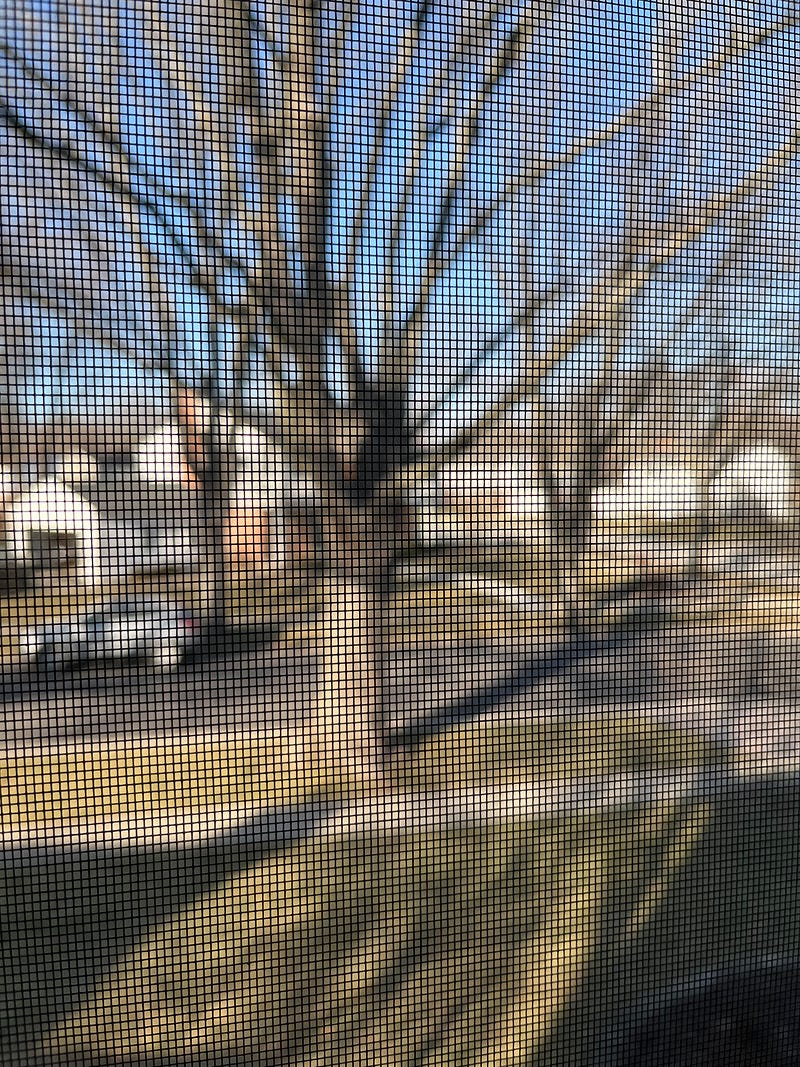
I Counted Twelve Main Branches on the Maple Tree in My Front Yard
I’ve lived in my house for over thirty years, yet can’t tell you how many stairs there are to the second floor
Sir Arthur Conan Doyle’s great fictitious detective, Sherlock Holmes, once chided his friend and colleague, Doctor Watson, “You see, but you do not observe.”
Artist Georgia O’Keeffe is known for her breathtaking depictions of flowers. She painted them in a unique way because she looked at them uniquely. Okeeffe once said, “Nobody sees a flower, really.” To see takes time.
When we pause and see what’s around us, it broadens our awareness and enriches our lives, says inspirational speaker and podcaster Jay Shetty. “Observation can help us see the world around us through a beautiful new lens.”
Today, when we see something of particular interest or beauty, many of us reach for our smartphones, capture an image, and then move on. We might return to it later and post it on Instagram or Facebook.
What did people do before smartphones or cameras? Some would pull out a sketchpad and draw. People would take entire sketching trips. Drawing or painting doesn’t only preserve a scene for the future. It enables us to see the object differently.
We see the subject in the moment. Mastering our power of observation should be practiced more — it takes practice to master. We are all artists. When we take time for close observation, we have the eyes of an artist when we allow ourselves to become engrossed in the intricacies — delighted by the details.
Ideally, this should be an approach to everyday life. Shetty explains that instead of a simple flower, we might see a petal curved like a cello. Rather than seeing a solitary leaf floating downstream, you might spy a stowaway beetle getting a ride down the river.
Instead of seeing a maple tree out your front window, you might notice how many branches spread outward from its main trunk and the roughness and unusual patterns of the bark.
We can do more than merely notice things. We can engage with them, interact with them, and experience them. This kind of connection inspires awe and wonder. It underscores the magic that we take for granted all around us.
Science supports the benefits of taking this closer observation. Researchers discovered that practicing keen observation helps our mental acuity. Creating art can be better at keeping our brains sharp than games like Sudoku.
We become more mindful and present when we slow down and digest the details. We can’t always stop to study every creature or interesting cloud formation, but we can keep this insight in mind. We can also be more aware when an opportunity for observation presents itself, and then we can switch our lens.
Let your vision linger and your mind expand. Stop now and take a closer look at something around you. You may have a tree outside your window or a picture on your wall. It could even be your fingernail. Try to see it differently. Get up close and personal with it.
Examine shapes, patterns, colors, and textures. Become aware of something you never noticed before. Continue honing your powers of observation.
Develop your artist’s eye. Become more perceptive as you move through life. Mindfully observe your surroundings. Begin carrying a metaphorical sketchpad.
Explore. Engage. Interact. Experience.