
I Couldn’t Do What My Children Are Doing
A Baby Boomer’s Take on Gen Xers and Millennials
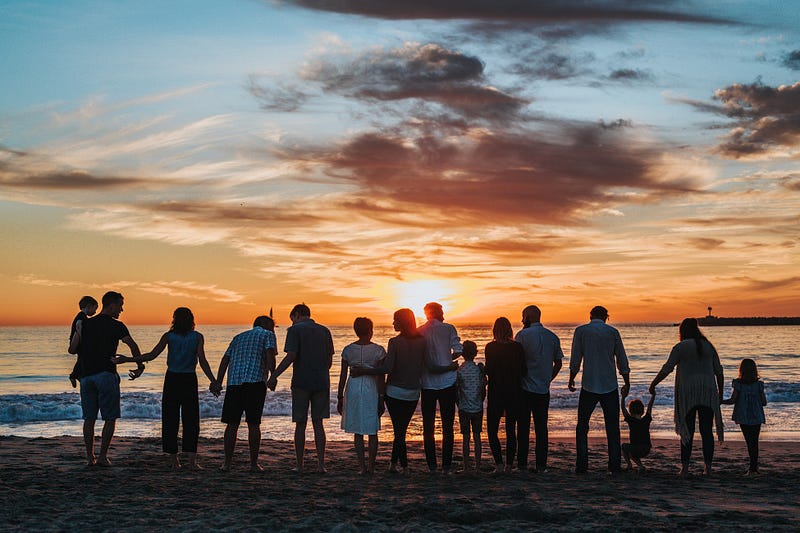
I have three children, 12 grandchildren, and I couldn’t do what my children are doing.
Let me explain, starting with the oldest. She’s a Gen Xer, lives on a farm, has a goatherd, an organic vegetable garden and almost all her family’s food is homegrown or home raised. They never eat out, she makes everything, even taco shells, “from scratch,” and she has baked wedding cakes for other people’s weddings.
Where did she get this from? Farming and baking wedding cakes? Not from my genes.
My idea of a good meal is one I don’t have to cook. And don’t get me started on cakes! My daughter will never forget the birthday cake I made for her 12th birthday party sleepover. It resembled a flattened version of a Hungry Jack pancake, and what’s worse, I had forgotten to buy candles. I ended up impaling the flat cake with a candle I grabbed from a decorative candelabra.
My three children, much as I adored them, made me feel like I was on a nonstop treadmill from the time they got up (early) until the time they went to bed (late). One of the best days of my life was when the youngest started first grade. I remember walking back to my empty house after seeing him off to school and shouting, Yippee!”
Three kids were a time-consuming handful, and sending them to school was a respite from the commotion.
My daughter, on the other hand, has five children; two biological, two adopted, and a teenager she has fostered for three years. And she homeschools them. There is no returning to an empty house and shouting Yippee because the house is never empty.
My own brief stint with adding children to our already tumultuous household occurred when my daughter was a teenager. I volunteered with a women’s outreach ministry, and as part of my work with that organization, I offered to take care of two preschoolers for a week. Their single mother was expecting her third child and the pregnancy was difficult. She needed complete bed rest.
By Day Three, I called the organization and pleaded, “Can somebody else take these two?” The toddlers had kept me up all night, unbuckled their car seats and careened around the car as we were hurtling down the highway, and gotten into a kick fight over who would sleep on which side of the Queen-size bed.
“No, there is no one else available,” came the curt reply. “You said you would keep them for a week.” And I did, but I was never more grateful for anything than the day I took them home. So my daughter’s decision to bring three extra children into the family amazes me.
But let’s move on to my second and third children, who are Millennials. My middle son has four children, one of them severely autistic. Their family can’t go on the sort of vacations we took with our children. They seldom go on a vacation at all, because of the difficulty of traveling with a nonverbal autistic teenager who is prone to wander.
Yet my son remains cheerful and upbeat. He started his own company and works hard to support their family of six. He cooks many of the family’s meals, planted a garden with his kids, and helped them build a bridge across the creek at the edge of his yard.
He leads a men’s group, their focus being on building strong family relationships and good character. It isn’t a political or religious group. As he explained it to me, they are men who need mentoring, support and encouragement to be the best people they can be.
My youngest son, who got a rocky start in the job market and in marriage, had to regroup after a layoff and a divorce. But he called on inner strength and determination to weather this part of his life, and now he is happily married with three children, a Ph.D., and work he loves.
Their children are lively, and their house veers more toward pandemonium than peace, so you can imagine my surprise when he and his wife told me they were planning to adopt one or two more children, siblings if possible.
“Aren’t three enough?” I wanted to blurt, but that sounded unsupportive, so instead I said, “What made you decide to adopt?”
“I’ve always wanted to give an unloved child a home,” my daughter-in-law said. “It’s been a dream of mine.” She went on to answer my other questions. Yes, the process was expensive. Yes, more children would introduce more chaos into the house. And yes, both she and my son were on board with the plan. They wanted to do something to make the world a better place.
I have to admit, I admire them. But I also have to admit that I will most likely stay in a motel when I visit them. With three children so capable of creating chaos, I can only imagine what four or five will be like.
Where did my children acquire this generosity of spirit; this desire to do more in the world than make money or live comfortably; this cheerfulness and perseverance in the face of adversity?
I would like to say they got it from me, but I have never dealt with a special-needs child, lived a life where vacations were impossible, or adopted a child because I wanted to give another human being a better shot at having a decent life.
I tried to teach my children love, faith, and the courage to follow their dreams, but how that played out in their lives was up to them.
And I have to say, I’m proud of them. When people of my generation, the Baby Boomers, disparage Gen Xers or Millennials, I am compelled to disagree. They are hardworking and idealistic, good parents and passionate about pursuing their goals. They want to make the world a better place, and I hope they succeed. They have my support, my love, and my admiration.