
I Can’t Feel My Fingers!
The Chilling Effects of Raynaud’s Syndrome
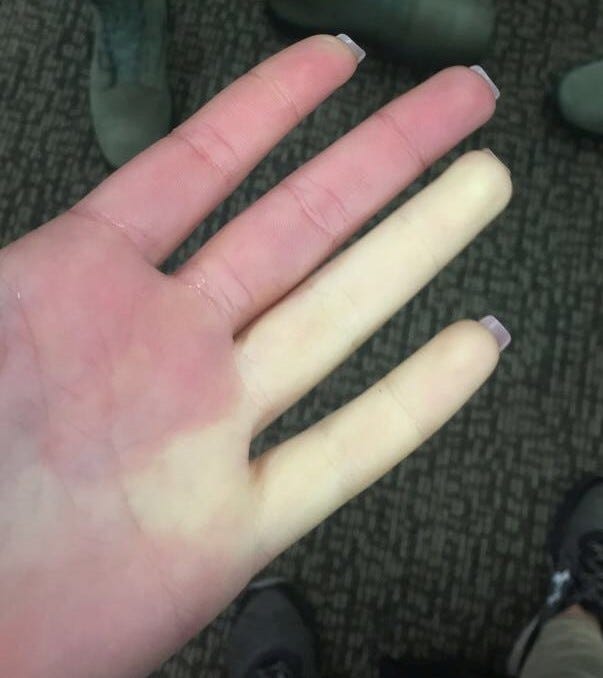

This week’s relentless rain and gloomy skies have left many of us yearning for summer’s warmth. While the cold weather is enough to affect anyone’s mood, for some of us, it also brings about a peculiar and unsettling physical reaction – the inability to feel our fingers or toes. This phenomenon is known as Raynaud’s syndrome, a condition that causes the blood vessels in the extremities to overreact to cold or stress by constricting excessively.
As someone who suffers from Raynaud’s I totally identify mysef as #TeamSummer, I experienced one of these alarming episodes firsthand just yesterday. Braving the pouring rain to walk my husky (who would surely never let me live it down if I didn’t), I returned home to find my fingers had turned ghostly white and completely numb. No amount of glove-wearing could revive the life back into my dead fingers.
It was only after submerging my hand in hot water for an extended period that color and feeling gradually returned. This wasn’t my first brush with Raynaud’s either – I had previously consulted a rheumatologist about these bizarre incidents, leading to an official diagnosis.
So what exactly is this disorder that can render one’s our extremities virtually unrecognizable?
This phenomenon was named after the French physician Maurice Raynaud, who first characterized it in 1862, Raynaud’s syndrome is classified as an abnormal vascular disorder. During a Raynaud’s attack, the tiny arteries that supply blood to the skin’s surface go into an overactive fight-or-flight state of severe vasoconstriction (narrowing). This dramatic reduction in blood flow causes the affected area to turn white or bluish and feel numb, cold, and prickly as oxygen is cut off.
The root causes behind this dysregulation of normal vasoconstriction are not fully understood, but Raynaud’s phenomenon is known to sometimes occur secondary to other underlying conditions like autoimmune diseases (e.g. rheumatoid arthritis, lupus), injuries to the hands/feet, carpal tunnel syndrome, and certain medications. In many cases though, Raynaud’s exists as a primary condition with no known associated disorder – this form is known as primary Raynaud’s or Raynaud’s disease. In my case, I have two autoimmune disorders so perhaps this syndrome is related. The Doctor ordered some tests to ensure it’s not lupus, and fortunately the results for lupus were negative.
Is it Dangerous?
Not really. While bothersome and potentially disfiguring during attacks, primary Raynaud’s itself is not directly dangerous or life-threatening. However, the condition can potentially point to bigger problems if occurring secondary to things like connective tissue diseases. Severe, prolonged Raynaud’s episodes can also lead to complications like open sores or dead tissue (gangrene) in the affected areas if blood flow isn’t restored in time.
So what triggers these vascular overreactions?
As I experienced, cold temperatures are indeed one of the biggest culprits. But simply feeling a stressful emotion or being exposed to environments with vibrations or certain chemicals can also prompt an attack in some Raynaud’s sufferers. The condition is also significantly more common in women (and this does not surprise me) with estimates suggesting it affects up to 20% of all women in their lifetime.

Mitigating Raynaud’s flare-ups involves avoiding known triggers as much as possible. Dressing warmly, minimizing stress, steering clear of vibrating machinery, and wearing protective coverings when handling chemicals can all help prevent attacks.
When an episode does strike, running the affected area under warm water, but not burning hot! … (it’s easy to make this mistake as you will not really feel that the water is super hot and you can get burnt easily), taking this action is usually recommended to gently restore blood flow. Over-the-counter medications like alpha-blockers may also provide relief by relaxing constricted blood vessels.
For those with severe, persistent primary Raynaud’s syndrome that doesn’t improve with lifestyle adjustments and medication, more aggressive treatments may be needed, make sure to ask your doctor. These include surgical techniques to disrupt the nerve pathways signaling constriction, injections to form new blood vessels, or even sympathectomy surgery to disable part of the sympathetic nerve chain responsible for over-constricting blood vessels.
While these heavy-hitting interventions are relatively rare for most Raynaud’s sufferers, the condition still takes a significant emotional and physical toll through its erratic, disconcerting episodes.
Having your own fingers or toes momentarily transformed into ghosts is undoubtedly an unsettling experience – one I wouldn’t wish on my worst enemy. And the stress and anxiety of not knowing when the next flare-up may strike can be mentally taxing as well.
Lucky me, today is a sunny day and I think my fingers will be fine, but winter is not over yet…
For sufferers like myself, warmer days can’t come soon enough!
Did you know about this syndrome? Has it ever happened to you? Let me know your thoughts in the comments!
Thanks for reading!