
I Can’t Cook, And I’m No Good At Math
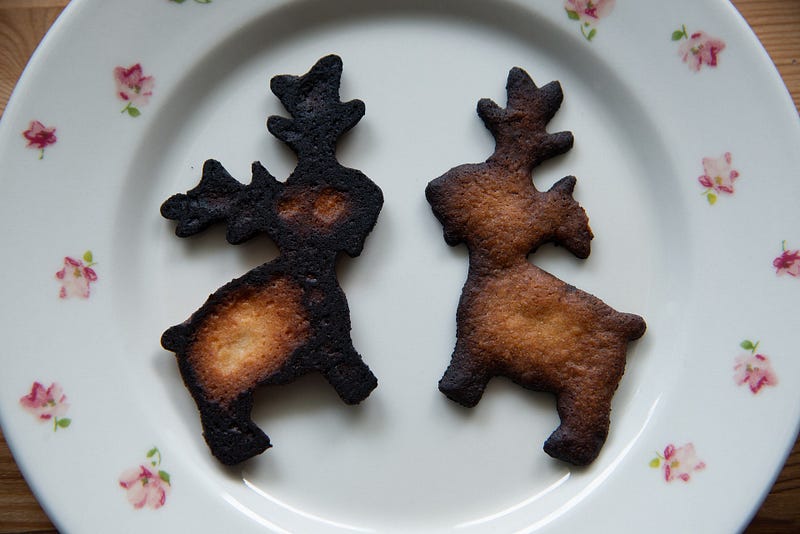
I have drumsticks prepping in the fridge covered in a homemade dry rub as I sit here writing. That’s right. Just typing that sentence, I feel proud.
See, I grew up hearing I couldn’t do all kinds of things. I couldn’t cook. I wasn’t “good” with numbers. Being “bad” with numbers included math and money. I was a slob, and I didn’t know how to keep a clean space. By the time I learned to drive, I also had zero insight into car care: maintenance, cleanliness, the whole nine yards.
These were “truths” told to me. I accepted them as facts. I was a child (then a teen), and, honestly, I didn’t know any better. I couldn’t discern the psychological portion of what was happening until much later; by then, I had accepted many self-defeating lies about myself.
There Are Many Who “Can’t”
I see this phenomenon happening to so many people. Someone else, typically a person they respect, pinpoints their helplessness for them, and they believe them.
As an educator, countless female students have told me the very same lie I recited: “I am bad at math (and science) (oh, and technology too).” Male students who didn’t understand poetry and were terrible writers, especially creatively.
Friends who changed their major because they didn’t have the intellect or fortitude to make it through law school. Past partners who were “terrible” communicators. Co-workers who couldn’t leave a job they hated because they weren’t “spontaneous” or “brave.”
I am guessing, in most cases, these people heard lies at a young age, and they, too, took them as facts, internalized them, and allowed them to take root in their lives.
The Purpose of Proclaiming Someone Else’s Helplessness
Looking back now, I reflect on the power of these mistruths and wonder what prompted my parents to proclaim them in the first place. And, to be fair, it wasn’t just my parents. I had teachers who confirmed I was horrible at math and other family members who, jokingly, dismissed my non-existent cooking skills.
We can never fully know what motivates another person’s words and actions. When it comes to labeling others, defining the parameters of what they can and can’t do, I think various factors are at play.
Labeling others is a learned behavior.
As an adult, I can see both my parents carry lies of their own. When they were young, their parents, teachers, church leaders, and the like told them who they were and what they could and could not do (and how well).
When you grow up not questioning the labels given to you, it may seem natural to place labels on others, especially children, when you become an adult. In this way, declaring the helplessness of others becomes a family tradition of sorts, trickling down from one generation to the next.
Further, it is easier to tell someone they can’t do something than to take the time to teach them.
More than once, as a child, I tried to help with the cooking. I showed interest. A few minutes into the experiment, “I didn’t know what I was doing,” so I would leave the kitchen.
Of course, I didn’t know what I was doing. I was a child, and someone would have to teach me. But teaching takes time and energy. So on some level, I get it. I was a teacher for over 12 years, so I know that the energy required to teach a new skill is no joke.
In light of the time teaching takes, simply telling someone they “can’t” feels like an easy exit strategy at the moment.
Finally, labeling helplessness is also a piece of the codependent pie.
If you tell a person they’re bad at cooking; you have to cook for them. If someone can’t manage their money or change the oil in their car, you can help with that too. If someone is incompetent at adulting, you can take care of them way past the time it is appropriate to do so.
This dynamic isn’t just a parent-child one. It can crop up in all types of relationships. Between partners and spouses. Family members. Co-workers. Teachers and students.
Ultimately, the lie of helplessness can manifest in some unhealthy ways.
Husbands who “can’t handle their alcohol” and grown siblings who are “misunderstood, so they can’t keep a job.” So now, all grown up, we create lies for each other, letting each other off the “proverbial” hook, stalling growth, perpetuating destructive cycles.
Whatever the motivation, this practice can leave children and teens ignorant to the truth of who they are, growing up to be adults, having internalized limiting beliefs.
Cayenne Pepper in the Sugar Jar
Placing labels on another person, telling them what they can and can’t do, and describing their abilities’ limits can have a wide range of consequences.
In my life, my investment in the labels played out in various ways.
First, I gravitated toward friendships and relationships that reinforced the untrue labels from my childhood.
This tendency resulted in relationships where I took care of someone else or took care of me in the ways we should take care of ourselves. So Inequality popped up in power dynamics, but jokes and good intentions glossed it over.
In the end, these relationships were unhealthy and mutually limiting, allowing both parties to remain stuck in the lies of their upbringing.
Also, the more I invested in these stories, the stronger my limiting beliefs became.
Even though I was an adult, I led a life of arrested development, engaging in self-sabotaging behaviors that kept me stuck. Due to the strength of my limiting beliefs, I only accepted the evidence that reinforced them.
That burnt cake or the one time I was late on an oil change — the past-due bill on my dresser and the heap of laundry after a long week. Each piece of evidence strengthened my attachment to the story I was telling about myself, leading me to act more and more in alignment with that false narrative.
Ultimately, the labels others placed on me as a child became a self-fulfilling prophecy for a good portion of my adulthood.
I believed that I was a “bad” cook and “terrible” with money. So, you can imagine, my attempts to cook for myself (or anyone) were minimal; my finances, under the weight of my silly, clueless girl routine, were a wreck.
The big picture? I thought I was a failure as an adult, someone who was ill-equipped to make sound decisions and care for herself. In accepting this story as truth, I went out into the world and made choices that proved the lie “right.”
I lost sight of (or never fully knew) my fire. I was like cayenne pepper thrown in the sugar jar, mislabeled, never knowing my potency or purpose. And that way of living, however sad, worked until it didn’t.
The Proof is in the Pudding (Pie)
I am not sure when I started “waking up.” It wasn’t in a moment or even in one year, but gradually. Little by little, it occurred to me that the labels weren’t quite adding up.
I was “bad” with numbers. But somehow, on the GRE and Praxis tests, I scored above average in math. Financially, as a result of years of poor decisions, I became reasonably knowledgeable in money matters. Recently, I took a personal finance inventory. The results indicated I was more knowledgeable than 80% of test-takers.
Cooking? Well, I actually tried it. It turns out I’m not “horrible.” On the contrary, with some practice, I have turned out to be a great cook. The proof? The pudding pie, chilling in my fridge at this very moment!
Similarly, the label of “slob” was also some strange projection. Last week, I unpacked, organized, and decorated a two-bedroom, two-bathroom apartment in a matter of five hours.
If you’re interested in my catering or decluttering services, you can contact me here.
All the other lies ended up debunked as well. From car maintenance to healthy food choices, I am more than proficient.
Ultimately, as I woke up, I started to enjoy exploring the range of my abilities, especially in those areas where others deemed me a failure.
The Unlearning is the Hardest (And Most Rewarding) Part
If you are also in the process of self-discovery, figuring out what is true about you, remember:
- Be patient with yourself. Waking up can be uncomfortable.
- Recognizing who you are and what you are capable of can be difficult when you’ve relied on others to define you. Reflection helps. Sit down and note every label someone else placed on you. Then, ask: is this true? Challenge the assumptions you made about yourself.
- Unlearning self-sabotaging behaviors takes time. Change won’t happen overnight. Instead, try to tackle one limiting belief and the behaviors tied to it at a time. Celebrate the wins, but recognize that you are working to dismantle a lifetime of lies, and setbacks are a natural part of that process. When they happen, forgive yourself and begin again.
Above all, take care of yourself and enjoy the process of learning what is true.
As for me, I’m gonna sit down and enjoy my drumsticks and pudding pie and smile because a) I am a good cook and b) the journey to discover that truth also made me a stronger person.


