
Nature/Inspire/Response
When I Cannot Go to the Mountains
the mountain comes to me
Yes, I have been very lucky, as this has surely happened!
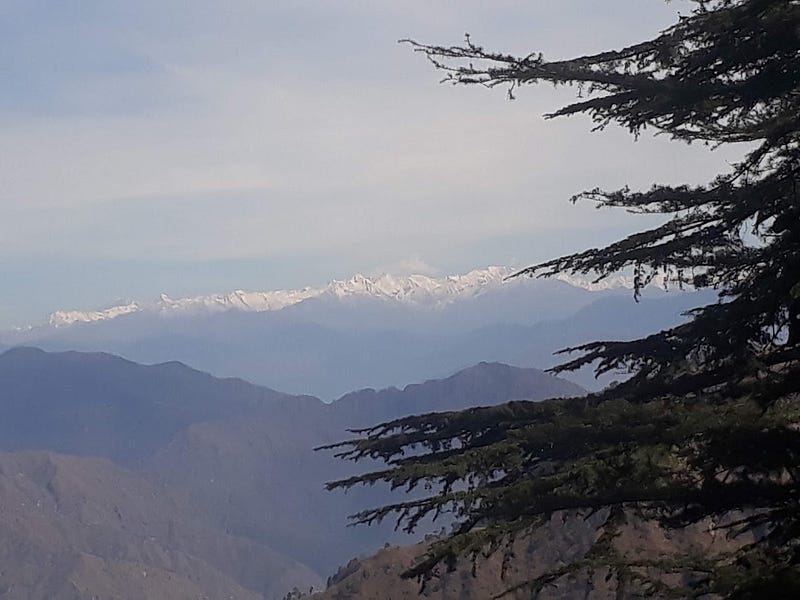
Since I have known this world, mountains have been part of it!
So, naturally, when the prompt to write about mountains was announced, I felt, as if it was for me.
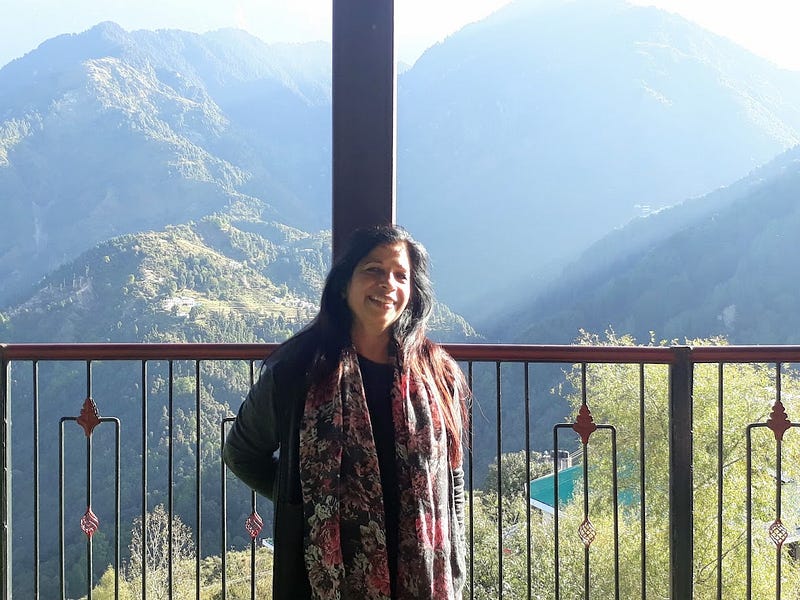
I had grown up in the foothills of the highest mountain in the world, the Himalayas, in Himachal. Surrounded by the Shivalik Hills, which are a part of the outer Himalayan Mountain range. I was born here and also spent a big chunk of my life there. So much so, that my friends call me Paharhan (a woman who comes from the mountains), and Himachali (a person from the state of Himachal in India)!
Migrating to Australia, I was worried about living in a dry and arid land, known as the sunburnt country, full of eucalyptus tree forests, sheep and kangaroo infected farmlands, with a huge dessert in the middle, and all its cities next to the surrounding coast!
Oh, dear! So, where would mountains be? I had been wondering,
“How would I survive without mountains!”
But when I arrived here, the mountains were already there, they had just changed their colour.
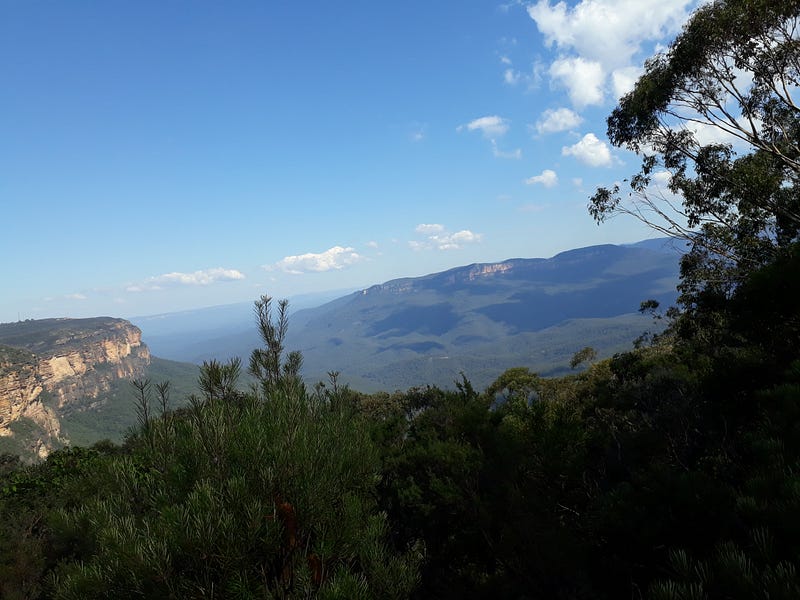
Called, (see the above image) the Blue Mountains, these majestic mountains are not far from my place, just an hour away, if we want to visit them! And we go there a few times a year, sometimes just to spend a day or for a weekend.
There are actually, so many mountains in Australia, and all are beautiful, (some other time, I will write about mountains in Australia), though they are different in their fauna and flora from the mountains in Himachal.
Most of the mountains in Himachal are quite high, and are lush green, at the height of 1500 from the sea level, where you find needle pine trees everywhere, and then, once you reach at the 7000 plus height, you find cedars, the most majestic bluish green tall trees, Deodars!
Deodars or cedars, as you can see from the image below, are such majestic trees, and I think, they are the most beautiful trees in the world!
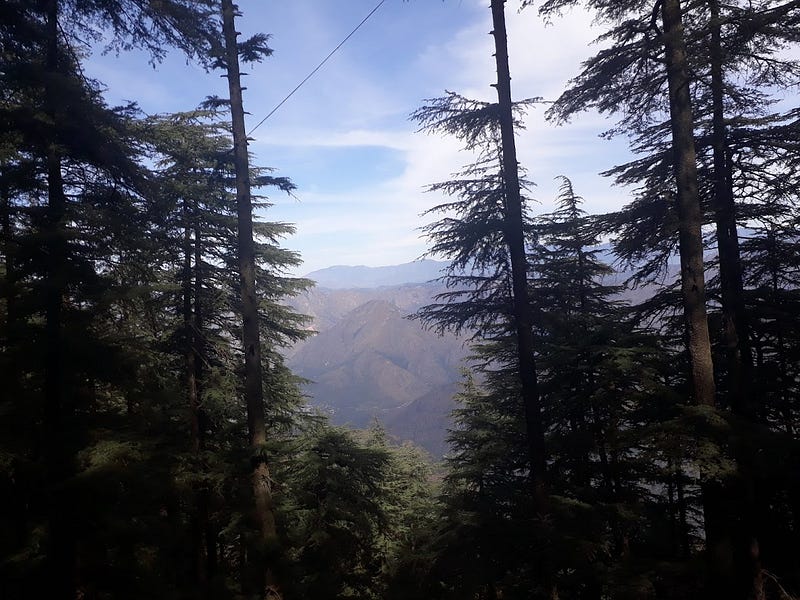
In a song in Hindi, these trees are compared to flags unfurling in the clouds, with the wind carrying clouds, like a message from the Creator himself!!
“Yeh Kis Kavi ki Kalpana ka Chamatkar Hei? Yeh Kaun Chitrakar Hei”!
It says: the “Beauty of nature is like the imagination of a poet!”
And Himachal which is one of the most beautiful states in India*, evokes that perfectly well, as with snowclad mountains as its backdrop, it does seem like a land of the gods, and is aptly called, Dev Bhoomi.
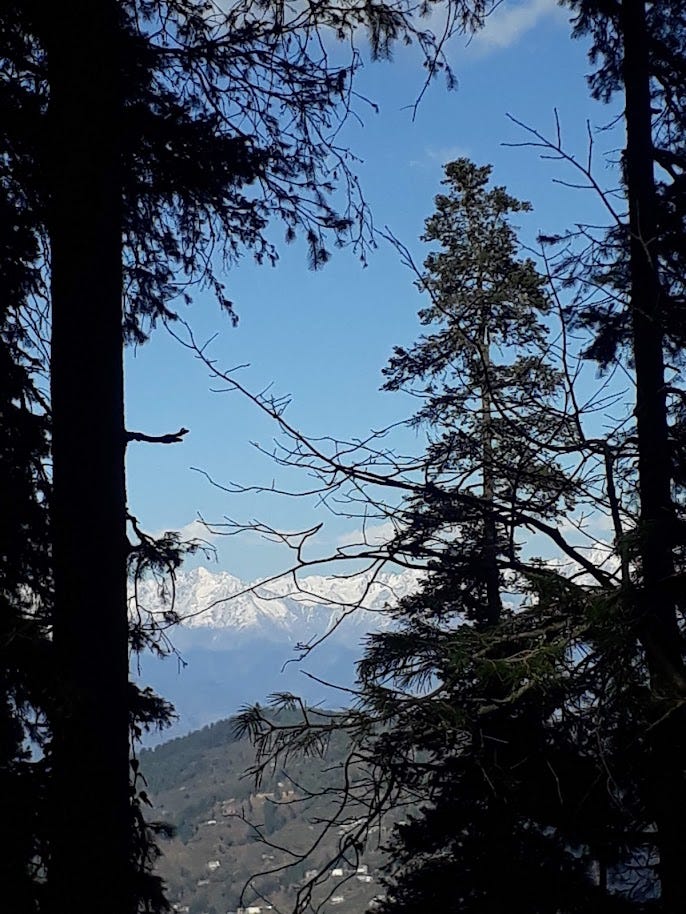
And this beauty that is scattered all around in Himachal, is all due to its mountains, as where there are mountains, there are rivers, and alongside the rivers, there are valleys, and the perfect weather.
Melting ice, snow, and heavy rains, as well as many underground sources of water, make the mountains a crucial part of our life!
They give us life.
In Indian mythology, mountains are associated with heavenly places, and gods, who live in really high places. And when we look at the snowclad Himalayas, (photo taken from the aeroplane window, when travelling to Bhutan), we can imagine meditating saints, rishis, and gods. And the sound of Om resonating everywhere!
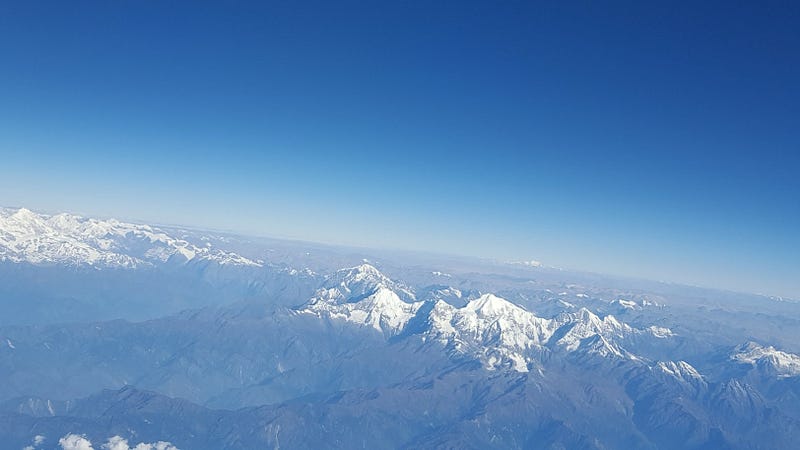
Maybe that is why temples are situated in the mountains. Not only in Himachal, but most of the famous temples, scattered all over India, are in the mountains, or on the banks of the rivers.
Most rivers originate in the mountains and flow towards the ocean, and on their way, collecting water from waterfalls, and their seasonal tributaries, fertilise and irrigate the plains, where food grains are grown!
Many of these rivers have been, or are being harnessed, and ‘dammed’ (no pun intended) in Himachal, for hydroelectric power.
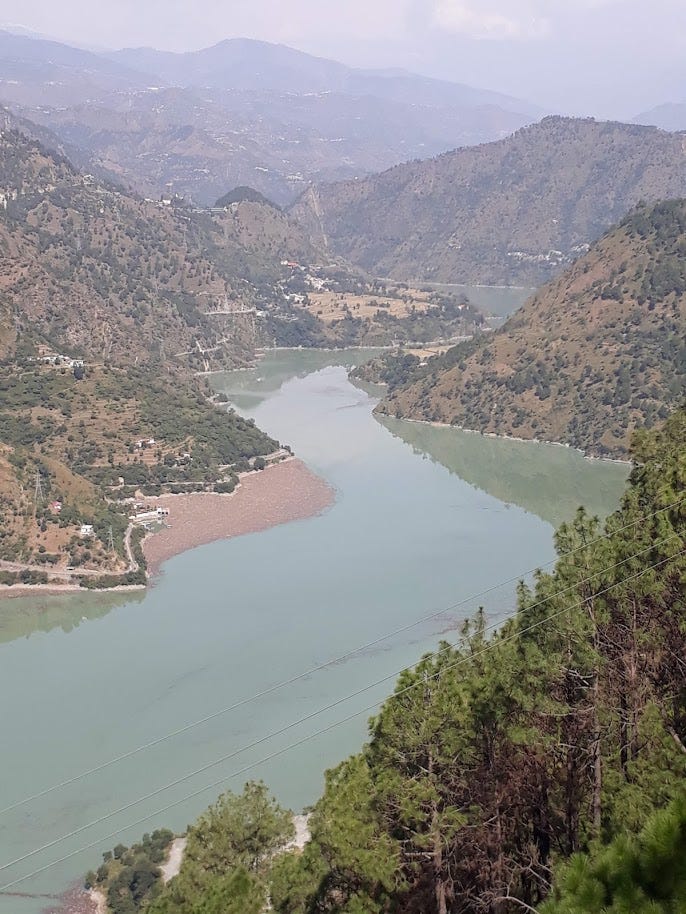
There are therefore many dams that hold water, and canals taking that divert water to the places where it is needed for agriculture, not only in the mountains but to the plains where this water is needed, even more!
Water, however, can be an issue, as people depend on rain and the water they can get from the rivers, dams, and water holes for agriculture.
Luckily, due to good fertile land, mountain areas have great agricultural possibilities, and particularly Himachal is known for its apples, potatoes, corn, and green vegetables.
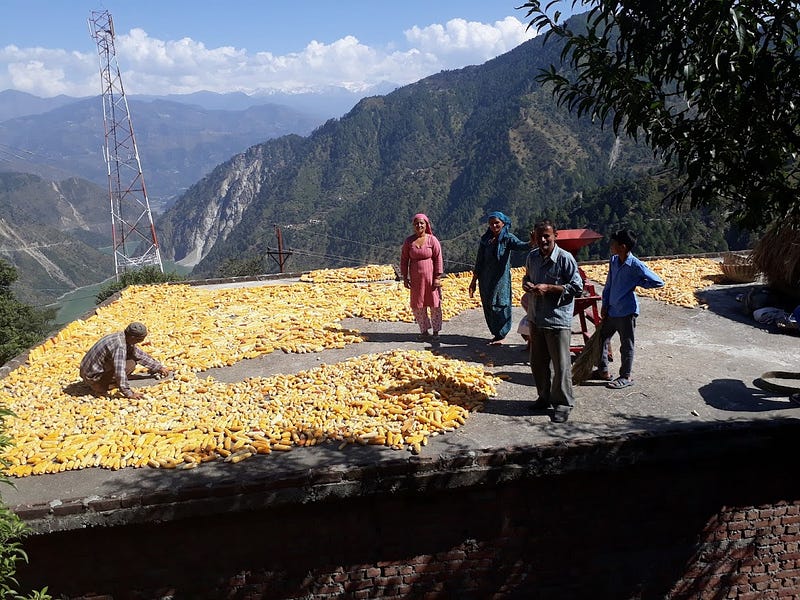
People in the mountain areas of Himachal lead a simple life and are content to grow what they eat and eat what they grow! Though, now they are also trying to grow exotic fruit and vegetables like, strawberries, cherries, raspberries, lettuce, broccoli etc for business. (that may not be that good for the farmers eventually, due to their excessive need for water).
Progress and development have, however, reached everywhere, and these places, in the mountains, are no exception. Ridden with electric wires, phone cables, and telecom towers, bringing the rest of the world to these places, in some form, changes have come to the lifestyle of people who live in the mountains.
Their ways of doing things have been transformed. Gadgets and food items that are advertised in big cities, have arrived here too, and are sought by people in remote places. Signs of Coca-Cola, Potato chips, and Maggie the famous two-minute noodles sold in small tea shops all along these areas, is a sure sign, capitalism has extended its claws here too!
When I was little, in Himachal, while walking in the hills, and, on our way to the school, if we got thirsty, instead of a ‘bottle’ of water, we would reach for the little bawdies, the water holes, and choodues, small waterfalls, as these would appear, right there, when needed, splashing or sometimes, trickling refreshing water.
We just made a little beak from our hands, and drank straight from the source! It was the sweetest, the most natural mineral water, with great medicinal qualities, straight from the source, the real thing!
Not from a plastic bottle, which says on its label, Mineral water! Actually these bottles have now arrived in Himachal in abundance and the pristine beauty of these surroundings has been marred due to their ugly plastic remnants, bottles, and cans thrown around along with plastic bags (officially, though, in Himachal, now, plastic bags have been banned).
Another issue that shows signs of deterioration of these pristine areas is deforestation through logging and clearing for development, which is a bane of this world, and that is happening everywhere. Yes, human interference, playing with nature! One can see, big trunks of trees floating in the river water, a great way of transporting wood, again piggybacking on nature, to destroy nature!
The commercial developers’ land grab and the cutting of the trees have (gradually in the last 30 to 40 years), distorted the scenery, leaving many bald patches on the mountains where dense jungles used to be.
These patches look quite ugly, though this development has made it possible for people to live in or visit really remote and interior places in Himachal, creating roads and townships.
However, in the rainy season, when every brook becomes a river, and every trickling water source turns into a torrential waterfall, landslides happen. Travelling becomes difficult in the mountains, as roads are dangerous, and life becomes uncomfortable.
Similarly, in winter, when it snows, though, mountains are the most beautiful place to be, they can also be quite a harsh place to be around!
Still, mountains remain a favourite place for tourists from big cities to visit in summer. In Australia, people go to the beach, to the ocean for a holiday, whereas in India, it is the mountains!!
Recently, I was in India, during the rainy season, Monsoons, which are the harbinger of rains, after a hot summer, is the most romantic season.
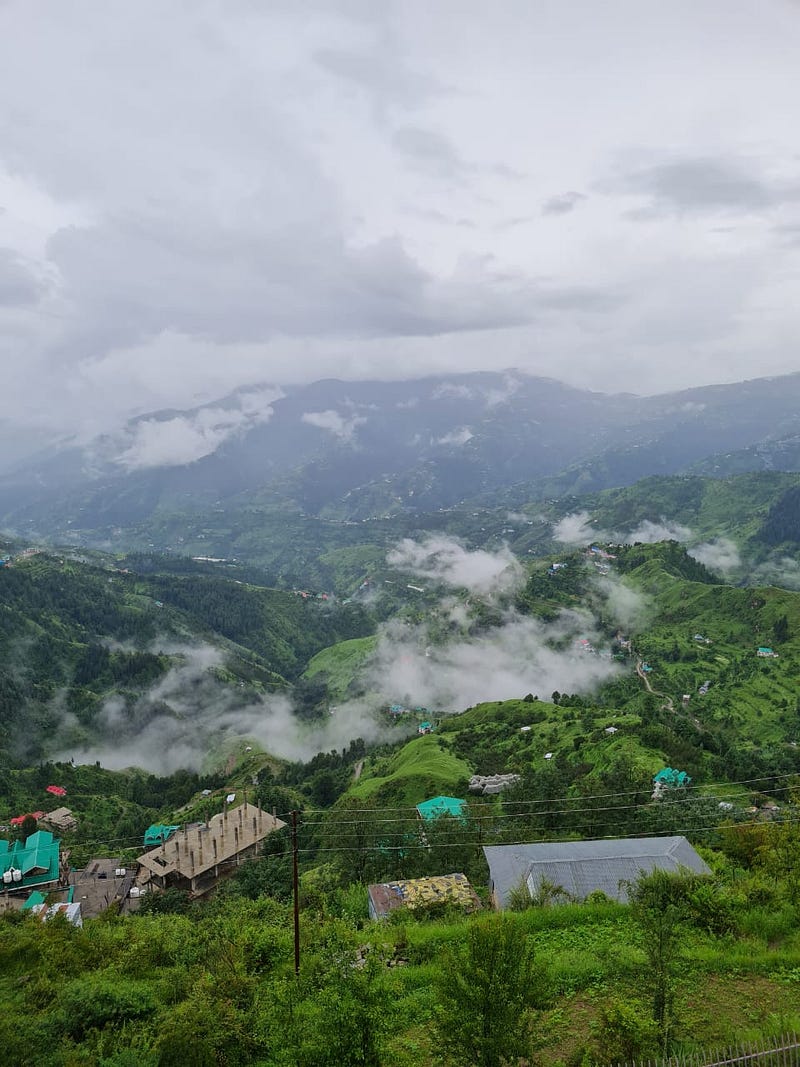
After a scorching summer, rains are welcome everywhere, but especially in the hills, it is just wonderful, as the gathering of gossamer clouds, in the rainy season, creates magic everywhere. The easing of the cascading rain and the settling of the foggy clouds in the valley in the setting sun is, as if someone has spilled a basket of balls of cotton against the blushing pink and orange coloured hilltops.
The clouds then rise from beneath, rather than from the sky magically, and fill the whole valley. **
Watching the sunrise is a bit tricky but usually, the sunsets are spectacular!
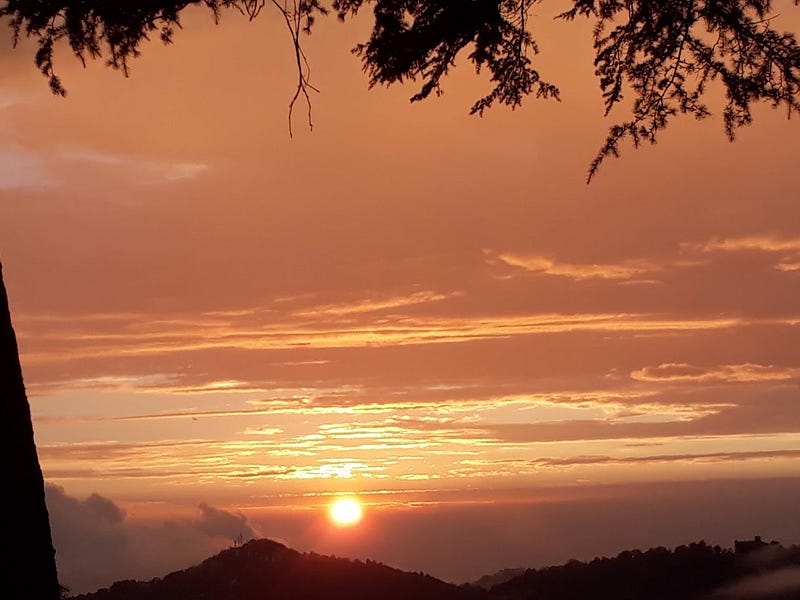
Each time, when I go back to Himachal, I find many changes, most of which I find negative, as mentioned earlier, but something always remains the same.
The spectacular beauty of the mountains!! Welcoming me home!
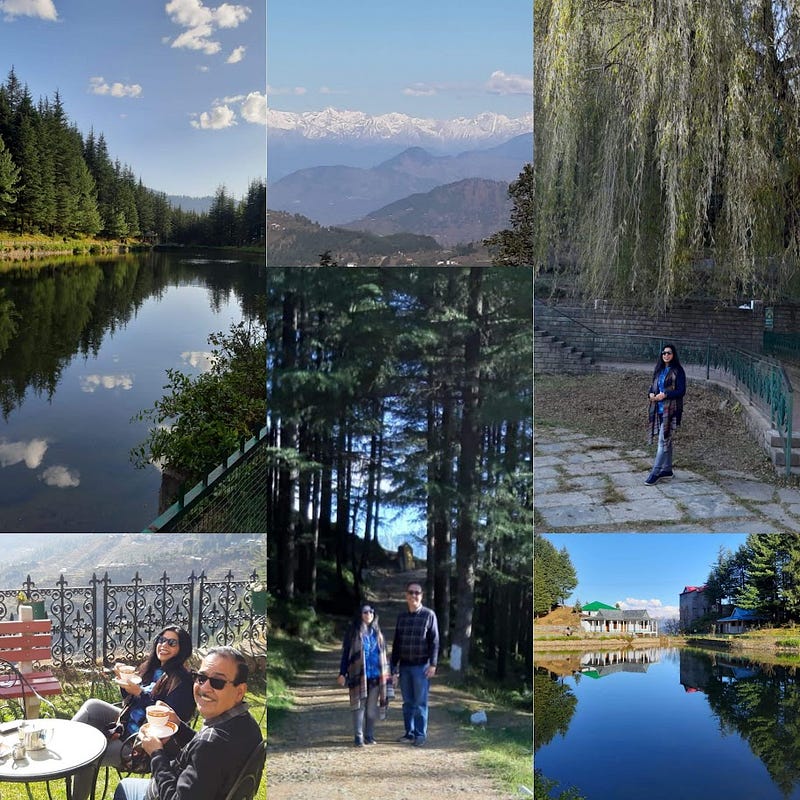
This is a collage that was created to share with family and friends after a recent visit to Shimla and it shows the beauty of the mountain areas in its surroundings.
*A disclaimer: There are beautiful mountains everywhere, and especially in India, which is a big country with such diversity, there are natural wonders, and wonderful nature is exhibited in its mountains, hills and greenest lush forests, river banks, the rolling hilly places, and majestic plains, miles of farms feeding the most populous country in the world.
**(This description of monsoon clouds in the mountains, is borrowed from another post that I had written for my personal blog).
Many articles have been published about mountains, in Reciprocal, which I have read, and will read, but here I want to mention two articles on this prompt which touched my heart.
I read Michele Maize ’s fantastic article about mountains which resonated with how I feel about mountains.
I also read Mia Verita’s article, and her take on the mountain prompt moved me.
One line from her article would resonate with so many of us
“you can’t understand a person’s mountain peak unless you first understand their valley.”
Thanks, Dr. Preeti Singh for a great inspiring prompt and your article on mountains, which instigated me to write about Himachal and mountains, which always keep calling me!
Sahil Patel what can I say? What a fantastic publication and what a great place to publish!
And a great editorial team! thanks, Dr Preeti, and Yana Bostongirl for curating our articles for publication!


