
I Came To Bear Witness To A Racially Motivated Assassination: Part 1, Memphis, TN.
White supremacy murdered Dr. Martin Luther King, Jr.
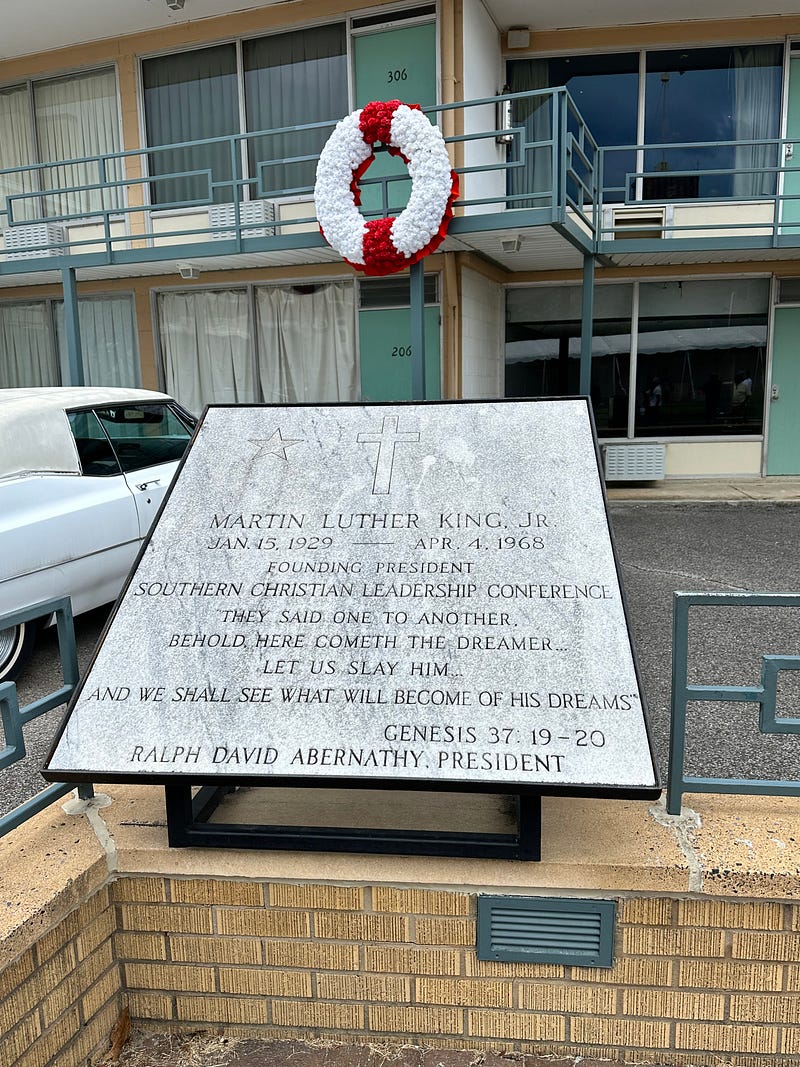
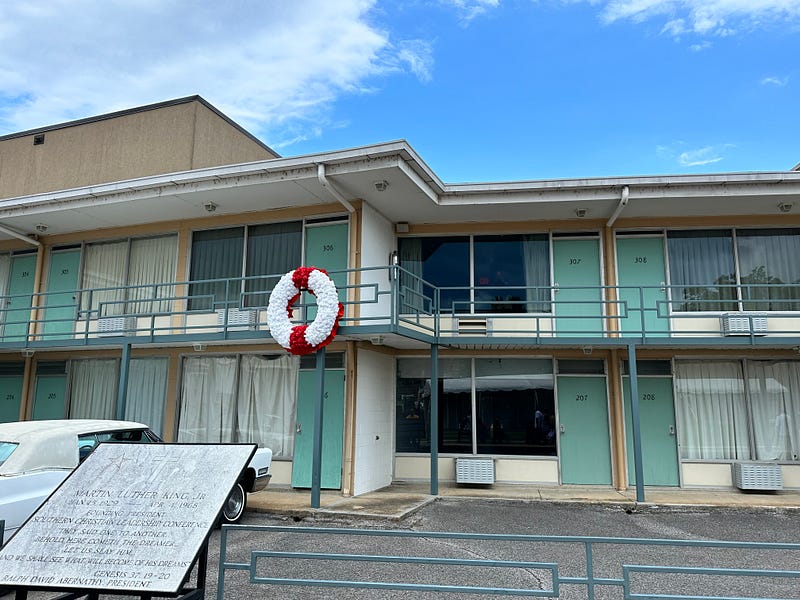
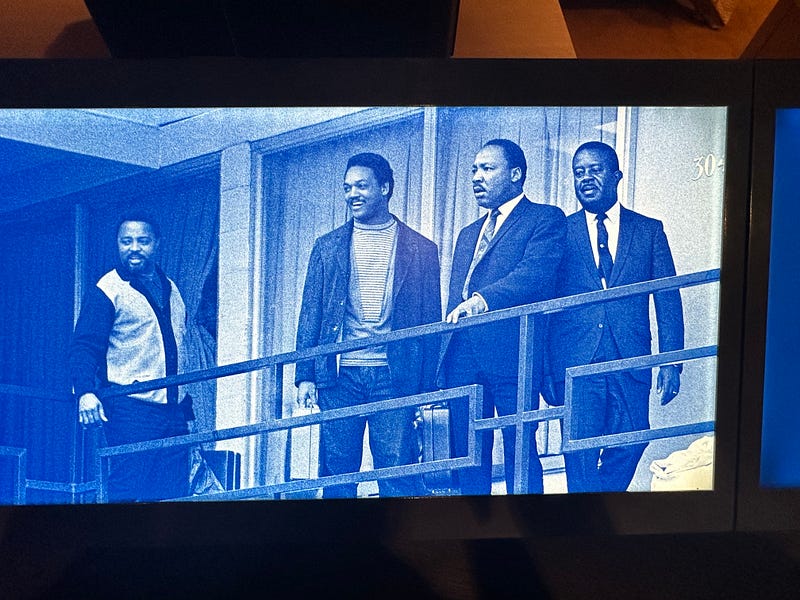
The image of him crumpled on the balcony and Rev. Jesse Jackson pointing off to the horizon in the direction of the assassin is a foundational memory for me. The photo has been lashed into my memory—a young Jesse Jackson with Dr. King when he was assassinated. Today, I am greeted by a Rev. Jesse Jackson, who has survived being a black civil rights leader in America with something so many of his peers were denied: the honor to grow old. As he enters his twilight years, it is an obvious reminder of how young they were. They were so brave, MLK and everyone who fought for justice and to force America to live up to the words: all men were created equal.
Dr. King was born the same year as Anne Frank. Both of them could still be alive today, but both of their lives were cut short by the evil blade of white supremacy (for comparison, Barbara Walters was born the same year as these two venerable giants, and she died on 30 December 2022). Dr. King died at the unforgivable age of 39. He was a baby, and his babies were babies. His children were robbed of their father. His saint of a wife was denied the companionship of the man she loved and who loved her. She would never marry again. She waited to be reunited in the sweet hereafter with the man white supremacy snatched from her. Even imagining their first embrace in Glory brings tears to my eyes. Glory, glory, hallelujah!
The stories of these two love birds driving a rented little convertible through the winding mountain roads of Israel fill me with joy. Despite all the attempts on his life, the countless bomb threats, the beatings, and assaults, for him to write the most afraid he has ever been was when he and his beloved Correta were on a small boat in the middle of the ocean makes me wonder what gale of wind or brutal tempest could elicit such fear in a man who has been stalked by death most of his adult life.
As long as I have been self-aware, I have known Dr. King. He is a giant that looms large in the annuals of world history. Through reading his own words, he gives us a glimpse into the man, the father, the husband, and the person who met the moment in time. I find his quiet reflection and contemplation on a life worth living to be the most fascinating. It humanizes a god. It makes his murder more intimate and his loss devastatingly profound. We lost a giant; his parents lost a son, his siblings a brother, his wife a spouse, his children a father, and his grandchildren a grandfather. We claimed him, but he belongs to them.
Dr. King is an indelible part of who I am and has shaped American life more than just about anyone in the past 70 years. I am not a skilled artist, but my meager abilities could draw him so that others could recognize him. His voice is chiseled in the wall of my memory, similar to my daughter’s mother’s, brother’s, and father’s voice; I know his. His voice existed apriori for me: it was here before I came to be and will exist after I am gone. His voice is timeless. I only need to hear one syllable in that sonorous tone, and I can correctly identify him as the orator.
Dr. King was more than a speaker; he was an orator steeped in the traditions of the black church of the South. His oratory style was distinctive and unusual to many non-black people who had never been proximate to the black church. The way Dr. King modulated his voice and how his words ebb and flow like they were attached to a yo-yo that he effortlessly commanded with a mere flick of his wrist. His vocabulary was enormous. It was so immense that it stopped being a vocabulary and transmuted into a lexicon. Endowed with a prodigious affinity for the English language, he erected stirring sermons and lasting letters.
Dr. King was a craftsman. He was precise with his word selection, which gave the enormity of his lexicon the gravity befitting a man of his stature with the urgent message he was placed on this Earth to deliver.
He spoke with an eloquence that confounded many people. Those who had been baptized in the unholy waters of white supremacy did not believe black folk were capable of such rhetorical skills.
Dr. King’s style has been emulated and continues to be imitated today. However, anyone who has spent time in a black church recognizes the gospel coming forth from King's mouth.
He was an adept rhetorician. His talent was self-evident, and combined with his brilliance, he was a juggernaut.
Dr. King’s intellect has been, I believe, intentionally concealed from us. He wrote many books, but most people have not read them because they are difficult reads. Most of his books are not taught in high schools or colleges. I read the Autobiography of Malcolm X in college — it is a fantastic book — and I highly recommend it. Yet, I have never seen any of Dr. King’s books on any reading list.
I am arrogant and believe I possess a large active and passive vocabulary. Reading Dr. King’s books has humbled me. I believe ignoring his brilliance is a continual assassination of the character of this legend. Moreover, the attempts to portray him as adulterous are intentional to mitigate his family’s loss. If he were accurately seen as the loving husband and dotting father that he was, his assassination would have yet another level of tragedy grafted upon it.
Dr. Martin Luther King, Jr. was assassinated by and for white supremacy.
His legacy has been defiled by those who hate him and the values he espoused. They have hijacked the fiery condemnations he bestowed on America and replaced them with an aspirational refrain taken out of context. Instead of doing the work to achieve a society where everyone would be judged for the content of their character, they purposely lied to us and said we were already here living in this American Dream.
This is how white supremacy continues to assassinate Dr. King today, lifting and exploiting one phrase from a speech that was an assault on the American way and building an idol to be praised, worshiped, and revered in order to camouflage their true intent: to not grant equality to anyone who is not a cisgender, heterosexual, Christian white male.
They turned the lifeless body of Dr. King into a shield for white supremacy. Anytime a black person rightfully condemns racist conduct, these shameless bigots unearth Dr. King to use his corpse to block the slings and arrows unleashed to condemn evil.
Republican lawmakers reflexively invoke his name in order to protect themselves from the appropriate consequences of their bad actions. Men and women who actively work to dismantle everything Dr. King represented are the first ones to call upon his name.
Even though he was assassinated on the balcony of the Lorraine Motel, his memory continues to be assassinated each day because white supremacy mandates it.
During the past two years, I started teaching myself about Dr. King by reading his books. I wanted to develop my own connection to this icon. When I had the opportunity to visit Memphis, Tennessee, I decided that I would bear witness to a racially motivated assassination. This is my story of how I came to bear witness.
I drove to the Lorraine Motel. From the confines of my vehicle, I saw a relic that had been preserved. It looked like it did in the photos. The paint was fresh. The facade showed no signs of corrosion or distress. It was pristine.
The instant I got out of my vehicle, I left 2023 and entered the 1960s. The site of Dr. King’s assassination stood before me. Everything faded into black and white, with hues of gray. There was a crowd beneath the balcony—a group of black men with instruments were performing. Sanitation workers had assembled, demanding fair pay and better working conditions. The crowd was jubilant. Dr. King was still in his room.
I strode closer to the motel. The balcony’s siren song beckoned me to explore further. Like a sailor, I was ill-prepared to resist this temptation. With each step I made from the parking lot towards the motel, I felt myself becoming more and more integral to the famous photograph of Dr. King crumpled on the balcony.
The parking lot was a wormhole through time. You entered it in 2023 and were transported to the morning of April 4, 1968. You are the only person among the throngs of people preparing to march and strike who knows the calamity that will take place in mere minutes. Impotent to stop the proceeding doom. Damned to witness the tragedy of a young father, husband, son, brother, pastor, civil rights crusader, and icon being felled by a coward’s bullet. Cursed with this knowledge, all you can do is bear witness to a racially motivated assassination of a black man because white supremacy demanded it.
I was not on the balcony with Dr. King; I was in the crowd on the ground, staring at his door. Dread consumed me. Soon, he and other luminaries would exit the door. The band would start to play. A spirit of jubilance would possess all of those who surround me, and I would be incarcerated in a prison of despair.
I am an attorney. I have seen people die. I have reviewed photographs and videos of dead people. I have viewed some corpses in such bad condition that you must strain to recognize their humanity. My profession has caused my safe, predictable world to collide with the most rotten dregs of society. I have seen us at our worst. On the ground in front of the Lorraine Motel, craning my neck to see the final moments of a young man, was another one of those terrible days when the world revealed how vicious and needlessly cruel it could be.
I was not an important or central character in this tragedy. I was someone who had come to spurn on Dr. King and the sanitation workers as they fought for better pay and job conditions. I was inconsequential to this moment in history. Yet, I was there. I was present. The air was heavy with the moisture it retained. Even though it was early, my white button-up shirt betrayed me by revealing to the world my perspiration. I was a reluctant witness of a racially motivated assassination.
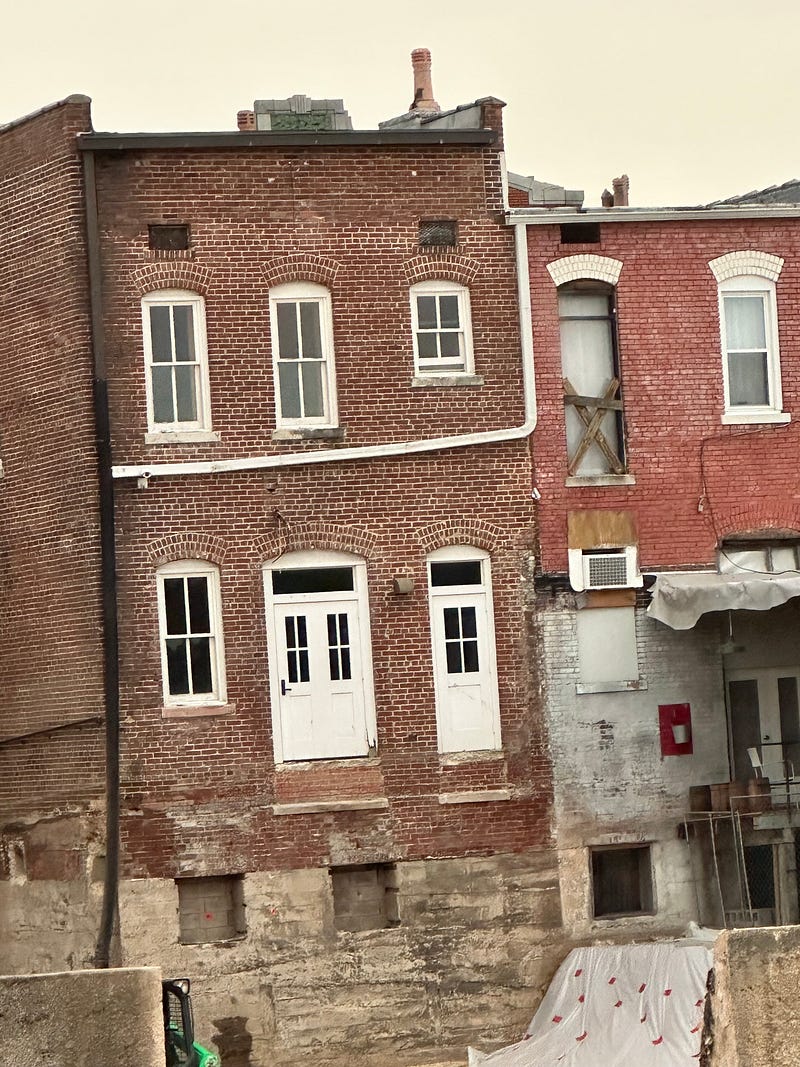
I knew the shot was coming, and yet I was still startled by it. The sound pierced the elated atmosphere. As Dr. King fell to the floor, the gravity of the moment had been affixed in the eyes of the onlookers. Those who had accompanied King pointed in the direction of a shabby red brick building that I saw for the first time in my life—the bathroom window slightly ajar—cracked open just enough for the muzzle of a high-powered rifle to protrude to carry its lethal payload to the target.
In this awful moment, Dr. King had been changed from a man into an object. In the assassin’s scope, he stopped being a man and became a target—the object to be annihilated.
The coward’s aim was true.
The coward’s bullet hit the target.
A King was no more.
I sat in front of the balcony and lamented on a life cut short. Tears inspired by anger, despair, sorrow, fear, and just how unfair the whole ordeal was streamed down my face. Why did you have to murder our King?
I wiped the tears from my eyes and entered the Lorraine Motel, which has been repurposed as the National Civil Rights Museum. A place not only to honor Dr. King but all of the soldiers, volunteers, generals, majors, sergeants, and every other rank and distinction for the people who bravely forced this country to be true to its creed: that all men (read people) are created equal.
This museum tells the story of America. It is a gorgeous place of remembrance. It has the bus where Rosa Parks refused to give up her seat. It pays homage to the Freedom Riders (the two Jewish men and a black man) who were murdered in Mississippi.
They have a replica lunch counter where brave black people would endure taunts, slurs, violence, and degradation in order to obtain the human rights that should be inherent for all citizens of this nation.
The National Civil Rights Museum is evocative and fearless. It tells the stories of our nation. It does not flinch. It does not avoid holding the powerful accountable. It was erected to bear witness to this turbulent time in our shared complex history. The history that Republicans all across America are trying to conceal, erase, eradicate, demean, and destroy.
This monument sprang from the blood of a King like Aphrodite from the loins of Uranus and tells a story as beautiful as the mythical goddess. This museum is a testament to the racial strife that was embodied in the 50s and 60s in this nation. It is a time capsule that rebukes the fascist narrative of a glorious past where everyone prospered.
This place of remembrance is a stark reminder of the violence and cruelty white supremacy wields to subjugate anyone who refuses to bow at its altar. It is a clarion call of the work that remains.
The final installment of this museum is the actual bedroom where Dr. King slept the night before, and the other room is where he met and worked on the strategy for the action. We see the rooms as Dr. King experienced them on his last evening on this mortal plane. They are quaint, tiny, cramped, and not fit for a King. We are accustomed to seeing royalty surrounded by opulence. To see him in this shabby motel made me think of Jesus Christ.
I am not comparing Dr. King or any person to my Lord and Saviour, but the story of how Jesus washed his disciples' feet hits home seeing him here. How King left his congregation, his wife, and children to lend support for whom we call in popular parlance garbage men made me think of how Jesus kept company with tax collectors, lepers, and prostitutes.
King, like Jesus, looked for the innate dignity that resides in all of us. The slogan for this operation was: All labor has dignity.
As I reflect on the room where he spent the night. I did not see a King or a civil rights icon. I did not see a rebranded firebrand that moved this nation forward. I saw a man. I saw a son, a husband, a father, and a brother. I saw myself and many of the people I know in him—just a man away from his family on a business trip.

For good reason, we have lionized Dr. King. Yet, I fear this abstraction of a man has made his loss less profound and reduced how devastating this was to his family.
As I leave the museum through the gift shop and start the slow march toward the wormhole that will deliver me into 2023, I contemplate Dr. King's and his family's sacrifices. He could have left this all behind and been a successful preacher. He could have grown old and heard the laughter of his grandbabies. Corretta would not have had to raise a family by herself, devoid of her husband's touch, his smile, his awful dad jokes. No more harrowing adventures at sea or careening down a mountain in a little sports car.
We lost an icon, and she lost a life partner. Our losses are not the same.
He was assassinated because white supremacy required it, and I needed to bear witness to the racially motivated assassination…of a black King.
Memphis, Tenessee, August 5th, 2023.
Garrick McFadden