I Bought My First Home at 25
Here’s what I learned about money and friendship
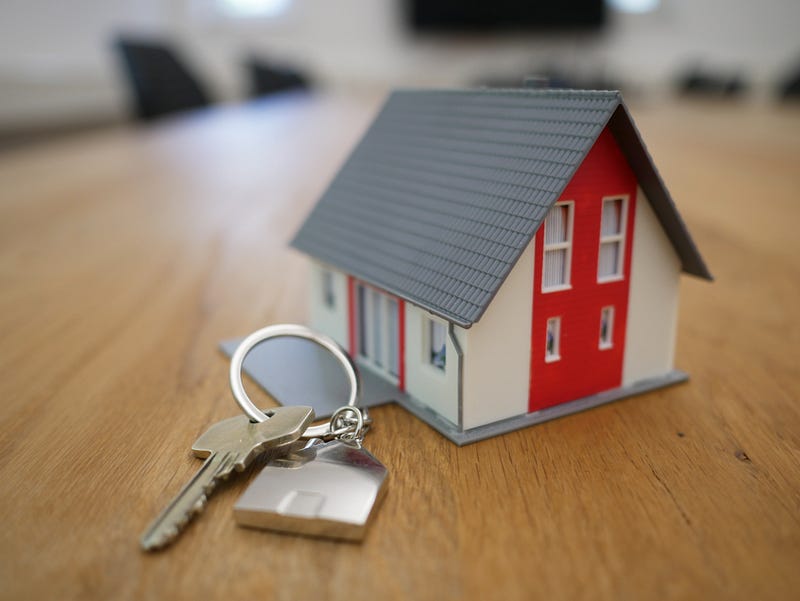
In 2020, at the age of 25, I achieved the Great Australian Dream. I own my own home, a one-bedroom apartment in the inner north of Canberra. My life is definitely better for it, but I came into homeownership unexpectedly. What I’ve learned on this journey has changed my views on money, life, and friendship.
Millennial humor is replete with satire on homeownership. The deck is so stacked against millennials that only a timely inheritance or a generous interpretation of the word ‘home’ could result in homeownership. We laugh so we don’t cry.
In my case, I had a financial head-start. That has to be obvious. There just isn’t a realistic way for anyone to start from nothing and have their homeownership dreams coincide with their quarter-life crisis.
My secret weapon was a bit mundane — I lived with my parents for 24 years. They were gracious enough not to ask for any financial contribution until I had a full-time job, so I saved 75% of my earnings during university. But this sense of security came with an insidious flaw.
I used to be an incredible miser
Having lived at home for so long, I had no idea how to manage money. All I knew was I needed lots of it. At 19, I began reading books on personal finance. They inspired me to start investing in index funds, which I promptly did. I started with $5,000 from childhood savings and freelance tutoring services. The goal was to save and invest enough for early retirement. I hated studying and reasoned that if I were to hate working as well, I’d better achieve financial independence as soon as possible.
On the spending side, I was minimalist to a fault. I only spent money on two things: public transport fares and food. And the food required hefty discounts. I’d only splurge on the few occasions I was lucky enough to have a date.
Even when I started making significant money, I kept my spending static. For about two and a half years, I earned between $35,000 and $47,000 a year. After taxes, my nest egg took its cut. My modest $5,000 swelled to $83,000 by the time I left home. I still checked the McDonald’s app for deals.
I moved from Melbourne to Canberra in 2020 for a job I could only do in the nation’s capital. Force of circumstance parted me with my money, but there was a mental cost as well. I paid $350 a week in rent, so I could commute to work without driving. Mathematically, I was okay — my net pay was $850 a week. Psychologically, I was uncomfortable — I could no longer set aside as much towards retirement as before.
To help make up for the shortfall, I strove to spend as little as possible in every other area of life. The only criterion for grocery shopping was that I could cook the ingredients and not die. Social events needed to take place within walking distance of home. My mortgage broker would later remark that my spending outside of rent ($450 a month) was low enough to attract scrutiny from banks. We got around it by tripling my entertainment budget.
I bought my home because something needed to change
Buying my first home would revolutionize my attitude towards money, but deeply personal factors pushed me in that direction. I was miserable by the time I passed six months in Canberra. After spending months working from home due to COVID-19, my job didn’t seem to justify moving cities. But returning to live with my parents was not an option unless I had a job in Melbourne. No such job was forthcoming. Since I had to stay in Canberra, I needed some improvement in my life.
I concluded the thing that would bring me the most happiness was owning my own home. Simply, I wanted to live alone. I was a subtenant to my roommate — it’s already tricky to live with other people, and it’s awkward to live with your landlord. By living alone, I could take my time cooking, exist in quietness, and entertain personal guests.
I also didn’t want to rent. There are ways to determine whether you’re financially better off renting or owning, but those considerations became vanishingly less important to me. I just wanted to deal with nicer people. The bank doesn’t care if I want to install an induction cooktop or let the baseboards gather dust. I had little control over my career in 2020, but at least I could have control over my home.
Getting mentally ready wasn’t easy. I had spent years of work and sacrifice to build my nest egg, and I wanted to keep it if at all possible. Since my portfolio was so exposed to stocks, it lost about 25% of its value in March, and it hadn’t fully recovered by September. If I were to liquidate my portfolio for a deposit, I would crystallize my losses and bet everything on an apartment.
Still, I took the plunge. My parents were willing to help, but it would’ve come with too many caveats since they couldn’t gift me the money. I needed to liquidate my portfolio fully to come up with 20%. If I tried to get away with 10% or 5%, it would’ve taken longer to get pre-approved. I needed my life to change, and it had to come quickly.
The buying process brought me closer to my friends
Buying a home is hard. I first needed to know what I was looking for. Initially, I wanted the cheapest place I could find, so it’d be easy to pay off. My good friend, MN, convinced me otherwise.
MN had bought her own home in Canberra the previous year, so she knew what I’d eventually consider important. I told her I was considering homes in a small country town just outside Canberra. Without me asking, she drove me around this town to show me what life would be like there. There were plenty of downsides. Buses to work would be infrequent, the apartments would be of poor quality, and all the amenities would be spread too thin. There was only one thing that concerned me, and it was a dealbreaker. There were too many law firms in this town — there couldn’t be that many divorces, mergers, and non-violent crimes.
I received a massive favor from MN. Since the town was so far from where I was currently living, it would’ve been inconvenient to check everything out myself. MN’s generosity didn’t end there. After I exchanged contracts for the purchase, she let me keep various belongings in her storage unit at her apartment. Another of my friends, MW, helped me move my things there.
After settlement, MN and her husband, SC, gave me a fridge and microwave. MW helped me move my things from MN’s place to my new home. SC even assembled all my new IKEA furniture. I saved a great deal of time and expense by relying on friends who volunteered to help me out at a stressful time.
My friends also supported me emotionally when it came time for me to break my lease. I’d signed for 12 months, and three months were remaining when I left. An unpleasant legal dispute followed, which was thankfully settled. I had great company during this time, though. We went out for drinks, exchanged horror stories, and told each other everything was going to be okay.
I have a better relationship with money now
How did I pick my new home if it wasn’t about the cost? I chose somewhere that was close to public transport, within walking distance to the supermarket, and away from main roads. The purchase price was $345,000, and I suspect the apartment is worth a bit more.
For someone who was so concerned about saving money, I didn’t really keep a written budget until I bought my home. I did it to reflect my new financial responsibility, and I wonder why I didn’t do it sooner. Writing down my projected expenses, and comparing them to actual expenses, gives me peace of mind that I really do have enough money. Documenting my thoughts has also helped me cope with non-financial worries.
Nowadays, I concern myself with quality more than cost — although I strive to get the best of both worlds. With ownership comes a sense of ownership. I want to live well and take care of my home. To clean my home, I bought a $400 Dyson stick vacuum cleaner (including a 20% discount, of course). I actually enjoy doing the vacuuming now! For my new induction cooktop, I bought high-quality compatible cookware for $200 (after getting 50% off — if it’s not half off, it’s not on sale). I make my meals lightning quick.
The most important thing that’s changed is that my money has a purpose now. My immediate financial goal is to pay off my mortgage. It’ll be a while, but I know it won’t take me longer than 14 years at my current pace. It’s certainly a lot more purposeful to me than putting it away for retirement. I still have a lot of career uncertainty, and I have no idea if I’ll want to retire early. Now, there’s no pressure to have my career all worked out. As long as I have money to pay the mortgage, I’m satisfied.
This is what I’ve learned
1. If you want to kick financial goals, you have to live differently. It won’t come from nickel and diming your bank account when you go to the supermarket. Certainly, it’s not a matter of skipping your avocado toast. It needs to be as dramatic as living with your parents or not owning a car. In your case, it might mean getting a second job or starting a business.
2. When you set out on any personal journey, you don’t have to do it alone. You’ll be surprised how many people want to help you because they identify with what you’re going through.
3. You need an anchor point to give meaning and calmness to your everyday activity. But equally, you don’t have to nail it right away. I started with a vague purpose of saving what money I could, and it evolved into the concrete goal of paying off my mortgage.
I became a homeowner pretty young. Luck played a huge part in it, and I’m grateful for what I have. I also have amazing friends to thank. Yours might not encourage you to become a homeowner at 25, but they’ll go on incredible journeys with you. And when you come against your own breaking point, taking a leap of faith might help you get that change of perspective you’ve always needed.


