
THE NUANCE
I Asked Leading Covid Scientists — Off the Record — About the Virus’s Origins and the Lab Leak Theory
Here’s what they told me.
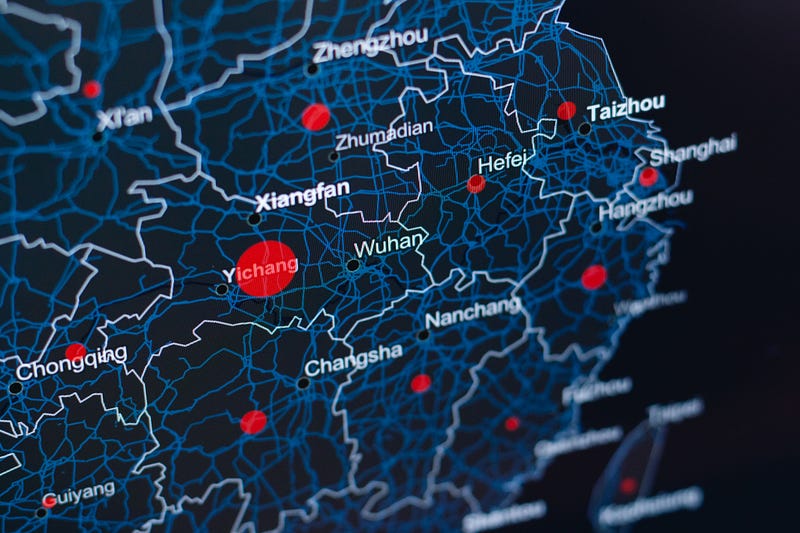
According to a recent report from the Wall Street Journal, the U.S. Department of Energy has concluded, albeit with “low confidence,” that SARS-CoV-2 most likely arose from a lab incident. The FBI has come to a similar determination.
While some other government branches and intelligence agencies disagree and lean toward the natural origin hypothesis, all now seem to regard the “lab leak theory” as plausible and deserving of further investigation.
‘If you follow the trail of how the lab leak theory was squashed by some very vocal individuals, you will see that it was done with many conflicts of interest.’
Even if it turns out that the virus did not originate in a Wuhan research lab, the fact that this is now regarded as an entirely possible scenario is bewildering to me. For a long time, I was under the impression that the lab leak theory had been debunked and discredited.
I’m sure this reveals something about the types of news media I consume (and the types I don’t). But however I acquired it, my views were twofold:
a) the virus almost certainly originated from some animal-to-human contact, probably in a Wuhan wet market; and b) the lab leak theory was not supported by solid evidence and was likely fueled by anti-China xenophobia.
I’ve gone back and tried to dig through some of the earliest reports on the virus’s origins to figure out how I got these ideas.
Very early on — all the way back in February of 2020 — a group of mostly American scientists published a letter in The Lancet that condemned “conspiracy theories suggesting that COVID-19 does not have a natural origin.” A month later, another group wrote in Nature Medicine that, based on genomic data, the lab leak theory was highly implausible.
I’m certain those arguments carried a lot of weight for me. At this point, those appear to have been, at best, flawed and over-confident.
‘Many scientists feel that lab leak theory should be taken seriously and investigated rigorously. However, there is a toxic mob of people on social media who will attack anyone stating this.’
I’m guessing a lot of other people feel the way I do — angry, bewildered, maybe a bit betrayed. But unlike a lot of people, I have ready access to virologists and infectious disease experts with the know-how to assess the available evidence and come to informed conclusions about the virus’s origins. I wanted to know what they thought about all this.
However, knowing how politically charged this topic has become, I thought it would be helpful to offer my sources anonymity in exchange for their frank opinions. I was a little apprehensive about this; it’s not something I’ve done in the past. But I wanted people to feel at ease opening up, and, in the event, several expressed a willingness to participate only because I was offering them the opportunity to do so without their name attached.
In total, I contacted 19 scientists, all of them affiliated with major universities, major research institutions, and/or U.S. Government agencies involved in public health and the pandemic response. Eleven of them got back to me. Most of them were people I’d spoken with before, but several were not. Some were based in the U.S., but a few were overseas. I asked each of them the same five questions. I received email replies from some and spoke with others on the phone. Some merely answered my questions, while others offered a more thorough airing of their opinions.
Here’s what they had to say.
* Note: I use “off the record” in the headline of this piece, but that’s not actually the correct journalistic term. These interviews were all on the record but “not for attribution,” meaning my sources understood I would print what they told me but would not reveal their identities.
** Second note: I have no particular expertise in virology, and I’m not up to speed on all that has been speculated or discussed about the origins of SARS-CoV-2. My goal here was not to cross-examine and fact-check my sources’ statements. I sought only to collect their opinions and present them to you in the hope that they might be insightful and clarifying.
Responses to Question #1: At this point in time, with the evidence we have to date, do you think it’s more likely that the virus originated in a lab or outside of one?
Most of the people I connected with answered this question in a straightforward way.
· I think the evidence, and historical experience, favor the natural origin, but it’s still an open question. I’m open minded on the lab hypothesis.
· I think it’s more likely not lab-associated, but at about 75–25 balance of probabilities.
· I think it more likely that the virus began in bats and infected humans either directly or indirectly.
· I believe this is classical zoonosis, as we have seen similar types in the past, such as SARS-CoV-1.
However, others said that they really could not venture a guess because of the patchy state of the existing evidence.
· We lack definitive evidence to decisively settle on the origin, so this remains an open question.
· I don’t think we have enough information to know or even guess which is more likely. This means both that a lab leak is still plausible and that it is far from proven.
· There is no convincing evidence for either theory. There has not been any animal source of SARS-CoV-2 identified. The closest relatives of SARS-CoV-2 in bats still lack the furin cleavage site, which is what made the SARS-CoV-2 virus pandemic. There is also no evidence of a lab leak because it has not been possible to directly investigate the Wuhan Institute of Virology.
My takeaway here was that most of the people I spoke with were still leaning toward the natural origin hypothesis, but everyone felt the evidence was patchy.
Responses to Question #2: What piece or pieces of evidence do you find most compelling in support of your views?
One expert presented what he saw as the strongest points on both sides of the discussion.
· In support of natural evolution:
1. Very nice study showing that early transmission was centered around the seafood market. However, that doesn’t prove that this represented the earliest transmission; perhaps just transmission events that were important in early spread.
2. We don’t need to invoke lab leak hypothesis to explain origins of COVID. As we’ve seen in rapid evolution of variants, this is a virus that is able to change and adapt rapidly.
In support of lab-leak:
1. Strong coincidence that this happened in Wuhan
2. Likelihood that related coronaviruses were being propagated in primate cells in the Wuhan lab, which could have led to mutations that increased the probability of human infection and human-to-human transmission of those viruses if they did leak from the lab.
3. Interference of the Chinese government in figuring out what happened and implausible misdirection that makes it impossible to believe they were acting in good faith.
One expert who leaned toward the natural origin hypothesis offered the following:
· The known COVID-19 virus biology evidence currently outweighs the more circumstantial evidence that was based largely on the correlation between the epicenter of the outbreak and the location / viral research mandate of the Wuhan lab, plus some viral sequence findings that have since been refuted as evidence of engineering. The virus biology and human epidemiological points more towards the ‘tragically mundane’, that the virus causing COVID-19 made an evolutionary ‘limp’, likely in bats, then a literal jump, probably via a market animal vector, and ultimately to humans… and then spread in a way that was not previously seen with other recently emerging coronaviruses. COVID-19 surprised us over and over, but that doesn’t make it any less likely to have emerged in the manner of any garden variety coronavirus in the past.
Another cited evidence that he himself deems shaky:
· The presence of positive samples in the [Wuhan seafood] market and the clustering of early cases around the market, including of two different lineages, i.e. the Worobey paper, is evidence in favor of this hypothesis. However, for numerous reasons it seems like a preponderance of evidence rather than the certainty claimed by that paper. Methodologic flaws in that paper (including failure to point out limitations of the method), combined with the fact that the Wuhan CDC is quite close by, make the evidence less than overwhelming.
Some other comments included:
· I have not seen the evidence because it has not been made available to the public.
· Among the generally accepted parallels of the natural process are numerous past coronaviruses (the original SARS, MERS-CoV, for example), most influenza pandemics whose origin could be determined, and other pathogens. Proponents of the lab incident hypothesis point to the fact that this exact virus was not among the numerous SARS-like viruses identified in bats after SARS, although there were clearly many close relatives, suggesting it’s possible to be from nature but previously unknown.
Responses to Question #3: Do you feel that there has been sufficient investigation into this matter to date?
This was the only question that seemed to generate absolute consensus. Everyone I spoke with felt that this matter had not received adequate investigation.
· Clearly not. Not even close.
· No. The fault primarily lies with China’s reluctance to assist in the investigations.
· Not at all! There has been no investigation of the Wuhan Institute of Virology to determine whether SARS-CoV-2-like viruses were being generated and tested in culture or in animals.
· No, and I think we need more SCIENTIFIC investigation, rather than intelligence investigation.
Responses to Question #4: Has your view on the origins of the virus evolved over time? And if yes, how and why have they changed?
Some said their views had more or less remained the same.
· From the very beginning of the pandemic, I have thought that the most likely source of the virus was from bats directly or indirectly via an intermediate host to humans. We saw this with the two other coronaviruses that caused serious disease this century (SARS and MERS).
Several people said they’d always been unsure, and remain unsure today, because the evidence is incomplete.
· From the beginning, I’ve been skeptical of anybody who expressed a strong view on the question of virus origin.
However, a few said their opinions had evolved.
· Initially I was open to different hypotheses and a bit shocked by the certainty expressed in the Lancet article. I tried to stay out of the discussion as I had more important things to do. I agreed to sign the Relman Science letter. I initially found the Worobey evidence fairly convincing but have since read more carefully and looked at critiques that make me concerned about a rush to judgment. So I have been in the “not sure” camp throughout but have moved a little in the direction of probably zoonotic. I remain of the view that it is scientifically faulty to claim certainty on either side.
Responses to Question #5: Very early and very quickly, the lab leak theory seemed to be dismissed by most major authorities and institutions. Why was that the case?
This question generated by far the most pointed and lengthy responses.
· If you follow the trail of how the lab leak theory was squashed by some very vocal individuals, you will see that it was done with many conflicts of interest. Some needed to cover up US government funding to Wuhan Institute of Virology, while others had much to lose by the field of virology being the target of public scrutiny. Others had a direct conflict of interest in protecting their agency from public scorn. Even today, many scientists feel that lab leak theory should be taken seriously and investigated rigorously. However, there is a toxic mob of people on social media who will attack anyone stating this and risk being labeled a conspiracy theorist or racist. The culture created by these vocal anti-leakers has suppressed rational discussion around the origin of COVID.
· Early in the pandemic, there was an understandable strong desire by many to promote cooperation and information-sharing in order to defeat the pandemic — and emphasis on fault may have been perceived to interfere with that goal.
· This had to do with precedence, politics, and some degree of hubris. Today, politics is primarily driving the controversy. Neither China nor the Republican Party has a strong interest in learning the truthful answer to this question.
· I don’t agree that the lab leak theory was dismissed by most institutions, particularly scientific institutions, but that was how it was interpreted. What I saw in my own profession was a rejection of major authorities speaking in absolutes without the necessary process and data, yet we still had an open mind and begged for the issue to be further investigated, especially after China was unresponsive to further investigation.
Some general comments that were not in direct response to my five questions.
One person observed that, during the early days of the pandemic, unsubstantiated discussion of lab-leak scenarios was inappropriate and counterproductive.
· Given the politically charged nature of the discussion, and the raw nerves all around, I think this was a question better left for the future. Once the virus was on its way into the world, it was a global human problem, and at that point the origin was moot, in my view. Given the failures almost everywhere in responding to the pandemic, the effort would have been more productively employed in trying to control the pandemic and improve cooperation.
A person who now leans toward the natural origin hypothesis had harsh words for the Chinese government:
· One of the reasons why the virus spread from China to the rest of the world was probably related to the irresponsibility of the Chinese, who I think did not tell us truth after the first cases emerged. As a scientist, I believe it’s important to stigmatize the behavior of the Chinese because they didn’t tell us the truth, and we have to do all we can to change future behaviors. If there is another future problem, we need better communication with international authorities.
Several people said that, whether the virus originated in a lab or in nature, this shouldn’t change our response moving forward.
· I doubt we will ever know. It’s clear that various political actors are invested in one or the other story, which may make it more difficult to get at the truth. But maybe it doesn’t matter what actually happened — in my opinion we should make plans that cover both possibilities as potential sources of future outbreaks.
· Proponents have said resolving this issue is important for preventing future pandemics, but I’m not clear how this helps. The lab hypothesis does underscore the critical importance of lab safety, and of maintaining and improving it. We should be paying careful attention to lab safety whatever the origin of the pandemic. We should also be vigilant for, and actively prevent, natural pathogen spillover. It seems logical, whatever the origin, that we should strengthen our ability to prevent infection from both sources.
Some argued that the public is taking away the wrong message from the Energy Department’s embrace of the lab leak theory.
· Some people are seeing the Department of Energy comments on the lab leak and saying, ‘We were right! This was something the Chinese and Americans produced in a lab as a weapon or to control people!’ And I believe this theory is absolutely against the science and against the evidence base. A lot of these same people are are also against vaccine science and antivirals.
· Personally, I do think the media attention is premature (and overblown). ‘Low confidence’ is the weakest assessment, and suggests an assessment based on very weak or very fragmentary evidence. It’s like going from 0 to 3 mph. I think it would have gotten a higher confidence assessment if they really felt there was a there there. If there were a smoking gun, the conclusion would have been “high confidence.” So it is a change, but a very small one.
Finally, one experts lamented that, so far, the investigation has not proceeded in a way that facilitates proper scientific discovery.
· Generating hypotheses is encouraged in modern science. Staying open to possibilities is encouraged in modern science. But you need the data, you need it tested, you need it discussed, you need it reviewed and confirmed. You need the data made publicly available so that others have a chance to study it and arrive at similar conclusions, or different ones. That’s science. Even then, conclusions are often a starting point for more investigation, validation, confirmation. But we haven’t had that process, we don’t have the necessary data (or at least we haven’t had access to the data), we haven’t conducted that process, and so we simply don’t know.
Some concluding thoughts of my own
After putting this piece together, I can’t help but feel that the final determination — lab or nature — doesn’t really matter.
SARS-CoV-2 has killed nearly 7 million people and harmed the lives of countless others. That it could have come from a research lab, even if it turns out that it didn’t, is enough to make me feel despondence bordering on despair.
How is it possible that such perilous forms of research are allowed to proceed — in China or anywhere else? Why are we fooling around with anything that could inadvertently cause this amount of carnage and suffering? I’ve seen the proposed justifications — to help us prepare for future pandemics, etc. — but, at least to me, they seem woefully incommensurate to the risks.
I’m a science journalist, but at heart I’m a humanities guy. I love people, but I recognize our follies and foibles. We all make mistakes. We are all susceptible to hubris.
Some will label this opinion anti-science or even anti-knowledge, but it seems clear we can’t trust ourselves to do any and all forms of research in a way that is safe. There are some boxes we simply shouldn’t open, no matter how much we yearn to know what’s inside.
Thanks for reading the Nuance. If you appreciated this piece, please share it with others. If you aren’t already a Medium subscriber and you plan to join, please use my referral link. You pay the same thing but Medium gives me a cut. — Markham


