I am never going to be Ally McBeal
and I think I’m nearly okay with it

When I was a teenager, I watched two TV series that had a massive influence on the career I elected to follow. Firstly, a BBC TV series called “This Life”, about a gang of trainee solicitors and barristers who shared a posh house in London and got into all sorts of sexy and interesting scrapes. I fancied a bit of what they had, especially Anna’s leopard-print coat. Oh, and the Minton tiles in the hallway of the shared house, they were a bit special as well.
Secondly, Ally McBeal. I was heavily into her layered bob, her clumsy competence, her jaunty skirt suits, her ability to weave complicated arguments in the courtroom but still dance around in her pajamas at home. Did I mention her haircut? I thought she was goals — I so enjoyed the way that her clear intellectual competence transcended her ditsy girlishness and seemed somehow to make it permissible, in a way I could not imagine. I’ve got pale blonde hair and I will always look for the joke in any situation; no one took me seriously, ever, when I was young. I thought: if I get a law degree, everyone will take me seriously. (I also thought: if I get a law degree, I’ll get a well-paid job and then I’ll be able to buy loads of jaunty little skirt suits).
So. I signed up for a law degree. But even as I sat down to my first lecture (it was on Torts, by the way, and I was very gratified. I had never heard of Torts in my life before, but they sounded serious. I was learning about a WHOLE NEW LAWYERY THING, and it was only my first day! What VALUE this university experience was!) I was experiencing a pang of doubt. I wasn’t entirely sure that law was what I wanted to spend my whole life doing. But I’d told everyone that it was what I wanted, and nobody likes a quitter. Besides, by this point I already had a baby, and that baby needed food in her greedy little mouth. No one would argue with the fact that a law degree would help me get a job.
So I stayed. I learned about thrilling things, like the impact of the Factortame and Cassis de Dijon cases on EU law (EU law! There’s a relic from a bygone era AM I RIGHT?!), and the impact of the Hillsborough football disaster on the remoteness rules for the tort of negligence. In it all went, and out it all came, in the form of exam after exam after exam. It took me nine years to finish all the studying and exams I needed to do in order to become a fully qualified solicitor. Nine years, four house moves, two weddings, one divorce, and three babies. I was a busy bee.
I was a busy bee, but I was not Ally McBeal. As the years went past, and my training funneled me from the classroom to the courtroom and then to the office, I slowly realised that I would never be the sort of lawyer who bangs her file of papers down, leaps up from the chair and yells “Objection!” before eviscerating the opposition with a well-crafted argument. I don’t like confrontation, as it turns out. Not the heated, “Your Honour” type of confrontation. Not for me. How wrongly I’d read my own self. Also, how embarrassing. A lawyer who’s not keen on arguing?! Oh dear oh dear.
My second seat as a trainee solicitor was in the Private Client department. I’d dreaded it. It seemed so slow and so depressing — helping people make plans for their assets after they’d died, or for who’d help them if they lost their minds, or on the other side, making probate court applications to help beneficiaries access the money their loved ones had left them. I thought it would be my least favourite area of law. I thought I’d be bored to tears.
How wrong I was. I clicked straight into the groove of Private Client. I liked the regular daily contact with clients from all walks of life, the majority of them elderly, all of them needing my help. In lots of little ways, I could make their lives easier and help them feel more content. I could be there for people at the hardest time in their lives, trying to make the path smoother. It had never occurred to me before that any part of the legal process could feel, well, worthy. But parts of my new job did. (Parts of it really categorically didn’t, of course. There are dark sides to everything, and nothing tears families apart faster than arguing over money. I hadn’t realised how bad it could be).
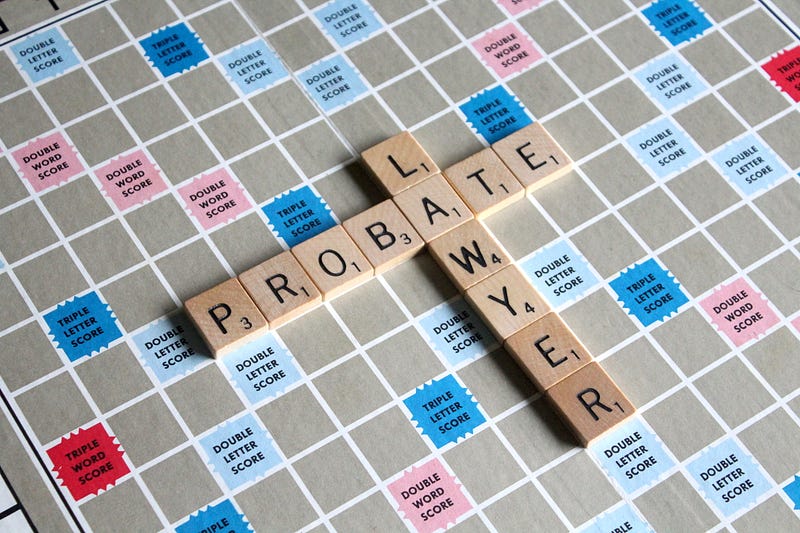
I’ve been a Private Client (probate) solicitor ever since. I’m a partner now, and head of the department. I have to do a hell of a lot of admin and during lockdown, working from home without my beloved secretary, I’ve realised that I am truly an old lady/Karen hybrid when it comes to navigating all the technology that supports my work. But nevertheless, I find that I still enjoy what I do.
I spent a long long time, a few years ago, fretting that I’d come horrifically off-course in career terms. I thought I’d gone soft, that I’d lost sight of the type of lawyer I could be, that I’d let myself down and not lived up to the person I thought I could be. Basically, because I wasn’t the notorious RBG, making the world a better place — and equally, I wasn’t reducing courtroom opponents to tears with my well-worded putdowns either — I felt like a failure.
Such bollocks, is what I try tell myself now, if those thoughts try to creep back. Such absolute codswallop. I’m not a failure just because words come more easily to my brain in written form than they do in off-the-cuff speech. I’m no less of a lawyer because I don’t want to go head-to-head with a pinstriped wideboy on a rainy Thursday morning. There’s a quiet dignity in regularly unpicking the meaning of an Act that was brought into law in 1825 and still has to apply today, in a world of digital assets and crypto-currency and blended families. It’s OK. It’s definitely OK not to be Ally McBeal.
Won’t lie, though. Still covet the jaunty little suits.