
I Am Living Well on a Pension in Mexico
I was fortunate enough to be able to retire at 55 years old, with a pension in the United States. I had been a college professor with tenure for 25 years. I was fortunate enough to get my job before universities started to hire mostly adjuncts for minimum wage.
I got my pension by consistently contributing to Ohio State Teachers Retirement System for 25 years. Even though anyone can retire at 55 years old after 25 years, people were shocked when I did it. Other professors did not even seem to know that this was possible. To tell you the truth, I’m not exactly sure why.
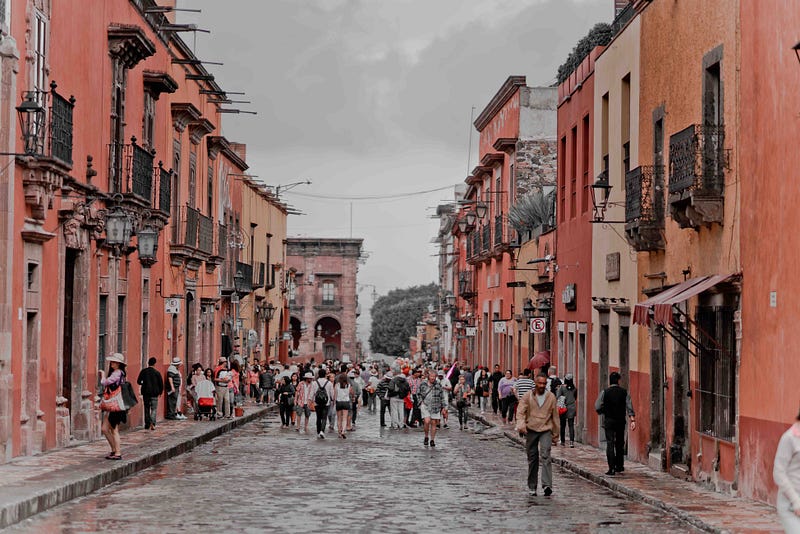
Soon after I retired, I moved to San Miguel de Allende, Mexico, a popular city for tourists and retired Americans. I have lived here for over six years now. Sometimes, I almost forget what it was like to live in the United States. I moved during the Obama administration, and things have changed a lot since then.
Back in 2015, after only four weeks of visiting, I bought my house for $95,000 in cash. I had saved this money over the 25 years that I was teaching. It helps that I don’t have to pay rent, and I like living in my house.
One of my close friends who lives in the same neighborhood pays $700 US dollars a month in rent. It is a large and beautiful house, and she has fixed it up nicely. It is within walking distance of the town center as well as many shops and restaurants. This friend moved from San Francisco, where her rent was $1700 per month for a one-bedroom apartment. Her house here has three bedrooms, two full baths, a full kitchen, living room, dining room, foyer, a large courtyard with a garden, and an upstairs studio. She is also very happy with her life here.
My utilities are amazingly cheap compared to what I paid in the state of Ohio. I probably pay $25–$50 US dollars for water and electricity combined. I have a solar water heater on my roof, so I don’t have to pay for energy to heat my water. I wash my clothes by hand and hang them out to dry, so I don’t need energy for a washer and dryer. My house has no furnace or air conditioning, so I don’t need energy for those things. When I need heat, I use an electric space heater in my room, and when I want to cool down I use an electric fan.
My typical monthly expenses run between $1500 and $2000 US per month. My biggest expense is food. I have never liked to cook. Since the pandemic, I have gotten in the habit of having my food delivered by Uber Eats. I treat myself to coffee and cake from Starbucks every morning, which costs about $12-$15 US dollars. I usually spend about $30 US dollars a day on food. If I wanted to be more frugal with food, that would be possible here.
For entertainment, I spend a lot of time reading and looking at videos on the internet. Most of this is free, except for Netflix. Somehow, I still share my Netflix account with my son in the United States and he is paying the bill now. I go out in the evenings only occasionally.
I pay my cleaning lady about $55 US dollars per week, which is higher than the going rate. My cleaning lady is also my neighbor and is helping to support her extended family, so I choose to be generous. I also pay a dog walker about five dollars a day. He is a semi-employed man with a family and wanted the job.
Most of the time I buy my clothes at yard sales or the Tuesday market, which is similar to what we call a flea market in the United States. Here in Mexico, we get a lot of dead stock from clothing stores in the United States. This is clothing that didn’t sell in the United States and is sold in bulk to poorer countries. Some of the clothes that I find are still pretty good, in my opinion.
I like clothes and have way too many. I usually end up giving them away every once in a while. The last time, I put them outside with a sign that said “free clothes” and most of them disappeared fairly quickly.
It can be difficult to make a living in Mexico, especially if you don’t speak the language. Most of the Americans I know brought money with them in the form of savings, pensions, and social security.
I do know a few people from the US who work, but they are usually younger than retirement age. Some of the people that I know work as real estate agents, often selling to other Americans who want to either move here or buy vacation homes. A few people I know work as art gallery owners, artists, and art teachers. One lady I know makes a living by leading art workshops and tours for other Americans.
I have never had a car, and don’t care to have one. A taxi ride here in town usually costs only three or four US dollars. I also take Uber a lot, which is sometimes even cheaper but is harder to get and takes longer than hailing a taxi on the street. We do have city buses that cost about 50 cents, but I don’t take them very often, mostly because they are not that convenient to go to the places that I need to go to.
One of the best deals here is the buses that you can take to go to another city. The stations are clean and safe, and the buses are very comfortable. A first-class five-hour trip to Mexico City is only about $25 US dollars. This includes a recliner-style seat with a tv-movie screen. Before the pandemic, I often traveled to nearby cities for sightseeing.
For stuff that I can’t buy here in town, we have Amazon, and the deliveries are often free. We also have at least one grocery store and pharmacy that deliver. Deliveries here are usually pretty cheap, ranging from two to five dollars.
Prescription drugs are very cheap here, and often don’t need a prescription. I buy my prescription drug Paxil for about $20 US dollars a month, and no health insurance is needed.
I have had six surgeries here, and I have paid for them all with my savings and/or credit card. I broke my shoulder that needed surgery and a short hospital stay. I also broke my ankle, which required two surgeries. I later discovered that I had weak bones due to a Vitamin D deficiency. For the last few years, I have taken a Vitamin D supplement which has corrected the problem. I had cataract surgeries in both eyes and retina surgery in one eye. I don’t remember the prices now, but they were about $2000-$2500 US. The medical care that I have received here in Mexico is as good as, if not better than, medical care that I received in the United States. A typical doctor visit here is about $40 US dollars, again no insurance is needed.
Although I miss my family sometimes, I really enjoy living in Mexico. The weather is very nice all year and the town I live in is very beautiful. I rarely worry about money anymore, and currently have no debt. It’s not necessary to speak Spanish here, but it helps to know some. Many people take lessons, and work at it, at least a little bit.
I would recommend it to people who are adventurous enough to try it.


