
I Am Happy Not to Be Young Anymore
Even though I’m surrounded by messages that I should worship youth, I’m grateful for the years under my belt

As far as I can see, we have two choices about the attitude we form as we mature. We can wallow in negatives or embrace gratitude. I know which I prefer.
There’s no denying aging comes with challenges. But every stage of life presents life lessons, and they occur at the right times. When I was young, I didn’t know as much as I know now. That’s how life works. We aren’t built with experience. It’s something we gain as we move through time.
Lived experience, according to Patrick O’Leary and Ming-sum Tsui reporting in Sage Journals, “refers to personal knowledge gained from direct experience that would not ordinarily be apparent through observation or via representations constructed by a third party who has not ‘lived’ it through the eyes of those who were in the situation.”
My experiences opened me to wisdom, offering empathy that wasn’t in such a vast supply due to a lack of lived years in my youth. I read a great deal back then. I studied and still do now. I watched documentaries, attended classes, and learned about psychology and what makes us tick. Everything was new and exciting.
Much of the knowledge gleaned, however, didn’t transform into wisdom until years later. I can’t attest to how long it takes anyone else to become more sagacious. But my journey took a while. Now I understand more than I did, and I’m happy to be in my fifties.
Redefining aging
I was astonished at the negative messages about aging I encountered once I left my forties behind. Having studied mental health and worked in the mental health profession for much of my life, it was clear that mindset played a massive part in our happiness.
I knew, though, that I could choose what to focus on. I could set my antenna to pick up positive signals about growing older that supported, uplifted, and encouraged me.
It was time to redefine aging, seeking enlightened opinions and fresh inspiration that showed leaving youth behind and traveling into the depths of maturity was valuable. Or, perhaps more positive than valuable, a gift.
I already realized that with experience comes knowledge, potential wisdom, and empathy, all excellent bonuses for aging. However, I imagined there must be more. I could go to town with the idea growing older comes with perks we don’t always see. Highlighting them would make me smile and could lift the corners of my reader’s lips, too.
After all, many animal species croak soon after their childbearing years. We humans, however, if lucky, continue for decades after we lose the ability to bring new life into the world.
There must be reasons we’ve been blessed with a longer life than many. We’re here on purpose, by design. That’s worth remembering.
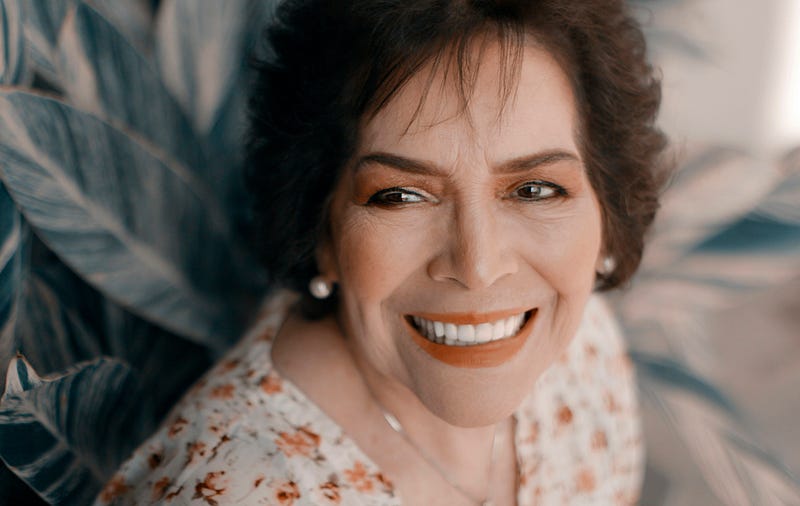
I stopped tuning into negative messages about aging
The first step, before you can soak up the possible benefits of living a long life, is to stop letting negative messages about aging leach into your subconscious. Plenty of sayings and beliefs are associated with age, many of them damaging.
Instead of repeating them here, adding to potential anxiety, I’d rather suggest you may want to notice and mentally question adverse statements. They will likely stem from the media and, potentially, your doctor, friends, family, and neighbors. Even our nearest and dearest repeat them on autopilot because they are deeply embedded in the human psyche.
When somebody insists physical or mental misery is inevitable as you age, stop to think. I like to ask myself whether what I hear is true for everyone. Sometimes, there’s an element of actuality. However, challenges are often exaggerated or applied in general terms and don’t reflect reality for every individual. Also, their pervasiveness can override more positive messages.
Researchers reporting in Science Direct discussed study results showing that pain-related words triggered the pain regions of the brain. “The aim of the present study,” they said, “was to investigate brain activation elicited by pain-related compared to negative, positive, and neutral words during two attention tasks. Our results indicate that pain-related words activate regions associated with the pain matrix, especially when subjects were explicitly attending to words.”
I found these results interesting since many of the adverse messages we hear about aging include words linked with pain. Could it be that they have the power to encourage the experience of pain?
This is an excellent reason to stop repeating them ourselves. We can’t stop anyone else from mentioning their ailments or pain-correlated fears regarding growing older. But we can take charge of our language and make it positive.
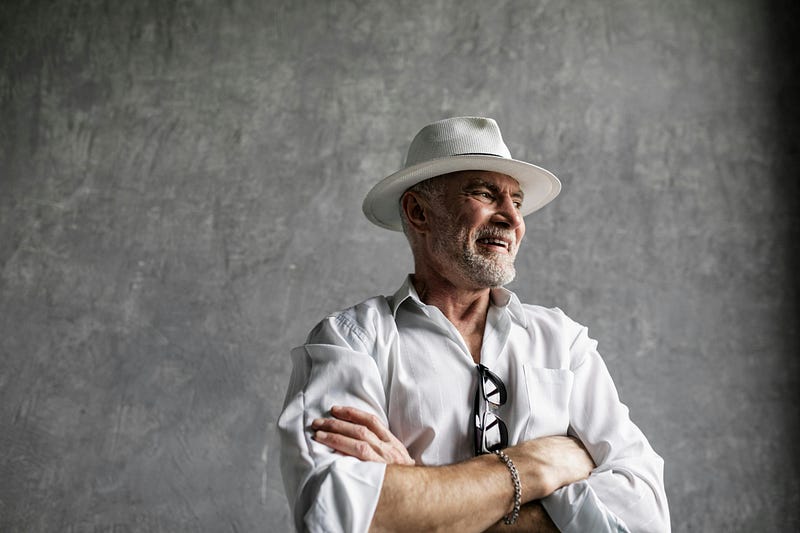
I started counting blessings that come from maturity
The next step to seeing your age in a positive light is to recognize your blessings. I don’t mean try to pretend everything’s fantastic if it isn’t. Instead, we can look at genuine, personal benefits.
I’ve recognized my wisdom grew as I got older, for example. My life is also more stable in many ways. I know what I want and no longer suffer fools gladly or aim to please. I enjoy the little wonders in life and savor them so that they expand, and I attract more of them. I take time to soak up sunsets, birdsongs, and sweet fragrances.
I let minor grievances go quickly, focus on making life joyful, and no longer spend time doing meaningless things since I know what does and doesn’t add purpose and happiness to my life now.
Further, I understand about lifestyle balance and am not interested in excess. I know how to trigger my bliss, relax in peace, and often turn to humor, acceptance, or solution-finding rather than getting upset.
I encourage you, whatever your age, to list your blessings. It will give you something positive to refer to when the chips are down and help clarify positive aspects of your life.
My antenna picked up these positive messages about growing older
I decided it would be helpful to increase my awareness of the benefits of growing older by researching the topic. Here’s what I found:
Smithsonian Magazine put forward some compelling reasons to embrace and value aging. Helen Fields writes, “Even as certain mental skills decline with age — what was that guy’s name again? — scientists are finding the mind gets sharper at a number of vitally important abilities.”
She describes how, according to a “University of Illinois study, older air traffic controllers excelled at their cognitively taxing jobs.” Apparently, “They were expert at navigating, juggling multiple aircraft simultaneously, and avoiding collisions.”
So, some of our vital mental skills are enhanced as we age, which means we can contribute to the world and remain valuable, a finding not to be sneezed at.
Fields mentions a University of Michigan study showing that “People also learn how to deal with social conflicts more effectively.” It would seem that, although most of us don’t ever think about it as such, mastering our emotions is an actual skill, and it increases with age.
National Library of Medicine offers another gem, saying that a 2008 telephone survey (comprising 340,847 subjects) shows well-being increases after age fifty. That’s unexpected good news for those imagining contentment declines.
Stanford psychologist Laura Carstensen backs this up in her TEDx talk, Older people are happier. She describes how survey respondents aged 65 and older fared far better in the happiness stakes than middle-aged and younger people who testified to experiencing more serious psychological distress.
Carstensen mentions findings demonstrating that older individuals have more positive experiences. She states that there’s a slight downturn in very advanced years. However, it doesn’t dip to the level of distress that younger people report. Thus, we can look forward to feeling relatively content during our twilight years.
She remarks that her research doesn’t always mean older adults are happy all of the time. Rather, it indicates that they handle emotions like sadness better and can simultaneously experience several emotions, like appreciation and sadness — the term emotional intelligence springs to mind.
One of the reasons for greater happiness in later life, explains Carstensen, is that individuals naturally begin to focus more on positivity and turn away from negativity. She talks about a study where older and younger people were shown positive and negative pictures.
The younger individuals focused more on the distressing pictures, while the older remembered seeing mostly positive images. We are built to perceive aspects of life that will likely bring us joy as we mature.
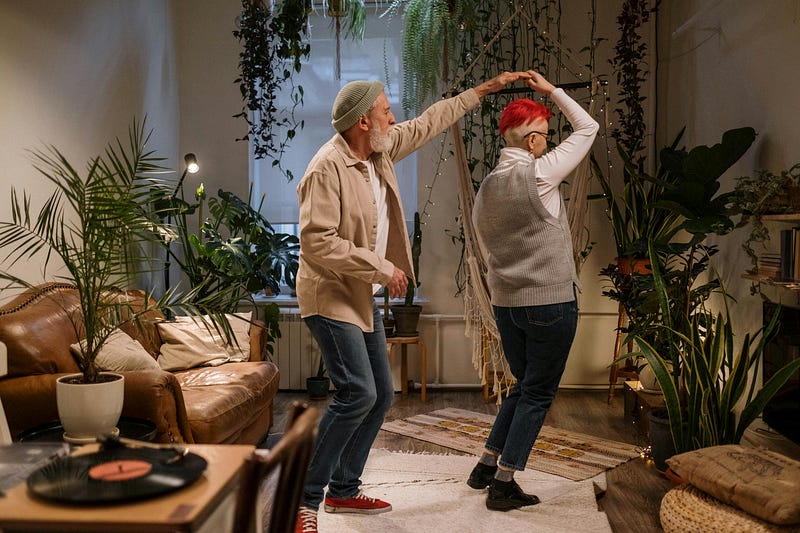
As well as looking at research on aging positively, I keep an ear out for encouraging statements. “I’m braver than I used to be,” and “I care less about what others think of me,” said my friend Sara.
I also overheard this doozy recently from an older woman walking her dog. “I’ve lived a long time and earned my right to speak my mind, have fun, and do what makes me happy.”
I couldn’t agree more.
Maybe, we outlive many other species as we age because we’re still worthy and can take pleasure in life. With our increased emotional intelligence, empathy, and capacity to look on the bright side, we can support younger generations as they learn and grow. We also gather more wisdom until our dying day.
Aging comes with challenges, but I am happy not to be young anymore. I intend to stay positive, embrace my age, and see aging as the bringer of potential gifts that weren’t so available in my youth. Perhaps, after reading this, you feel the same, too.