
I Am Building A Tower For A Giant
Thomas McIlhenry and his Vision Quest for Marcus Houston
Thomas McIlhenry woke up early to prepare a brief for a client’s appeal, and he looked haggard and exhausted, surrounded by stacks of legal papers and law books scattered across the kitchen table. He was trying to handle his typical day that day. He still had to work on Marcus Houston’s motion for a retrial. He was also trying to find a witness who he believed existed who could exonerate Marcus.
His wife Elena came in at seven-thirty to begin breakfast and found him sitting pensively with his head propped up by his arms like tripods.
“How long have you been up Tom?” She asked him as she opened the refrigerator to look inside.
“Since three o’clock.”
“You can’t keep doing this and hope to function,” she counselled.
“Don’t you think I understand this? There are not enough hours in the day to do the things I need to do. It would be great if it were like a loop and I could just keep coming back and getting more time. What time is it? My eyes are so tired, I can’t see the clock.”
“It’s seven thirty-seven,” she answered.
“Like the plane. I find when I’m really tired my mind starts to make the oddest connections. Like seven thirty-seven was how much we spent on a hotel bill on our honeymoon.”
“Why would you even remember something like that?” she asked.
“That’s the question, isn’t it? Why do we remember the things we remember and forget the things we forget?”
“It’s too early for those kinds of questions. Anna will be up soon and the fast race starts again,” she answered.
She noticed that he had a book called “Chaos” sitting among the papers.
“A little light reading, Tom?” she commented as she picked it up to look at it.
“Fractals,” Tom told her. “It’s about how beneath what appears to be random variations there are hidden patterns.”
She set the book down.
“So, what’s on the agenda for today?” She asked him.
“Today I have a court appearance at nine and a house closing at one o’clock and then I have to go out and see my brother at the farm.”
“Is something wrong?”
“No, just some papers he wants me to take a look at.”
“Maybe he just wants to see you and he finds reasons for you to go out there. I think we should go for a visit this weekend, bring them some pies and homemade bread.”
“They’d like that.”
“I’ve got to get back to this brief,” he told her.
“Do you want something special for breakfast?” she asked.
“No, the usual is OK.”
The usual for Thomas was two scrambled eggs and sausage which he would eat at work.
Across the country, hundreds of miles to his east I was also eating scrambled eggs and sausage at a small table in my bedroom. My father had put the table in my room so that I could more comfortably draw my pictures. He had also bought me a professional drawing pad and colored pencils. My father stood in the doorway of my room watching me slowly eat and he wondered what his silent son was thinking.
“Would you like more juice?” He asked me.
At first, I did not respond.
“Would you like more juice?” he repeated. “Your bus should be here in fifteen minutes.”
My father seemed to be dividing his life into 15-minute intervals, just like Liam McShane.
I turned my head around as though to respond to the question.
“Today he finds his witness,” I spoke matter-of-factly as though making an announcement. My father had no clue what I was talking about, but I couldn’t say more. I couldn’t explain the implication of my statement and the difficulty I knew Thomas would have with this witness. My father could see a stream of tears on my left cheek.
“Who finds a witness?” My father asked me.
“Cranberry juice, please,” was all I could say.
“I’ll see if we have some downstairs.”
As my father began to descend the stairs, he pondered what all these random seemingly unconnected statements would mean. He searched through his pantry until he found an unopened bottle of cranberry juice, which he opened and poured into a glass. Then he began to climb back upstairs carrying the glass.
When he returned to my room, I had finished my breakfast and was sitting quietly on my bed with my legs crossed.
“I found the juice,” he told me.
I turned my head toward my father for the first time and spoke clearly, “Thank you.”
“Thank you,” my father responded.
As he stood in the doorway, he reflected on everything that had happened since he brought me home. It had been an awkward five months and he still wondered what it all meant. He could hear the bus honking from downstairs.
“Time to go, Jonathan. Your bus is here.”
I stood up a moment, looked around my room and then began to walk the thirty-five steps from my bed to the curb where the bus was waiting. My father followed behind me as he had done over a hundred times before. I did not say a word until they stopped at the street and the bus driver opened the doors. Then he turned around and spoke clearly and firmly, “I love you, Daddy.”
His father immediately began to cry.
“I love you too.” He began to hug me, hesitating at first.
“Today, he will find his witness,” I repeated the words I spoke earlier. “He will begin a journey to the other side of the world.” Then I turned around and climbed into the bus. My father was even more confused than before. He hoped one day he would be able to communicate freely with his son. I knew that day would come and make us both happy.
Meanwhile, back in their modest home in Green Bay, Anna who was eight years old, was coming downstairs to breakfast. She seemed groggy as she entered the kitchen with her auburn hair going in several directions at once.
“Good morning, Mommy,” she greeted her mother who was at the kitchen sink washing a dish.
“Good morning, Daddy,” Thomas was finishing his last of a cup of coffee.
“Good morning, Princess,” he responded.
“Today I have a field trip,” Anna told him as she awkwardly climbed into a chair across from him.
“What do you want for breakfast, honey?” her mother asked.
“Pancakes,” she responded.
‘Tell me about your field trip,” Thomas told her.
“We’re going to a museum to see old trains,” Anna answered.
“Sounds exciting,” Thomas responded. “I love old trains.”
“We have to get ready for school,” her mother told her as she came over to the table and encouraged her to go upstairs to dress. “By the time you get back down here, your pancakes should be ready.”
Anna left the kitchen and went back upstairs to dress.
“Are you going with Anna to the museum?” Thomas asked her.
“I can’t today. I have to go to the DMV to renew my registration,” she answered.
“I’m sorry. I told you that I would do that!” he apologized.
“It’s OK, Tom, I know the circumstances.”
“When I get this man out of prison, you’ll see that everything we’ve sacrificed will have been worth it.”
“You’re a good man, Tommy. That’s why I married you. Maybe it will go quicker than I expect and I can meet them at the museum.”
Anna came downstairs after almost fifteen minutes wearing a blue tee shirt with a picture of an old railroad locomotive on it.
“Where did you get that tee shirt?” Thomas asked her.
“Mommy bought it for me.”
Her mother set a plate of pancakes and a glass of orange juice on the table.
“Sit down and eat, honey. We don’t have but fifteen minutes before the bus arrives.”
Anna sipped the orange juice and her mother poured MacGyver’s strawberry gourmet syrup out in a spiral on top of the pancakes.
“I found this at the health food store. A little pricey. But it’s delicious.”
“Where did you get the tee shirt?” Thomas asked his wife.
“I ordered it from the museum,” she responded.
He pushed the cup aside.
“I really should be leaving to go to the court.”
“Please stay a few minutes more. Anna really loves it when you put her on the bus.”
“Please,” Anna told him as she was chewing a piece of pancake.
“Anything for you, Princess,” he responded.
Anna finished her juice and ate most of the pancakes and her mother wiped the syrup off her face with a napkin.
“The bus should be here about now,” Yelena told them.
“I’ll take Anna out, where’s her bag?” he told her.
“It’s by the door.”
Thomas took his daughter by the hand and walked her to the front of the house. When he opened the front door he could see the small yellow bus waiting at the curb. He waved a moment and taking her left hand he began to walk her to the curb.
“Is there anything you want from the museum, Daddy? Mommy gave me some money to buy something.”
“Buy something for yourself, Princess.”
When the driver opened the door, he recognized her immediately as Emily Manchester. He had known her since they were children together in elementary school. He had begun to notice these odd synchronicities.
“Is that you Emily?” he asked her.
“Yes.”
“You’re my daughter’s bus driver?”
“Almost four months now.”
“What a small world?” He turned to his daughter. “I used to go to school with your bus driver a very long time ago.”
His daughter turned around just as I had done an hour earlier and told him, “I love you, Daddy.”
“I love you too, Princess.”
She hugged him and climbed onto the bus. He stood a few moments at the curb and watched the bus pull away. He seemed a little sad as he walked back to the house to get his things ready so he could leave.
When he reached the front door, his wife opened it for him.
“That’s why you should be here more often when she leaves. It’s one of my favorite moments of the day.” She reached into her purse and removed a small package. “I also have something for you,” she told him.
“What is it?” he asked.
“Patience, Tommy.” She handed him the package.
He opened it and found a small lapel pin with a locomotive.
“I know how much you like trains, Tommy. That’s all you talked about on our first date.”
She pinned the locomotive pin on the right lapel of his jacket.
“You know they’re going to make me take it off before I go through the metal detector at the courthouse.”
“You know our daughter is going to buy you something at the museum today, no matter what you tell her. If I manage to get over there in time, is there something you’d like?” she asked.
“No, I’m fine. Encourage her to get something for herself.” He paused a moment. “I have to be going.”
He put on his jacket, which he had laid on the arm of their sofa and he prepared to leave.
“I have one favor to ask of you,” she told him. “When you go and see your brother Andrew later today, ask him for their email address. I want to send some pictures I took.”
“I don’t know that Andrew has an email account. He’s like our dad, technology resistant.”
She leaned over and kissed him.
“I would need supernatural intervention,” he responded.
He lifted his briefcase off the floor and began to walk toward his car. It was a small Nissan Sentra which was over ten years old.
The engine hesitated a moment before it started. His wife came out of the house and climbed into a newer white minivan parked beside him. She waved as she began to back up. He let her go first and watched her as she pulled forward moving west. He sighed a moment then began to back up himself. His destination, the County Courthouse was east of their house. As he began to accelerate down the street his eye caught the street sign at the corner of Clemons Ave. They lived on Hadleyburg Street one of the many Mark Twain street names in the small suburb in which they lived.
For the oddest reason he thought of circles, how every movement in his life seemed to come back to where he began; house to courthouse, courthouse to farm, farm to house again and for his wife and countless others played out the same phenomenon, house to DMV, DMV to museum, museum back to house, each person in untold numbers of iterations, everything was demarcated by circles, the seasons, the cycles of the moon, the rotation of the earth, the hands of clocks and all tied somehow to the number twelve, in syncopated rhythm back to the very beginning of man’s consciousness of time and space.
He seemed lost for a moment in a nexus between consciousness and something else, an awareness of something larger than himself, as though a glimpse of the fractals, which organized the seeming randomness of his life. He shuddered a moment as he saw a stop sign just ahead and slammed on the brake to stop.
In Yonkers, New York, my bus had stopped at the Genevieve School and the matron looked over to me as I was drawing in my sketchbook for the whole thirty-five-minute ride from my house in White Plains. She could see that I had drawn a portrait of a young girl of about eight with auburn hair and a blue tee shirt with a locomotive.
“That’s very beautiful, Jonathan,” she told me.
I didn’t respond.
The bus driver opened the doors and all the children, seven boys and three girls began to file out one by one. I was the last to leave and I carried my sketchbook gently in my left hand. In my right hand, I carried a small red ball.
When the female aide Elizabeth came to get me to take me to my classroom and she told me, “Good morning, Jonathan,” I responded only with one word “circle.” She could see the red ball in my hand.
“Yes, circles, Jonathan. A ball is a kind of circle.” I put the ball back into my pants pocket as my teacher Ms. Belmont greeted me.
I had settled into a daily routine, following the rhythms of those around him. Almost no one suspected the whirlwind of sensation that was going on inside of him. They looked at my pictures and did not understand them, but I, Jonathan, was creating a record as pieces of a large multifaceted puzzle. It would also become a roadmap for others to find their way to the sanctuary I was creating. The small details would become important once the patterns of this puzzle became more visible.
As I sat down at the circular table around which all of my classmates had gathered, I laid my sketchbook oblong on the table with the top pointing west. I had never spoken a word in the entire time I had been in the class. But to everyone’s surprise, I said, “I loved my mother.”
“I’m sure you did, Jonathan.” Mrs. Belmont responded sympathetically. “We’re all sorry that she’s gone.”
I lifted the cover of his sketchbook and ripped out a page on it was a picture of the classroom with the large table in the centre with them all sitting and working.
“It’s beautiful, Jonathan,” Ms. Belmont told him earnestly.
I pointed to the table and said, “Circle.”
Yelena arrived at an office of the Wisconsin DMV and outside its offices was a large traffic circle with an island flower garden in the center. She went around the circle nearly five times before she finally found an open parking space. Seven miles away her husband Thomas also had arrived at the courthouse frantically looking for a parking space.
He was fifteen minutes late and he hoped his case hadn’t been called. He ran from his car to the front of the building. When he arrived at the front doors, there was an African American woman waiting nervously in front of the doors. She was holding a drawing and looking at the people who were entering. When she saw Thomas her face lit up and she approached him.
“Are you Thomas McIlhenry?” She asked him.
“Yes, I am,” he answered.
“My name is Tanya Patterson. I need to talk to you for a few minutes.”
“Unfortunately, I’m a little late for a court appearance.”
“I came to talk to you about my brother Malcolm. I believe he’s the witness you were looking for, to get that poor man out of prison.”
“How did you know about that?” He asked her.
“I got a letter,” she answered.
“A letter from whom?” He halted for a moment. “I should be out about ten thirty. If you don’t mind waiting.”
“I’ll wait,” she told him. Then Thomas entered the building.
As he went through security, he couldn’t help but think about how expectant her face appeared to him. He somehow knew that she was going to wait for him. He knew these court appearances could take up to two hours.
“You seem distracted, Mr McIlhenry,” one of the security people greeted him as he rushed toward the courtroom.
“A lot of objects on my table,” Thomas responded. He remembered for a fleeting moment, sitting at a table in kindergarten with colored blocks scattered in front of him.
“What are you building, Tommy?” His teacher Ms. Hardaway had asked him.
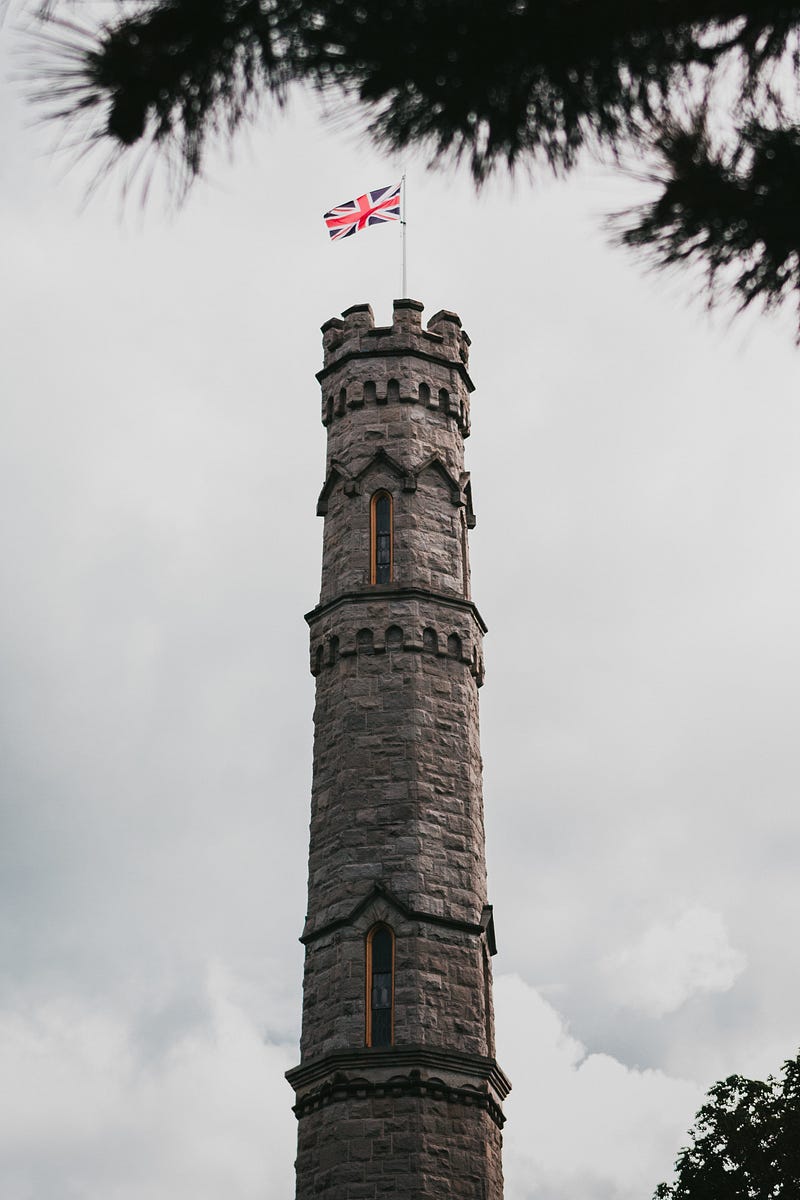
“I’m building a tower,” he had told her. “A tower to catch a giant.”