
Essay Contest
I Am a Woman’s Rights
Incite Change Contest #2: Racism in Feminism
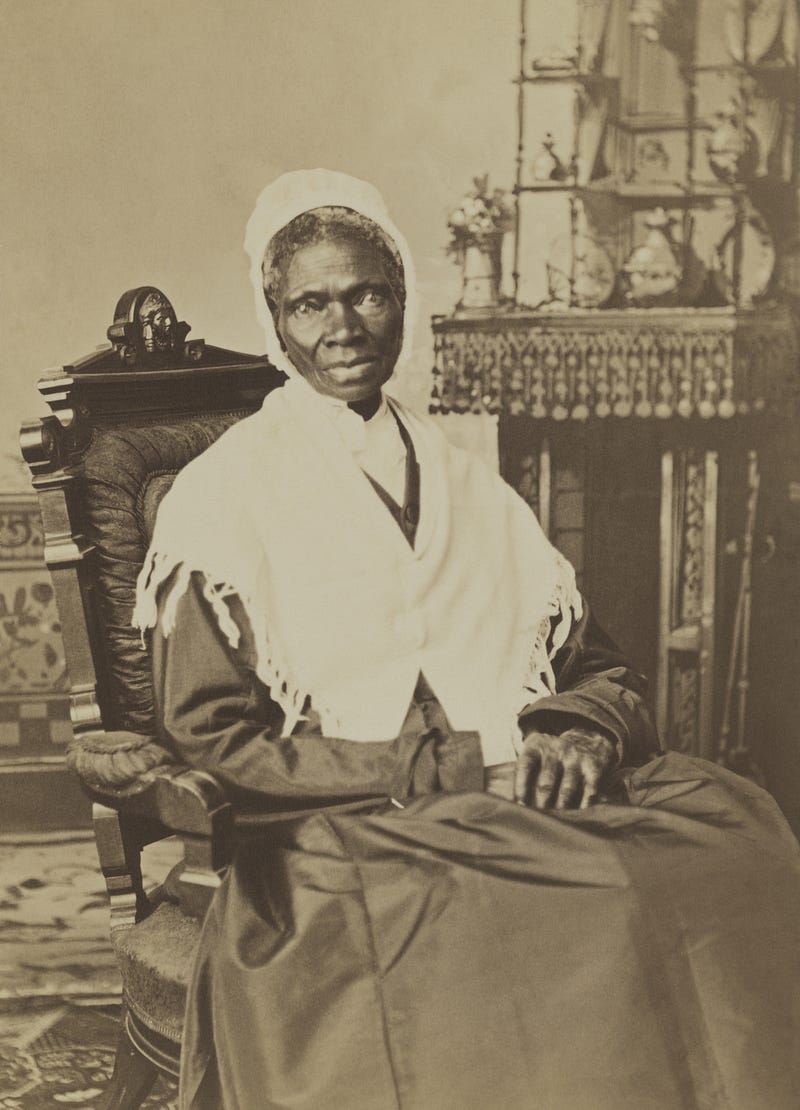
May I say a few words? I want to say a few words about this matter.
I am a woman’s rights. I have as much muscle as any man, and can do as much work as any man. I have plowed and reaped and husked and chopped and mowed, and can any man do more than that? I have heard much about the sexes being equal; I can carry as much as any man, and can eat as much too, if I can get it. I am as strong as any man that is now. As for intellect, all I can say is, if women have a pint and man a quart — why can’t she have her little pint full? You need not be afraid to give us our rights for fear we will take too much, for we cant take more than our pint’ll hold. The poor men seem to be all in confusion, and don’t know what to do. Why children, if you have woman’s rights, give it to her and you will feel better. You will have your own rights, and they won’t be so much trouble. I can’t read, but I can hear. I have heard the bible and have learned that Eve caused man to sin. Well if woman upset the world, do give her a chance to set it right side up again. The Lady has spoken about Jesus, how he never spurned woman from him, and she was right. When Lazarus died, Mary and Martha came to him with faith and love and besought him to raise their brother. And Jesus wept — and Lazarus came forth. And how came Jesus into the world? Through God who created him and woman who bore him. Man, where is your part? But the women are coming up blessed be God and a few of the men are coming up with them. But man is in a tight place, the poor slave is on him, woman is coming on him, and he is surely between-a hawk and a buzzard.
— Sorjourner Truth
From Marius Robinson’s transcription: Published June 21, 1851 in the The Anti-Slavery Bugle
Many of us are aware of Sojourner Truth as an anti-slavery advocate and many of us are familiar with her feminist speech “Ain’t I a Woman?”
The only problem is “Ain’t I a Woman?” was never a true version of what she said. This, most common and popular version of her speech was published 12 years after the original transcription was published.
Marius Robinson, a close personal friend of Sojourner's, attended the event where she spoke in 1851 and was seen to take notes. It is said the two got together before he published his transcription and went over what he would write. Sojourner, it is assumed, signed off on his transcription and he published it a few weeks later in the Anti-Slavery Bugle.
12 years later, in 1863 Frances Gage published the most common but highly inaccurate transcription in the New York Independent. He heavily changed the words and wrote them in a fake slave dialect.
You can find both versions to compare and contrast in the Sojourner Truth Project here and find the original Anti-Slavery Bugle article in the Library of Congress here.
What I find most interesting isn’t the speech itself, though I like it a lot, but is the reason for the fake slave dialect and for changing the words for a primarily white audience.
I’m uncertain of Frances Gage’s intent, but the end result is the changes were anti-feminist and racist, both. Denigrating Sojourner’s actual words into a black face parody of feminism.
The fact that this version of her speech is the most common, the most popular says a lot about the endemic racism of society; then and now. Racism hasn’t gone away, nor has the fight for women’s rights. The feminist movement, it seems, has failed to bring white women and women of color together in the mutual goal of women’s equality. Women of color have often felt left out and left behind in the contemporary feminist movement. As have transgender women, bisexual and homosexual women, women of a certain class, and anyone who doesn’t fit a certain (white) mold. (Make no mistake, Western countries have an invisible and unspoken caste system, but that is a topic for a different essay.) The modern feminist movement lacks intersectionality.
A hot topic, among many hot topics of the last decade of the 21st century, intersectionality — a buzzed-about term that means that inequalities based on class, race, gender and other identities should be seen as intersecting, rather than as separate issues — has recently gained a lot of traction with social media influencers and celebrities.
Ariana Grande tweeted about intersectionality, “. . .it ain’t feminism if it ain’t intersectional.”
The Daily Vox tweeted about what intersectionality is not, “White feminism is a particular strand of feminism, practiced by white women, that is not inclusive. It is not intersectional”
There are many more essays, quotes, articles, and scholarly papers on Feminism, Intersectionality, and Racism in Feminism. Look for them. Write about them.
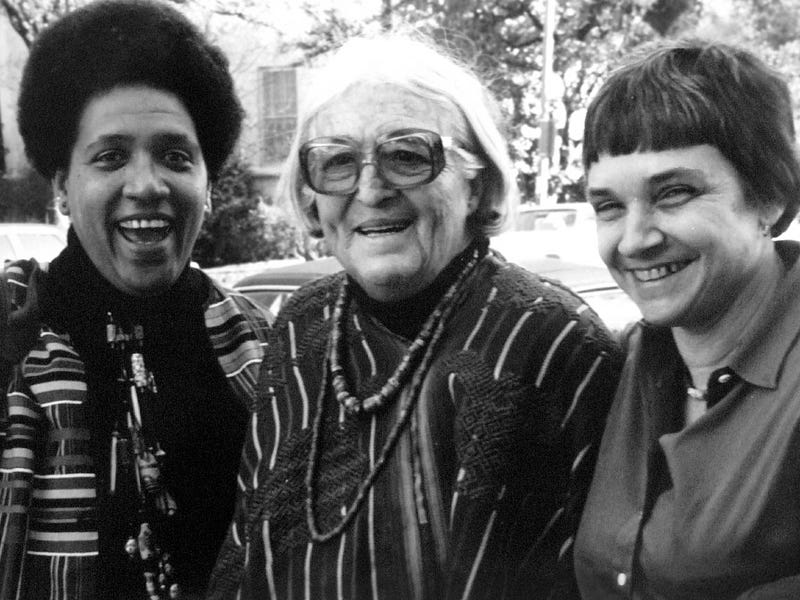
“There is no such thing as a single-issue struggle because we do not live single-issue lives.”
“There’s always someone asking you to underline one piece of yourself — whether it’s Black, woman, mother, dyke, teacher, etc. — because that’s the piece that they need to key in to. They want to dismiss everything else.”
“The failure of academic feminists to recognize difference as a crucial strength is a failure to reach beyond the first patriarchal lesson. In our world, divide and conquer must become define and empower.”
— Audre Lorde
We all know racism is endemic. We all know sexism is endemic. But what happens to feminism when 40% of women in the United States are not of European ancestry? *source?
This is the topic of this month’s Incite Change Essay Contest #2: Racism in Feminism. I don’t want to spoon-feed you my ideas and thoughts on the topic, but I will give you some places to start your research.
Rachel Cargle wrote “White Feminism Is White Supremacy in Heels” for HarpersBazaar.com in 2018. This (linked) opinion piece is an excellent starting point for research for this month’s Incite Change Essay Contest.
Another is Jess Mally’s “Why We Are Only Truly Feminist If We Are Also Antiracist"
Famous feminists like bell hooks and Gloria Steinem are still talking about race, caste, and class both within the feminist movement and without. Both have written books on the subject. Do a quick Google search. You’ll find them.
This is a deep subject. It is an important subject, and essential to our survival as a species. I’m increasing the word limit to 1000, therefore. The rest of the essay contest rules are as follows:
- You must follow TBI submission guidelines to a T.
- You must have the correct format for the kicker, Title, subtitle.
- You must follow the TBI Ko-fi page.
- You must follow all editors of TBI (we are listed on the Ko-fi page)
- You must provide the following links at the bottom of your essay:
https://ko-fi.com/thebadinfluence
6. Your essay cannot exceed 1000 words but can be as few as 50 (longer doesn’t necessarily mean better)
7. You must correctly attribute your images
8. No plagiarism! Please cite and link your sources.
9. Please use Essay Contest as your kicker and Incite Change Contest #2: Racism in Feminism as your subtitle
10. Essays can take any format: personal essay, opinion piece, satire, or poetry
Winning stories won’t necessarily be the longest stories, but will include fresh opinions and offer potential solutions.
The prize for the winning essay (only one winner) is $10.00 and a guest blog post on the Ko-fi page where you can and should promote your personal links and write about anything that candies your underwear. We’ll push your story like inner-city heroin and feature it on the TBI homepage and all the social media.
Here’s the schedule May 5 to May 18: Submissions accepted May 19 to May 25: Roundup of all submissions published, editors deliberate May 26: Winner announced
We want to see our TBI writers and editors get paid. Help support the cause by following and donating/purchasing
Reuben Salsa Jonica Bradley Marla Bishop Edward Anderson Melissa R. Mendelson Demeter deLune Marilyn Flower