
THE NARRATIVE ARC
I Am a Mexican Woman Working in the USA, and I Was Detained at the Border — Again
I’m too familiar with Custom’s little room, which is actually their detainment space
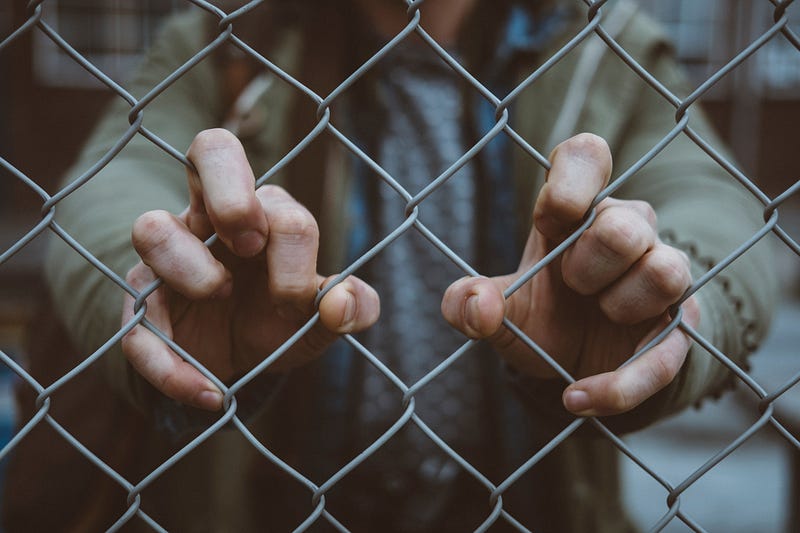
“An officer will escort you to the interrogation room.”
I nod in resignation. Seconds earlier, I had handed the officer my valid passport and visa. I lug a three-inch yellow folder bursting with legal documents, so I wouldn’t hear these words again.
I am exhausted, but I try my best not to look like it. I have just landed in Los Angeles after an eight-hour flight from Mexico. Before getting in line for customs, I splash my face. I swap my sneakers for Doc Martens. At the border, looks matter.
But it’s not enough.
“Wait over there.”
Click. That’s when the timer starts. Thirty seconds. That’s how long I have to text my parents I’ll miss my flight before the immigration officer confiscates my phone. Thirty seconds to tell my boss that I’ll miss work. Thirty seconds to text my friend waiting to pick me up that I’ll be MIA.
I only manage to type two words to my parents — little room — before the officer arrives.
Escorting officers will joke about you sometimes.
“Finally a good-looking one,” an officer yells to his partner about me, “they always send us the ugly ones.”
He chuckles. I smile, nervous and in shock. I was being escorted to an interrogation room, after all. Officers own you once you step inside that room. Doesn’t he realize his power over me and that I’m terrified? Other officers march ahead, never turning to look at me.
I know the rules by now. No phones. No laptops. No going to the bathroom without permission. No talking.
See Something? Say Something, a poster reads on the wall along with a number to call to report incidents of sexual abuse or abuse of power by the U.S. Customs and Border Protection. We can’t use our phones. The poster feels like a sick joke.
Three hours go by as I wait. I do sit-ups. I use my chair to do tricep dips. I can’t drown out the officers’ yelling.
“You’re a permanent resident. What part of PERMANENT RESIDENT don’t you get? You can’t keep leaving and coming back,” an Asian officer with a heavy accent shouts at a Chinese family for over an hour, and one of his forehead veins pops out. I look down to grab a pen to draw on my pants.
Finally, the officer calls me.
“Your visa isn’t in the system. I can’t clear you.”
The officer is referring to the visa that I’ve had for six years. The same visa that I’ve used to come into the country the last 41 times. That visa.
“Prove that you’re a software engineer”
I’m a twenty-four-year-old Mexican girl. I don’t look like a Silicon Valley software engineer, but I am. I handed him my letter of employment, my visa authorization, and my job offer. I was met with a sarcastic Good for you and a scowl.
He asked for more evidence. With fingers trembling, I log on to my internal work profile and show him.
“You can go.”
By this point, I have already missed my connecting flight. It was the last flight that night. Today wasn’t the first time. I ask the officer how I could avoid this in the future, and he says that this is protocol.
It will happen every time I enter the country.
I have spent over half of my life working towards that piece of paper with the help of my parents. I studied middle school, high school, and college in the United States. I don’t have an accent. I earned a Computer Science degree from one of the top 10 universities in the country. I have a cushy Silicon Valley tech job. I know I received the princess treatment in the interrogation room compared to others who haven’t had the opportunity to assimilate and be perceived as less of a threat.
How crazy is it that you need a piece of paper, so you are allowed to cross an imaginary line? How absurd is it that millions work their entire lives for that piece of paper, paying their taxes, paying for lawyers, abstaining from visiting their family, while others have that piece of paper as their birthright?
I felt dehumanized in the interrogation room, but I know experiences like these are the price we are supposed to pay to be here.
I moved to this country when I was eleven years old, with a valid visa. I want to feel like I belong here. This country has been my home for most of my conscious life. I am grateful to be here, but holding my silence about my experience in the little room feels like swallowing a knife.


