
D as Diagramming: Don’t hate Buzzwords and Culture
Let’s talk about how trend works with the Hypeword framework.

This post is part of D as Diagramming project which aims to explore the power of diagrams and diagramming. Today I received the newest email from the Mind Maker newsletter which is created by Anne-Laure Le Cunff who is the founder of Ness Labs.
Anne-Laure Le Cunff recently started her Ph.D. journey and her research is about the neuroscience of education. She shares an interesting first-hand experience of Ph.D. with readers.
My field — the neuroscience of education — is full of such mismatched definitions. So, you know me… When I started feeling confused about distance learning, e-learning, online learning, and virtual learning, I took some notes to make sense of it all, and the result is a short article you can read below. I would love your thoughts if you have any feedback to share or relevant reads to suggest!
Welcome to the academic jungle! Actually, the normal world is a jungle too. Anne-Laure Le Cunff shares a link to the following tweet in the email.
This tweet inspires me to share a diagram about Hypeword which is designed for discussing buzzwords and culture.
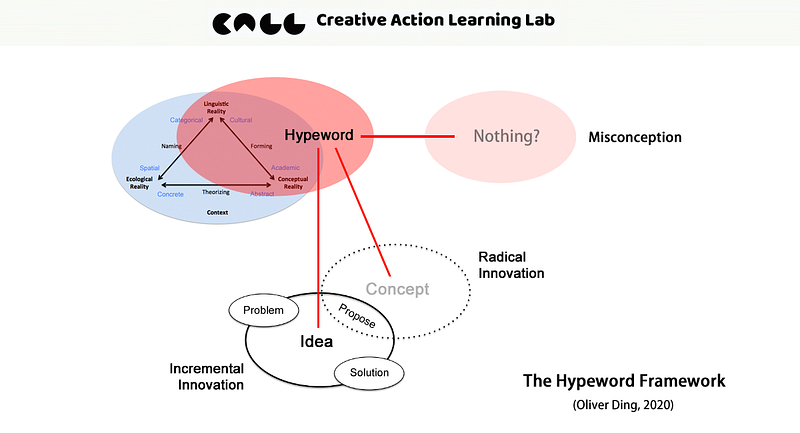
Don’t hate buzzwords and culture. That is how the trend works. There are many theories that can help us. Actually, I made a framework several months ago.
The Hypeword framework is a by-product of writing a book titled Project-oriented Activity Theory.
This book introduces Andy Blunden’s approach to “An Interdisciplinary Theory of Activity” with a set of diagrams. The core idea of his approach is “Activity is the process of formation of concept”.
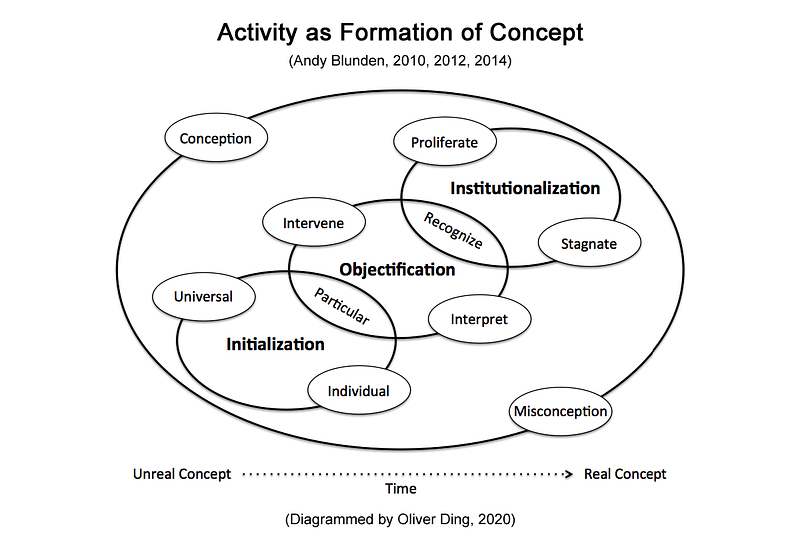
Blunden clearly claims that there are three aspects of objectification of a concept: symbolic, instrumental, and practical.
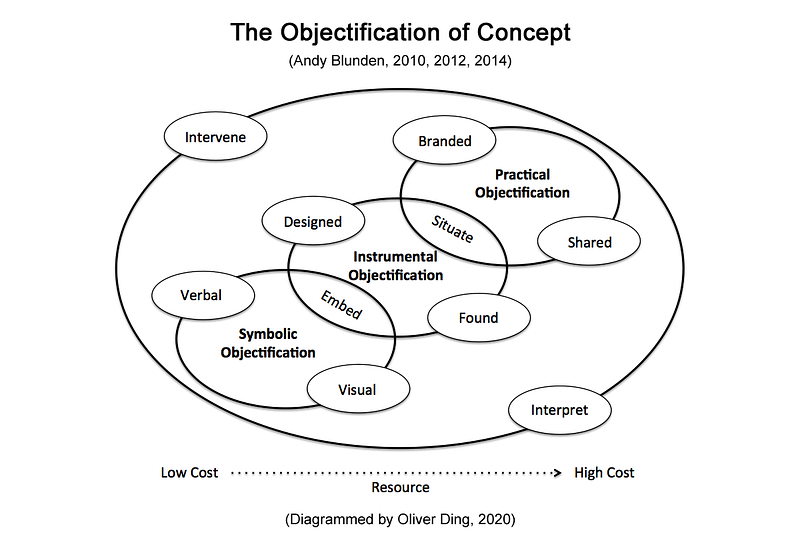
The last diagram zooms out to a large view that connects Individual mind (Idea) and Collective theme (Zeitgeist) through Collective Projects (Concept). This view also suggests a new way of understanding “Culture”.
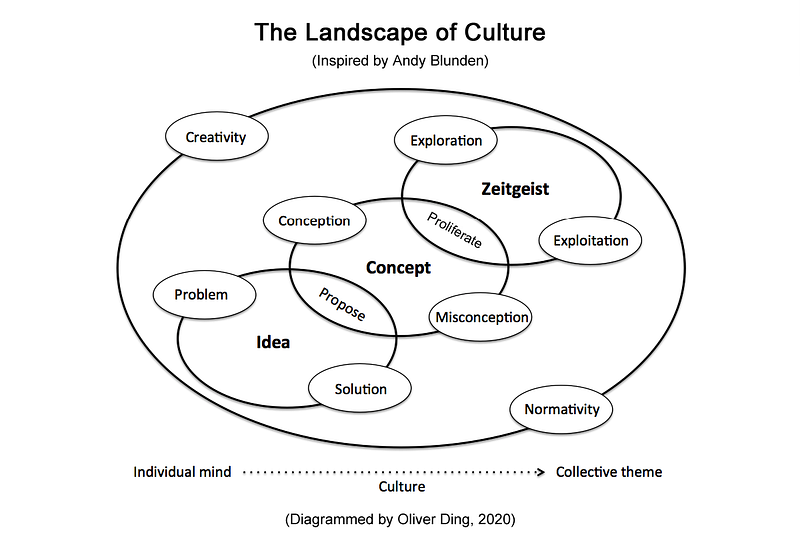
Inspired by the Hype Cycle from Gartner, I coined a new term “Hypeword” which means popular buzzwords about technological development. Thus, the “Hypeword” refers to the level of “Zeitgeist” in the technological business field.
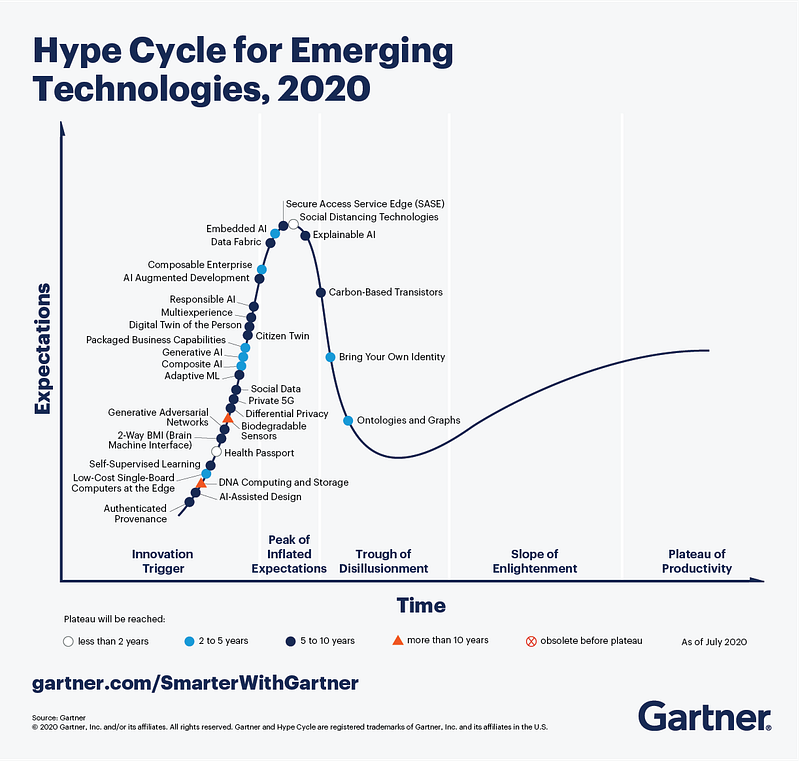
I am not going to claim that “Hypeword” is a derogatory term. For instance, “Mobile Responsive” or “Responsive Design” refers to a website design trend which means the layout and/or content response or adapts based on the size of the screen they are presented on.
The value of the new term “Hypeword” is using it within the “Hypeword — Concept — Idea” triad. The above discussion has pointed out that not all Ideas are Concepts. Now I want to claim that not all Hypewords are Concepts too. However, some Hypewords are real Concepts.
Of course, there is a possible outcome of Hypewords: Nothing. This is called “Misconception”.
How can we know we are on the way to creating a brand-new Concept which could lead to radical innovation?
The last part of my book introduces the Concept-fit framework for understanding platform innovation. You can read it here: Platform Innovation as Concept-fit.
I also discuss a topic about Concept Competition and Career Development. In recent years, new professional domains emerged and grew fast also disappeared quickly, especially web/mobile practice-related domains. For example, UX v.s. IA.
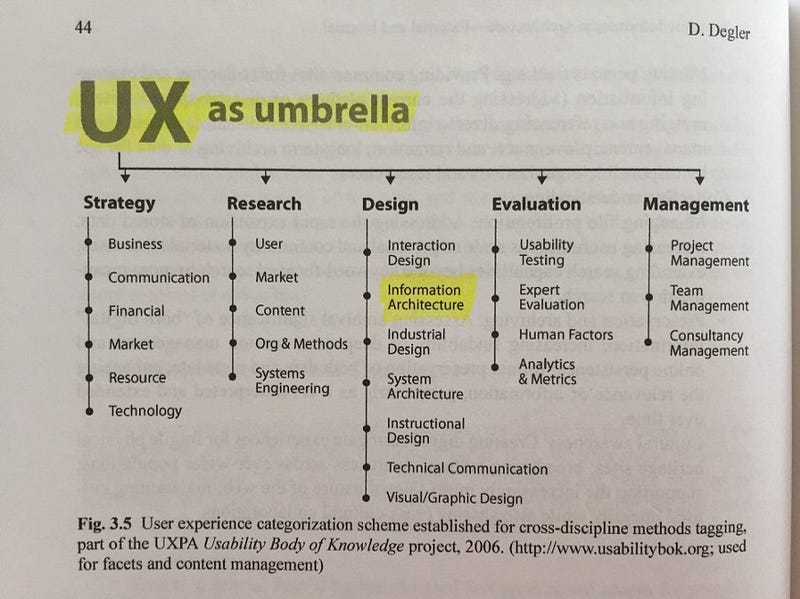
This topic led to a new book: Themes of Practice. If you do something about No Code, then the concept of “No Code” is your Theme of Practice. If you don’t anything about “No Code”, then it is not your “Theme of Practice”. Now, we see the relationship between You and Trends.
Don’t hate buzzwords and culture because they could be your opportunities. Don’t only talk, you should actually do it.
A word could lead to innovation or a revolution.
You are most welcome to connect via the following social platforms:
Polywork: https://www.polywork.com/oliverding Twitter: https://twitter.com/oliverding Boardle: https://www.boardle.io/users/oliver-ding Linkedin: https://www.linkedin.com/in/oliverding
License
This work is licensed under the Creative Commons Attribution-NonCommercial-ShareAlike 4.0 International (CC BY-NC-SA 4.0) License. Please click on the link for details.


