
Hype or Hypergrowth? 11 Charts That Showcase The Speed of AI Development
AI is featured everywhere nowadays. From books, to movies, to news articles, we just can’t get enough of AI.
But is the feeling of AI growing legitimate or are we just bamboozled by the media publishing about it?
To get a better idea of how fast is AI developing and how present it is in our lives we took a look at a variety of sources. From Stanford’s research into the past 100 years of AI and future trends, to what people ask Google and Wikipedia.
1. The Average Jane Stopped Caring About AI (But Cares Again)
Web searches give as a unique insight into what people actually wonder about. When you are alone with Google, you look things up which you are actually interested in.
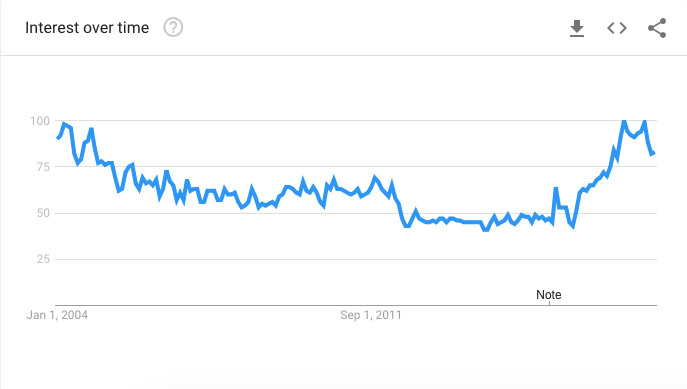
Looking at Google Trends data from 2004 to today, we see that people gradually lost interest in the topic of AI …
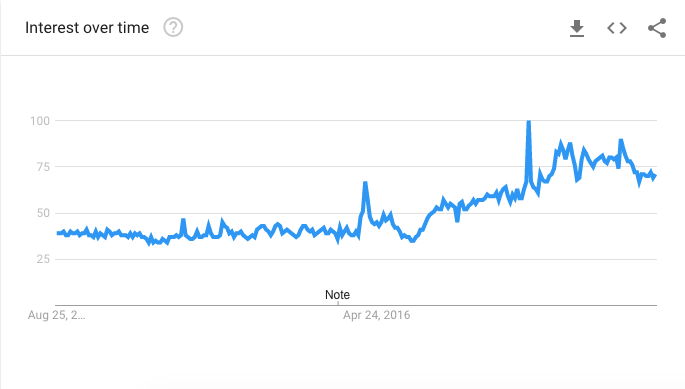
… but started to get curious about it again in the last two years (close up of previous chart).
2. Academics are Hooked
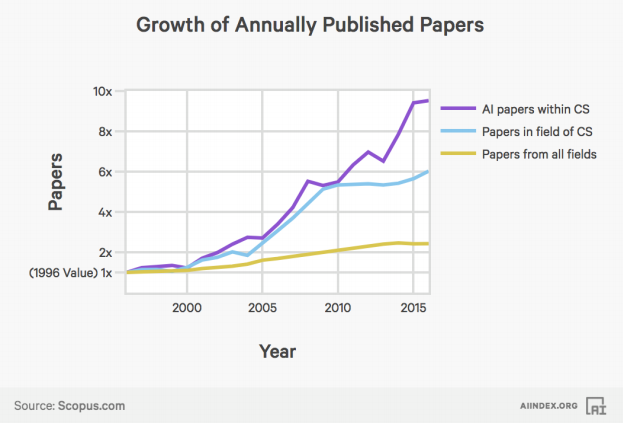
Researchers at Stanford took a look at the past 100 years of AI to determine what the trends in the field are and in what direction is the field growing.
From 1996 the number of academic papers published in the field has grown more than 9-fold. That is much faster than the growth of papers in the field of computer science (6-times higher today than in 1996) or the average for scientific publishing (grown 2x).
3. Hollywood Loves it (But Not As Much)
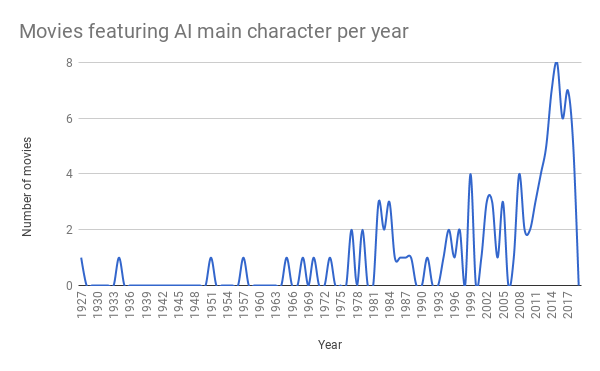
Despite the fact that movies with AI as a main characters are on the rise, they are not growing as fast as academic papers. The number of AI movies has increased 6-times since 1996.
4. Students are Buying the Story of The Future
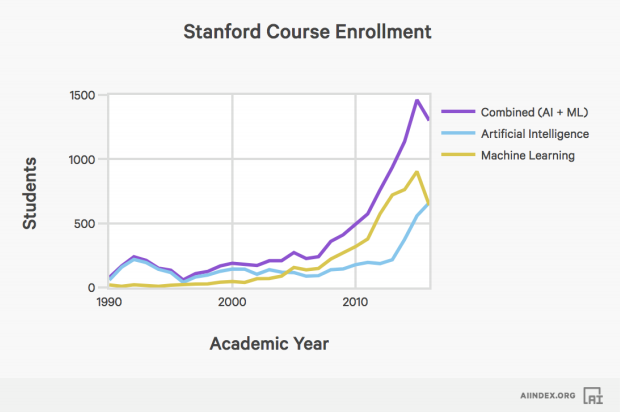
The new generations are sold. Enrolment in introductory courses on artificial intelligence and machine learning has increased 11-times since 1996.
5. Businesses are Trying to Make Fiction Into Reality
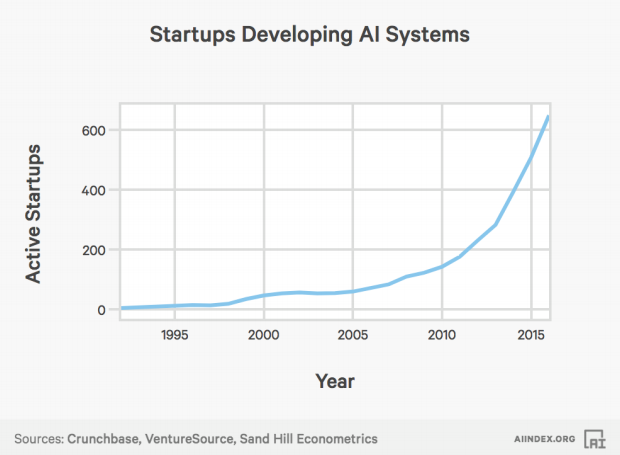
The efforts of making AI the future and not just fiction is most obvious in the business sector. Since 2000, the number of US startups developing AI has increased 14-times.
6. VCs Put Their Money Where The Collective Mouth Is
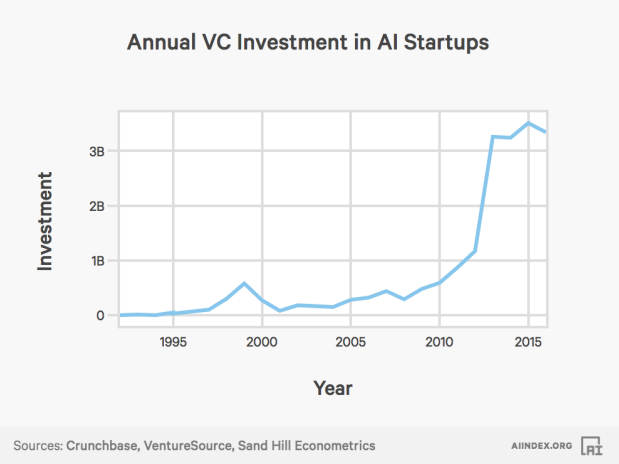
Venture Capitalists are increasing their investments into AI businesses. Since 2000 their backing of AI has not doubled, nor tripled, it has grown 6-times.
7. Job Openings Are Booming
The market share of jobs requiring AI skills is growing, but more so in Canada than in the UK or USA.
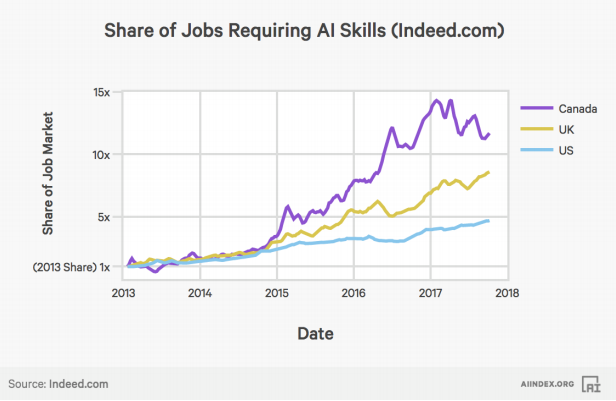
And the trend is picking up momentum:
8. But Jobs Which Don’t Need Workers Are Growing As Well
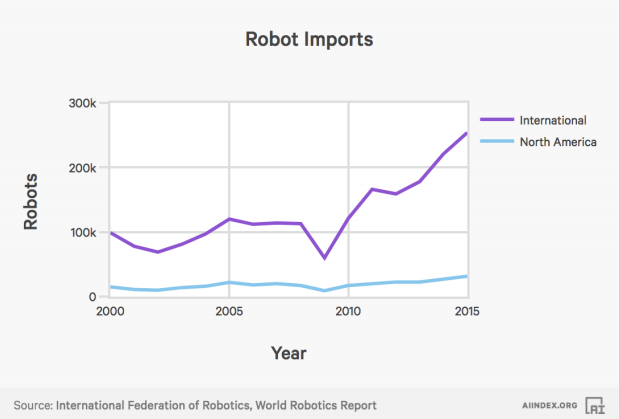
Companies increasingly rely on work automation and robots replacing humans, as seen by the growing import of robots worldwide.
9. AI Has Surpassed Humans At Object Recognition
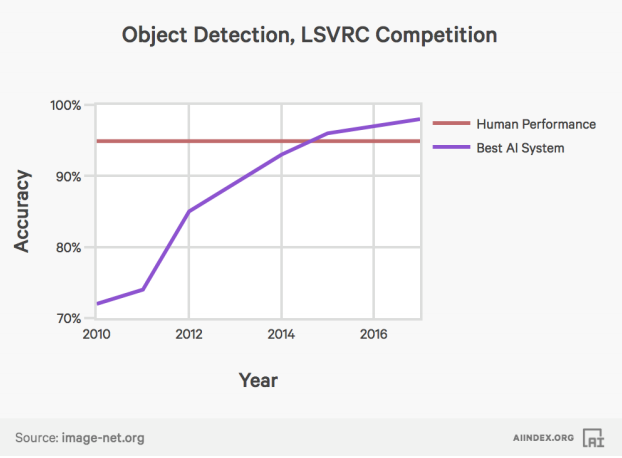
The error rates for image labelling have fallen drastically over the years. In 2010 the best algorithms performed with 28.5% error, while nowadays their error has fallen below 2.5%.
10. But AI Fails Miserably At Answering Questions About Images
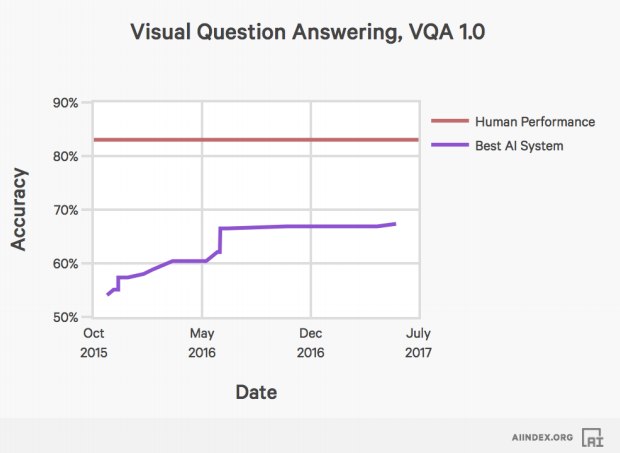
The graph shows the performance of AI systems, when asked to answer open ended questions about images.
11. If Not Yet, AI Will Surpass Humans By The End Of This Century
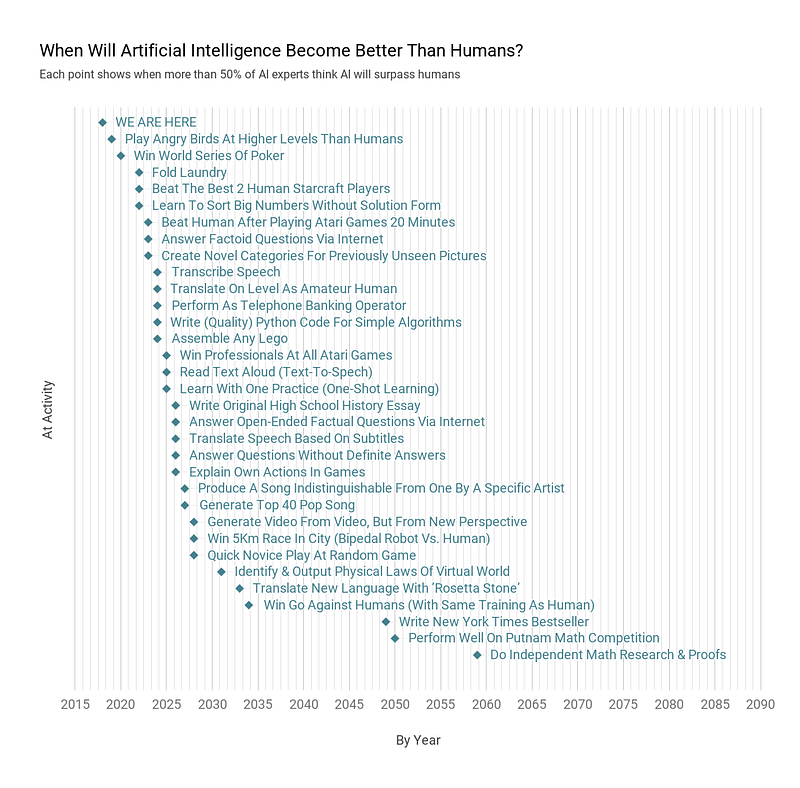
We wrote about this before. Experts predict AI will beat humans at a variety of tasks by the end of the century.
What’s Next?
Like what you read? Keep up with our analyses on our platform.


