
Hydrogen or Electric?
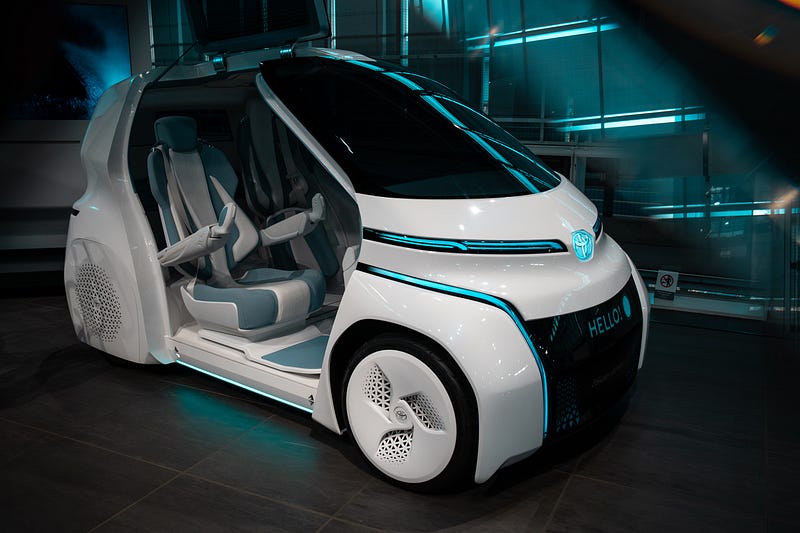
Fans of electric cars and proponents of hydrogen technology often get into an argument over what kind of vehicle humans will use to get around in the future. More precisely, they discuss whether we will use battery (or pure) electric vehicles (BEVs) or fuel cell electric vehicles (yes, hydrogen cars are also electric because they use electric motors).
As we will discuss in this article, both technologies will likely be used in the future, albeit for different use cases.
Electric Vehicles and Batteries
Most of you are probably familiar with how battery electric cars work.
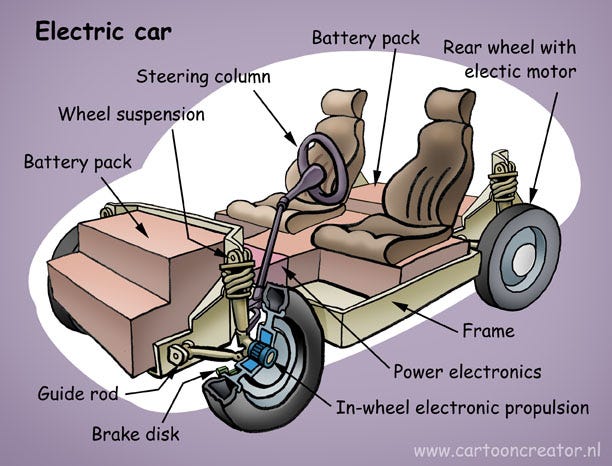
In simple terms, they use electric engines (induction motors) to move the car forward, and they get their electricity from one or sometimes multiple battery packs installed in the vehicle (see image on the left).
These batteries are usually lithium-ion batteries, and the energy they can hold depends on their size as well as their specific energy (the energy density within the cells).
Pure electric cars do not produce any exhaust emissions while driving and are therefore much healthier and better for the environment than gasoline-powered cars. Some manufacturers, like Ford and Nissan, reduce the footprint of their battery electric cars even further by using recycled materials for manufacturing parts of the vehicle.
In many countries, electricity is also cheaper than petrol or diesel — especially if you can produce it at home. Because they have fewer moving parts, BEVs require less maintenance, making the total upkeep even more affordable. Even though there are still many more gasoline cars on the streets, BEVs have rightfully been the most significant mobility trend of the last decade.
In July 2020, roughly ten years after its IPO, Tesla overtook Toyota to become the most valuable car manufacturer in the world. Of course, Tesla’s evaluation of over $200 billion is purely mathematical and primarily based on the hopes and dreams of Tesla’s investors. Even though it is undeniable that Tesla is years ahead of its competition, it is unclear how massive this advantage truly is. It is unlikely that it is financially quantifiable. It is also unclear how large the BEV market will become in the future because it is highly dependant on national environmental policies and the success of alternatives like hydrogen cars.
At the moment, though, there are still various reasons for people not to buy an electric car. A recent study showed that the biggest arguments against BEVs were the vehicles’ range and charging time, their relatively high price, and the lack of charging infrastructure at our homes and workplaces. Additionally, many consumers feel that they do not know enough about BEVs to make an informed purchasing decision.
While all of these arguments will probably become irrelevant within the next ten years due to advancements in charging and storage technology, they are still valid today and prevent the sale of more BEVs. Traditional car manufacturers, for example in Germany, further block electrification efforts because they need more time to catch up to Tesla.
Still, almost every serious car manufacturer, as well as numerous startups, have presented electric vehicle concepts in the last few years. It is undeniable that increased supply and a wider variety of products will create further incentives for people to switch to an electric vehicle soon.
A Hydrogen-Powered Future
Even though Toyota launched the first commercially produced hydrogen-powered car in 2013, the concept of using a fuel cell in a car is relatively new to the world.
As of July 2020, only four car manufacturers — Honda, Hyundai, Mercedes-Benz, and Toyota — have commercially released a fuel cell electric vehicle (FCEV). On top of that, two models (the Mercedes-Benz GLC F-CELL and the Honda Clarity Fuel Cell) are currently only available in their respective home markets (and California, in case of the Honda).
But hydrogen technology has recently received more and more attention. This month, the European Union published a strategy paper that portraits the technology as an integral part of its climate neutrality strategy, and it will probably invest billions of Euros in a continent-wide infrastructure for eventually green hydrogen fuel.
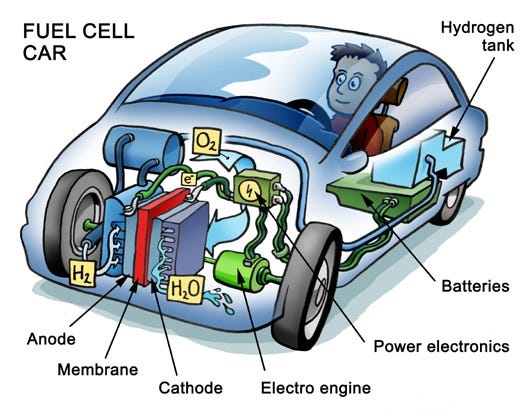
Just like battery electric cars, hydrogen cars use electric motors to move the car forward. Unlike a pure electric vehicle, however, this car uses a fuel cell, in which hydrogen reacts with oxygen to generate electricity for the motor (see image on the left).
Oversimplified, we could say that a hydrogen fuel cell works like a battery that you can refill with hydrogen instead of having to recharge it with electricity.
FCEVs still have a traditional battery, though. It is usually much smaller than a typical Tesla battery, and it is used to provide extra power during acceleration and to balance out the power coming from the fuel cell. It also stores the energy that is recaptured from braking.
Just like BEVs, hydrogen cars produce no exhaust emissions. The only product of the reaction in the fuel cell is water, which is harmless (if not beneficial) to our environment. In contrast to a battery electric vehicle, however, a hydrogen car can be refilled within a few minutes — much faster than any current BEV.
While battery electric cars are slowly becoming more affordable, fuel cells (and therefore FCEVs) are still quite expensive to produce. In some cases, manufacturers are even selling the vehicles for less than their production costs, just to get the technology off the ground. After all, much higher demand will probably lower the production costs of fuel cells significantly.
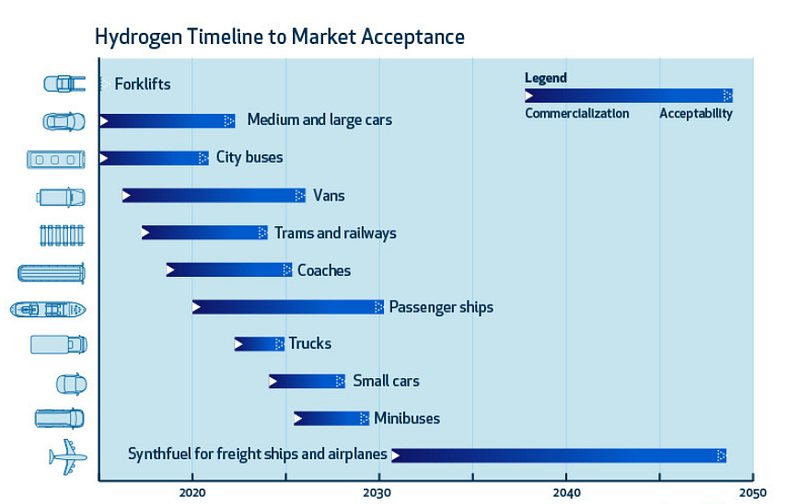
At that point, hydrogen fuel cells could also be used for other vehicles than cars (see image below).
What are Our Use Cases?
A few months before the Coronavirus outbreak started, I attended a presentation event for the new Toyota MIRAI. I had the chance to talk to the project manager for alternative propulsion technologies at Toyota Germany about the company’s vision of the future of mobility.
He told me that Toyota had prepared a small-scale demonstration of the applications of both technologies — battery electric and fuel cell — for the later postponed Tokyo Olympics and Paralympics (see image below).
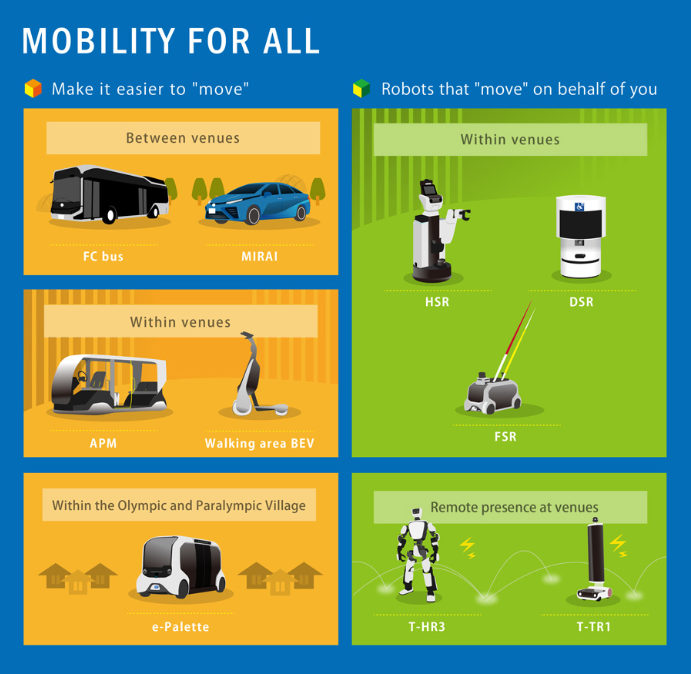
According to the concept, BEVs would be used for short trips within closed areas, while FCEVs would take on the long journeys between Olympic venues. I was told at the MIRAI event that this idea is very close to the vision that Toyota has for the future of all mobility.
According to this approach, battery electric vehicles would be used for short trips and less power-consuming applications, like shopping runs or short-range commutes. Hydrogen-powered FCEVs, on the other hand, would be used for long trips and continuous driving, namely for long-range cars, trucks, and busses.
Airplanes, ships, and all other types of vehicles would similarly use the technology that works best for their particular use case. Large ships are much more likely to run on hydrogen, while helicopters are more likely to be BEVs.
This theory makes a lot of sense. Humans have been using different types of petroleum-based fuels, like petrol, diesel, or kerosene, for various vehicle applications for decades. Why would this not happen with the next generation of propulsion technologies?
What Do We Support?
Luckily, both hydrogen and electricity can be produced locally and sustainably using renewable energies, like solar radiation or wind power. The decentralization of our energy and fuel infrastructure would additionally make us more flexible and ensure a better distribution of renewable resources.
Because they are our best options for a sustainable future, both industries need a widely available infrastructure. This infrastructure is necessary for the technologies to get accepted by the general public. Like the EU, governments will have to invest heavily in charging stations and hydrogen pumps to ensure a green future.
Unfortunately, whenever governments are planning to give out money for technological investments, the involved parties attempt to rank the solutions to generate more funds for their cause.
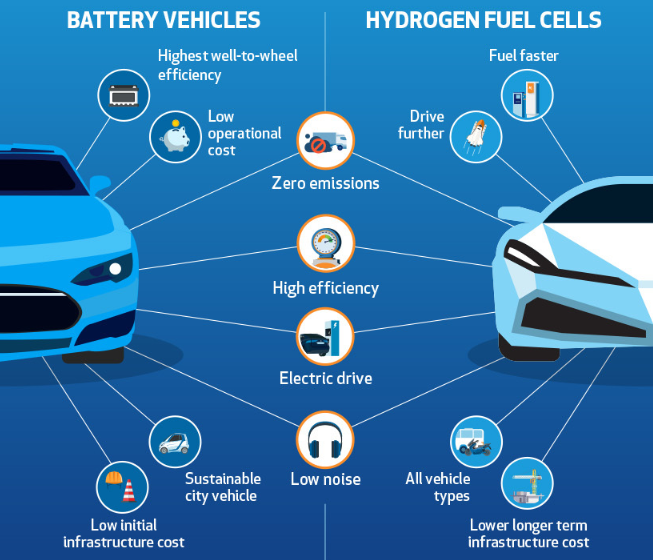
Because there are so many mobility aspects to consider and so many different use cases we have for vehicles, it does not make sense to support one technology more than the other one, though. They are both essential pieces of our strategy to achieve a more sustainable global society.
Beyond the discussed use cases, it is also hard to generally compare the efficiency of BEVs and FCEVs. The net efficiency of the respective technology is highly dependent on the implementation. Both solutions — batteries as well as fuel cells — will be researched more extensively in the future, and both fields can make very significant leaps forward within the next five years.
Last but not least, the total demand for sustainable mobility solutions is expected to grow so immensely in the next few years that both industries might struggle to produce enough vehicles for a while.
Nobody knows how we will move around in the future (even though it might be evident to Elon Musk). It is doubtful that consumers will immediately find the perfect solution for their particular use cases. Additionally, there might eventually not be as many personal vehicles per capita as there are today. Ongoing urbanization will make it especially illogical to own a car, and smaller mobility solutions are on the rise already.
Maybe we will even find a better type of fuel before either propulsion technology becomes widely spread.
Let me know what you think in the comments!


