
Hunting for Lions in Zambia and Zimbabwe
When will we outlaw the horrific trophy-hunting safaris in Africa?
I am ashamed! I need to atone! I was duped!
I have never held a rifle in my life, and I have never killed an animal for sport, even for food. Not that I have any issues with hunting for food.
I do have issues with anyone who hunts only for trophies, and I learned on a safari trip to Zambia in 2017, that I was once complicit in the trophy safari business.
My complicity and unbeknownst collaboration wasn’t in Zambia. That’s where I learned the awful truth. My collaboration goes back to my safari in Botswana in 2007.
In 2007, I took a safari with friends through Southern Africa. We planned to spend a few days in Victoria Falls, Zimbabwe, then a week on safari in Botswana, enjoy New Year’s in Cape Town, and then a few days of safari scuba diving in Sodwana Bay north of Durban.
On the transit flight to Victoria Falls from Johannesburg, I picked up a copy of the British Airways magazine and began to read it. I noticed an intriguing article about a humanitarian organization that was rescuing lion cubs with the intent to create and train new lion prides to release into the wild to reinvigorate the lion population. One of the ways the organization raised money for its cause was to offer walking with lion tours to foreign visitors. For U.S$100 dollars, you could spend a half day with semi-habituated lion cubs walking with them helping to teach them skills for their future in the wild.
Wasn’t it an interesting offer I thought at the time? You could have this amazing experience with lions up close and support a good cause. Once we were off the airplane, like a cheerleader, I convinced my friends to experience walking with lions too.
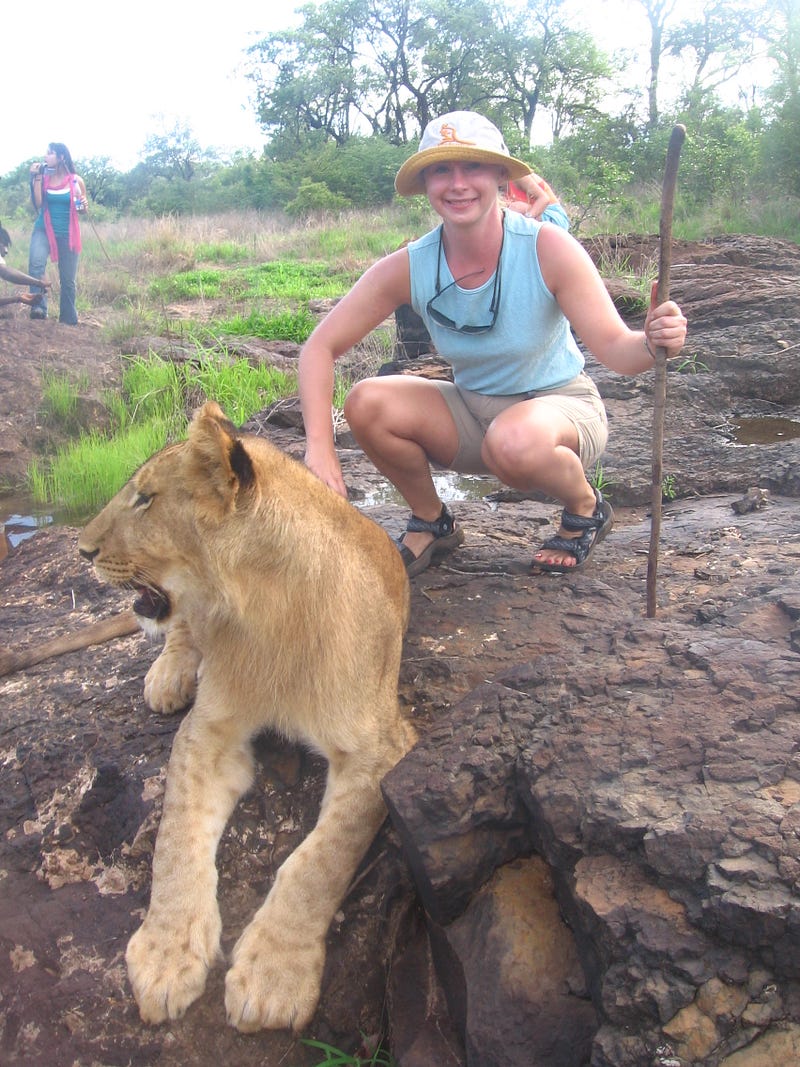
During our tour, the organization was so proud of their accomplishments. They had four phases of progressing a newly formed pride into the wild. The first phase was raising the young and teaching them basic skills, and the second phase was introducing a pride of lions in a small enclosure and beginning to teach them to hunt together. In the third phase, the lions were put in a large enclosure with other wild animals so they could start to hunt on their own together unsupervised. The fourth phase was to release into the wild together as a pride.
The team was very proud of themselves as they had successfully introduced a single pride to the third phase and the pride had recently taken down a giraffe together! I took fabulous pictures and memories of the walk and didn’t think about it again until….
In 2017, I returned with my family to Southern Africa. This time it was to do a walking safari with Wilderness Travel of the South Luangwa National Park in Zambia. It would be the first time I would have done a multiple-day walking safari. The safari was an eight-day affair. It started with days of jeep safari, four days of walking safari, and 2 final days of jeep safari again. Before starting the safari, we stayed in Livingstone, Zambia close to the border of Victoria Falls, Zimbabwe for a few days to acclimate.
While in Livingstone, again I heard about these Walking with Lion tours. I wondered how the organizations were doing and if they had found success. This time, I was better smartphone-enabled and was able to instantly look up reviews on travel sites like Trip Advisor.
As soon as I started reading these reviews, my heart filled with horror! These Walking with Lion tour organizations that had sprung up across Victoria Falls and Livingstone since 2007 were just money-making scams, and the organizations never had success releasing a single lion pride into the wild.
They merely stole lion cubs from their pride to entertain tourists, and when the lions were too large to walk with tourists, they sold them to trophy-hunting safari companies.
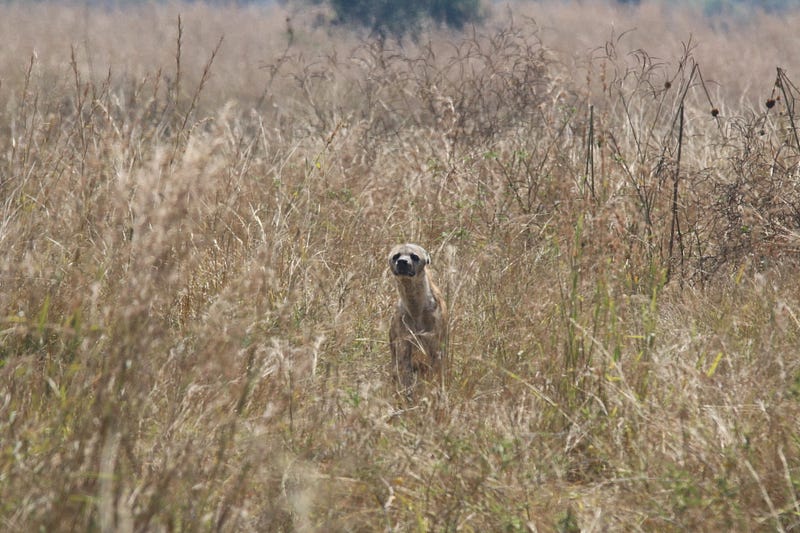
I was instantly disgusted with myself and my naivety, believing these organizations had a mission for conservation and not decimating prides instead, by first stealing the next generation and then hunting the parents out of existence!
The walking safari in South Luangwa, however, was one of the best experiences of my life. This time I did the hard work of walking eight miles a day for the pleasure of seeing up close a full-grown male lion. He was sixty feet away and very intimidating. Our group took some quick photos and kept walking relieved he would be protected by the National Park system.
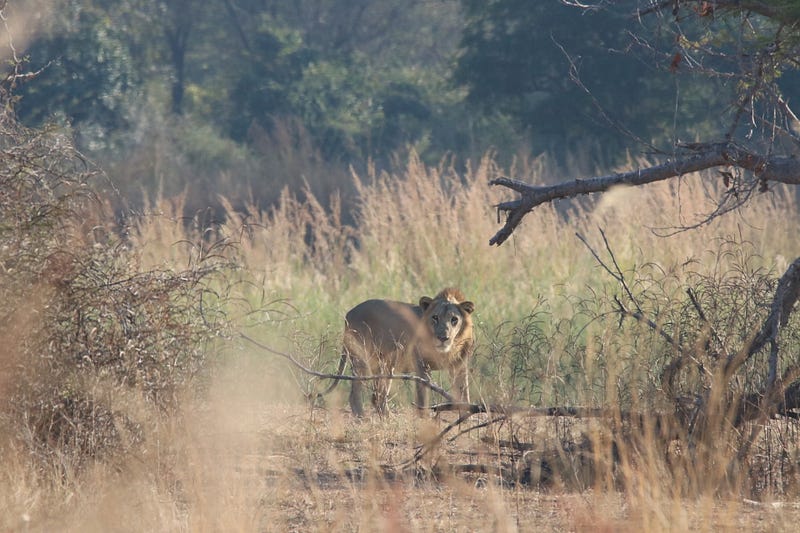
In our last jeep safari, we drove to the border fence of the South Luangwa National Park system, and to our repulsion, we came up close to another jeep on the other side of the fence filled with trophy safari hunters dressed in full fatigues with rifles. My nephew pointed my bazooka telephoto lens at them and started taking pictures. They quickly drove off not wanting our attention.
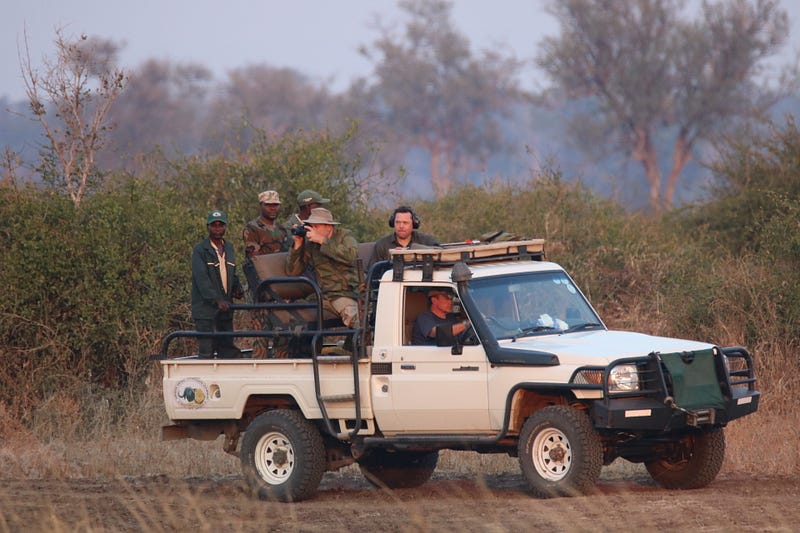
We asked our guide later if this was legal. He said unfortunately it was. The trophy-hunting safaris are legal outside the confines of the National Parks however, it was not unusual for companies to hunt close to the fence-line like we saw today.
They do this either in hopes that a complacent animal living in the park will cross out of the park and into their range, or they are also known to shoot into the park to scare the animals to run out of the park in terror so they can shoot them!
There isn’t anything I enjoy more than a photo safari in Africa. According to the World Wildlife Fund organization, we only have 23,000 lions left in the wild.¹ How many will we have left in ten or twenty years if we don’t do a better job of protecting them?
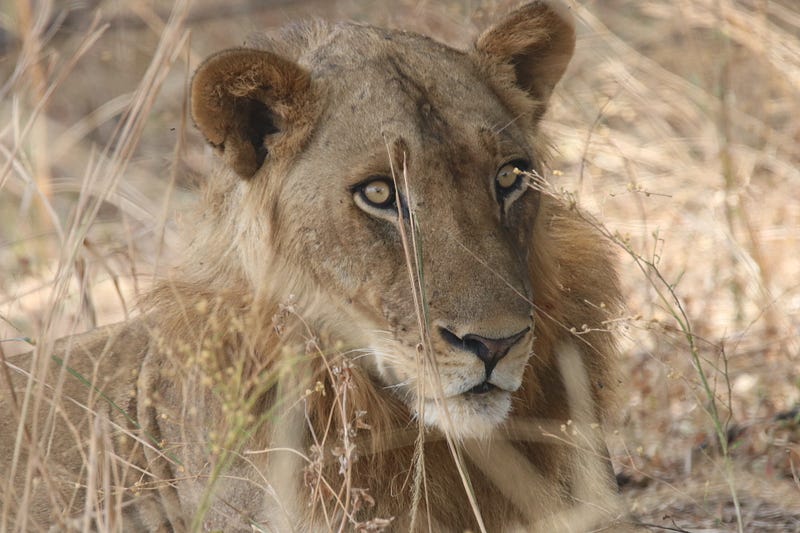
What can we do as globetrotters other than to lobby African governments to make trophy hunting illegal? We should never use a Walking with Lions provider to start. The other best way to conserve endangered animals is to support the legitimate African tourism industry.
By being the globetrotters we are, and taking safaris with reputable companies, more Africans can earn a living as guides and park rangers disincentivizing them from resorting to poaching or working for trophy safari hunters. Also, if anyone we know admits they hunt animals in Africa as trophies, we should shame them and then alienate them from society!
It would be a tragedy if future generations, like my daughter, never have the option of walking to see lions in the wild!