Smile Power for Business
Humor Succeeds When It’s Relevant To Your Target Audience
It will make them more receptive to what you have to say
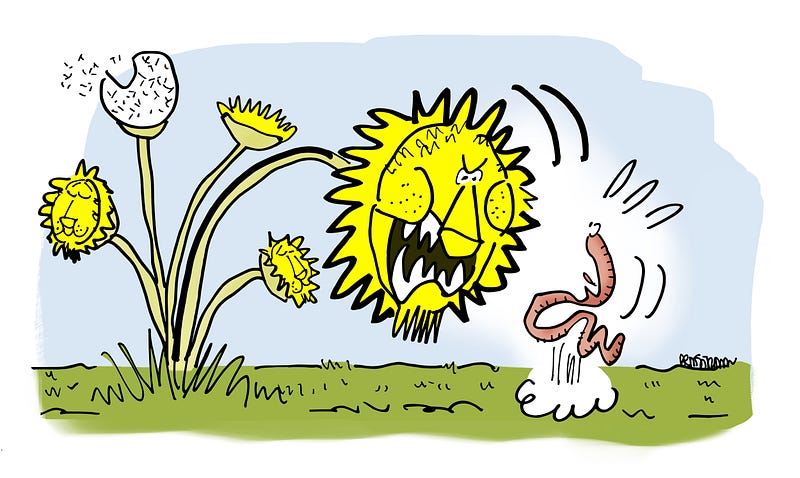
I read a Forbes post about a mom who launched a startup to make it easier for kids to learn vocabulary. The key to the program’s success: humorous illustration. As this relates to my job, I want to unfold it to give you some ideas and perspectives.
Robyn D. Shulman, a former elementary school teacher, writes that teachers today are working with students who have much shorter attention spans. She notes that during her own years in the classroom,
“I always found students to be most responsive and comfortable when I was able to connect their work to something personal in their world or simply make them laugh.”
Enter Sofia Fenichell, whose startup, Mrs. Wordsmith, produces The Storyteller’s Illustrated Dictionary, along with vocabulary cards and workbooks. They all use wacky illustrations to help kids learn new words.
The humor keeps them engaged and makes learning fun.
My Experience in the Use of Humor for Business
I found out that humor can be a helpful tool for education and marketing purposes in the business world.
I was inspired to make my own illustrated word. For example, in the following illustration, you have to feel sorry for the poor kid who got stuck with plain text.
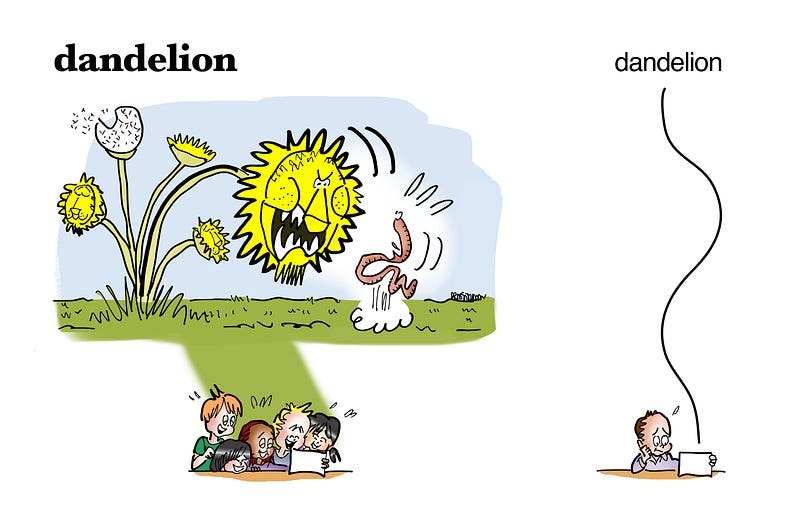
It’s important to note that the goal here is learning, not being funny or getting laughs.
The humor has to facilitate learning. Humor fails if it’s a distracting influence.
Humor succeeds when it’s relevant to your target audience. Then it has the power to hold their attention, lighten the mood, and improve retention.
College professor Ron Berk, who uses all kinds of zany humor to teach biostatistics to college students, puts it this way:
“What I do and how I teach is all about the students. It has nothing to do with me. I’m tapping into their multiple intelligence needs and their culture so that they can understand the material in their terms.”
Here are two examples of the use of humor.
Carol Schlef, RNC, MSW, a women’s health educator, takes the same approach.
While teaching pregnant teenagers about proper nutrition, she noticed they seemed bored and disinterested. So, she created a special “food pyramid for teens.” It identified the four major food groups as “refined sugar, fat, caffeine, and salt.” The teens laughed at the joke and were more receptive when she introduced them to healthier ways of eating.
Ms. Schlef says humor even delivers a little medical bonus: it makes your audience feel better because “laughter can increase respiration and oxygenation and bolster immune systems.”
There’s an important lesson in all this for marketers: Humor not only builds relationships, it also helps people be more receptive to what you have to say.
And remember this important point: when you’re trying to teach or communicate, it’s not about getting laughs or being funny for funny’s sake.
Rather, you’re using humor to help your audience relax, put down their shields, pay attention, and be more receptive to your message.
I’ll close with a “targeted humor campaign” from my own career.
When I first started out as a freelance illustrator, I was desperate for work. Someone asked me to draw caricatures at a Christmas party. I’d never done it before, but I said sure and hoped for the best. I was a hit!
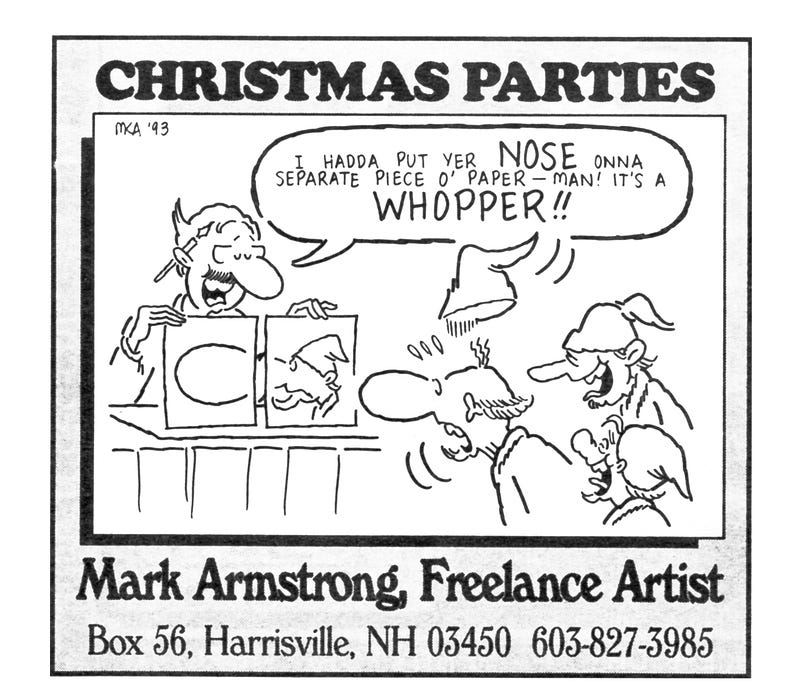
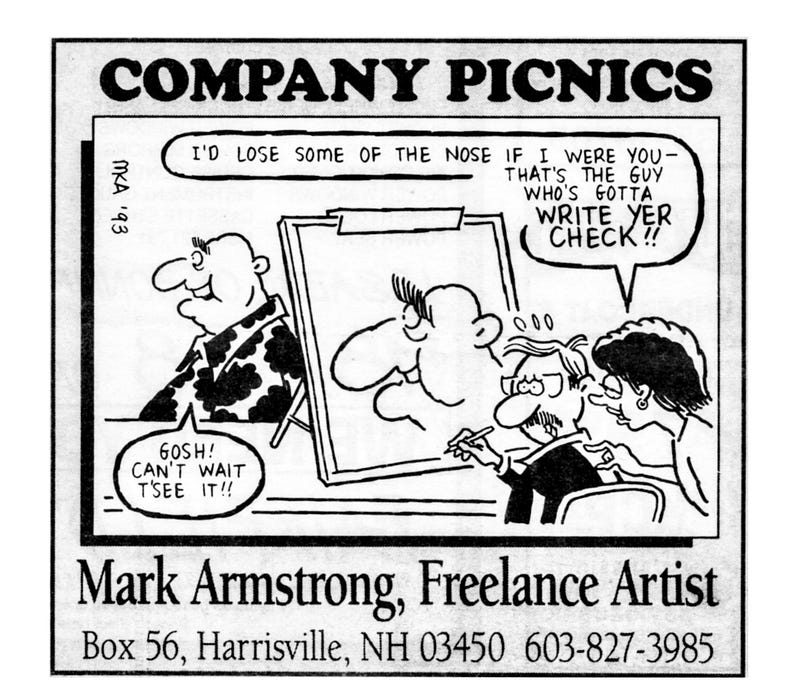
I decided to market myself as a caricature artist who provided entertainment at company picnics and Christmas parties. I ran ads like the following in the local shopper weekly and picked up a lot of gigs.
They don’t actually say so, but the ads are targeted at mid-sized and large companies that would be more apt to host employee functions.
Conclusions
The power of humor in communication and education is undeniable. As demonstrated by successful initiatives like Mrs. Wordsmith and the experiences of educators like Ron Berk and Carol Schlef, humor, when carefully tailored to the target audience, can significantly enhance engagement and receptiveness.
The key takeaway for marketers is to leverage humor strategically — not just for laughs, but as a tool to connect, relax, and captivate the audience.
The anecdotes shared, from creating a “food pyramid for teens” to the targeted humor campaign of a freelance illustrator, emphasize the importance of relevance and focus in humor-driven communication.
Remember, the ultimate goal is to entertain and create a conducive environment for your message, ensuring that humor becomes a facilitator of connection and receptivity without overshadowing your core marketing objectives.
Takeaways for Marketers
1. Use humor to grab attention and create a receptive mood.
2. Make sure the humor is targeted. You’re trying to connect with your target audience, as opposed to just trying to get a laugh.
3. Never let the humor get in the way of your marketing message.
4. Use it to get attention and make people receptive to your pitch, but don’t let it distract from your pitch. Use humor to accomplish your goal, whether it’s teaching kids vocabulary or selling your product or service.
Mark Armstrong writes about marketing and visual communication. Learn more at Mark Armstrong Illustration.