“Humble”: Drowning in the Supremacist Symbolic Annihilation of Black Women
This will not be a post about progress.
This will not be a post about progress.
Two days after the release of Kendrick Lamar’s single “Humble”, in a fit of emotional tears one Saturday morning, gripped in the pang of an all-too-familiar sense of disconnection and dumb-struck loneliness accompanied, I expressed to my friend and mentor a deep-rooted fear of not trusting my gut. This was despite instigating a career change from long-term dedication to my scholarship while teaching 10–12 courses a year as an adjunct. A tenure track position I made real in the world will be mine come July.
My mentor consoled me as he often does. First, with snot blowing my fears away, he listened to me. He listened for 3 minutes or so…or until he couldn’t tolerate the self depracation any longer. This brother, one of my dearest friends, preaches to me, “If you could see her through my eyes.” We met in grad school at Michigan. We both graduated with a Ph.D. in hand decades earler. #goblue. JB preaches persistently provoking his Gospel of abundant love, affection, fun, and sexuality into my despair. We do this weekly. I wish he were a song on rotation in my earbuds daily. On this occasion, he passed on this oral diamond: “Don’t just describe the water we are drowning in and call that progress.”
“Don’t just describe the water we are drowning in and call that progress.”
Humble might rock your body but JB’s words rocked and revived my feminine soul that final day of women’s history month. But as I said, this post will not be about progress.
This post will not be about progress. Not the kind a black women deserves. Put this on repeat.
How do women like me build their erotic and emotional desires on top of the pernicious, persistent, and portable symbolic annihilation of us in our media, especially media made for us, by us. Humble acts as a kind of “predictive modeling” repeating and reproducing a long-playing discourse about bitches and hoes. Why must I constantly die-jest and deny its symbolic interactionism? Why must I, lil’ black girls, and other women, once again, learn that we must adapt to a definition of “humble” that asks us to deny our very existence.
I teach an essay in cultural anthropology by cognitive psychologist Lera Borodisky about the ways language shapes the ways we think about the world and our selves. “Speakers of different languages must attend to and encode strikingly different aspects of the world just so they can use their language properly” (Boroditsky). What aspects of the symbolic universe of race and gender is needed to reiterate the annihilation of the black feminine in our rapped worlds? A popular time machine designed it seems to both capture our daughters’ imagination, get them to drive the traffic on YouTube with they twerk their bodies at younger and younger ages for unintended audiences so YouTube-born artists from Soulja Boy to Kstylis can climb the Billboard charts with song and dance. In its wake lie the bodies of black girls and women that deny their sexploitation of their content to sell records and attention. Humbly, they rarely interrupt the white supremacist and patriarchal message that to be called a bitch is to these days demean a male rapper’s masculinity not deny black women their humanity whether emcee or fan, see?? Do you not only hear it? Can you see it?
(Hol’ up, bitch) sit down (Hol’ up lil’ bitch, hol’ up lil’ bitch) be humble (Hol’ up, bitch) sit down (Sit down, hol’ up, lil’ bitch)
“He burned me like a perm,” to revive the rhymes of Lauryn Hill when she was still with The Fugees, over and over again.
As shown in Chart 1, three-quarters of households living in public housing and in Project-Based Section 8 housing are female-headed, and over 83% of voucher-holding households are headed by women. A large proportion (72%) of Section 202 housing units are also home to female-headed households. http://nlihc.org/sites/default/files/HousingSpotlight2-2.pdf
Too many niggas, not enough hoes And some of you niggas, acting like hoes. — Kendrick Lamar
Your mama’s a man, you’re daddy’s one too. You live in a tin can, that smells like a zoo. HLG Signifying Monkey.
Define symbolic annihilation; http://www.blackwellreference.com/public/tocnode?id=g9781405131995_chunk_g978140513199524_ss129-1
In a world where black women are symbolically annihilated in popular rap music videos, in the appropriation of popular dances like twerking and popular fashion from plastic surgery to obtain big booties and lucious lips (from non-black to black women who are naturally bootylicious), in a symbolic and political world of images and entertainment, how can we speak of progress?
Popular communication constantly erases the black feminine either in the name of the free expression of patriarchal voices in rap or in the government as well as in film in the name of progress as we witnessed in news about the drowning of the first Muslim judge, a black women whose name was less important than her religious identity in a post 9–11, post-racial, post-45 ascent to the White House or in the absence of black female casting in films about Detroit or black power in the UK. Black women whether in social movements or in local hip-hop cultures tend to define and organize scenes for others to simply reproduce patriachy and omit not only their role and presence but their names. #sayhername
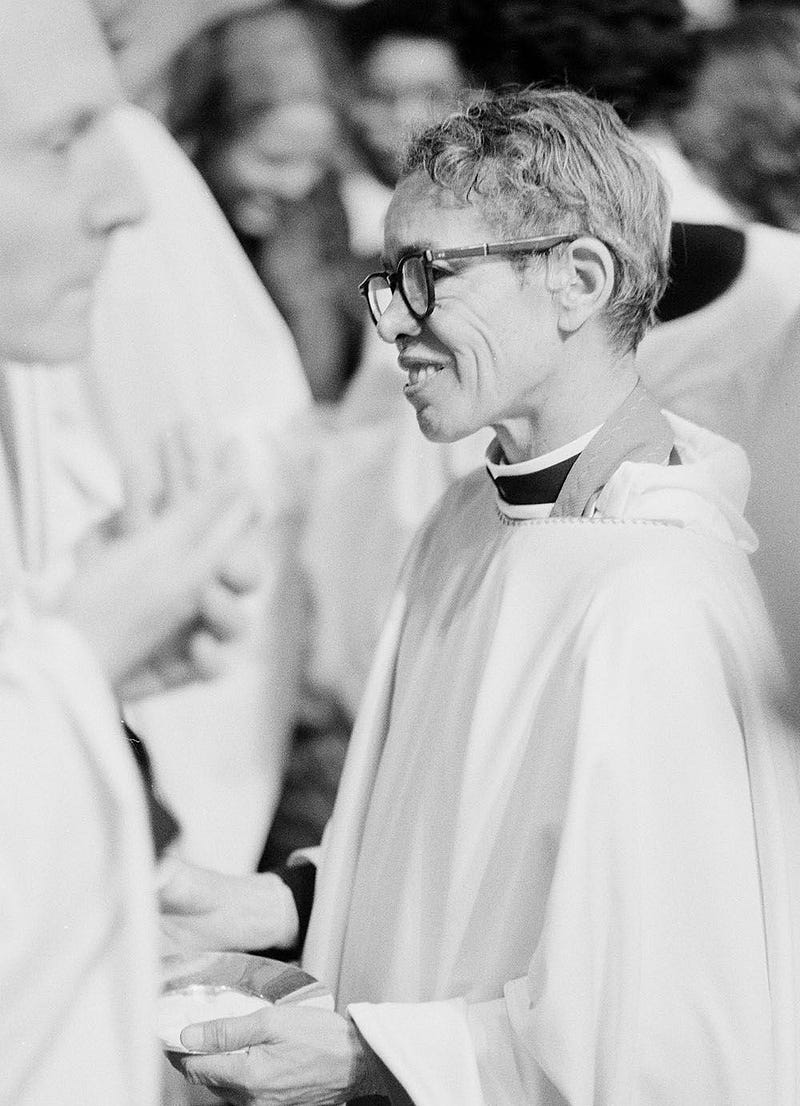
Stuart Hall once invited us to critical re-examine our role in cultural studies. If I may recontextualize and repurpose his words for my own intent, “Against the urgency of [black women’s hypervisibility in media and the invisibility of the subordination in real life], what in [the Divine Feminine]’s name is the point of cultural studies?… I think anybody who is into cultural studies seriously as an intellectual practice, must feel, on their pulse [and in their pussy], its ephemerality, its insubstantiality, how little it registers, how little we’ve been able to change anything or get anybody [read: men in the most visible positions of power central to gendered representations of blackness] to do anything [for black women #FBW]. If you don’t feel that as one tension in the work that you are doing, theory has let you off the hook” (Stuart Hall).
The spin on Kendrick Lamar’s video “Humble,” released on the final days of Women’s History Month, captured my attention and triggered this critique. Now, in April, in Sexual Assault Awareness Month, I follow the lead of Baltimore’s BLM activist Makayla Gilliam Price, who moved me a year ago at the Black Girl Movement conference with these words:
“We are walking down one of the main streets in downtown Baltimore and its surrounded by whiteness, white money, um it’s very neoliberal, uh and, we — me and…uh…two other girls that I just met at the protest — were just standing in the middle of the intersection twerking. [laughter. YAS!]
Makayla is channeling Ella Baker and Audre Lorde and I laugh. You can hear me on the recording found on YouTube yelling “YAS!!” She continues:
“So in Baltimore, Black women and black girls have been reclaiming their femininity, have been reclaiming and making spaces for themselves making transient zones of freedom…um…for themselves inserting their sexuality, inserting their intersectional identities, inserting their fluidity, creating space for ourselves to be embraced…um…and that’s what being a movement baby looks like for me in Baltimore, it’s just, um, a way to reclaim my identity.”
There would be no need to reclaim space, our sexuality, and a space for inserting who we are if there wasn’t a constant experience of being symbolically annihilated. What I called a tactic of “invisibilifying” black femaleness in my first book written over 10 years ago. The Games Black Girls Play: Learning the Ropes from Double-Dutch to Hip-Hop. According to colleague and ethnomusicologist Deborah Wong, the book is “a radical counter-history [that] shows how African American girls — interlocutors who are triply minoritized through race, gender, and age — are producing music culture that has profound influences on popular music and the popular imagination.”
The profound influences and significance of the “kinetic orality” — embodied critical discourse of Black girls’ bedroom play and dance in popular digital attention economies — is subverted or overshadowed. This process reinvents itself whether it’s explicit like the psychological violence of animalization and hypersexualization of girls in hip-hop and R&B visual tropes or whether it’s implicit in references found throughour K-Dot’s aka Kendrick Lamar’s albums. With Section 8 — a reference to the social welfare and housing policy that many legislators and everyday gossips assume primarily benefits single black mothers, which also functions in dog whistle politics for low-income segregated housing and welfare queens — symbolically functions on a low key stand in for the ongoing intra-cultural battle of the sexes in Black communal discourse. Its tenor and timbre anoints African American musicking where the male and female performing body is always a locus of Black people’s bad romance politics. The bad blood of the Black superwoman myth circulates through a body of social memory. It animates the ways Black female bodies keep score of the battered politics of gender through social dance. Dance and movement react and respond, embody the cognition of girls’ and boys’ intersectional generational politics expressed by our gait and voiced in the stilt tea aka gossip and mother wit of abused partners which I believe are part of a phenomenology of musical blackness I call “somatic historiography.”
The dissected Hottentot Black female body lives at the symbolic intersection of the social uses of “bitch” in songs like “Bitch, Don’t Kill My Vibe,” and “Humble” from Kendrick Lamar’s 4th studio album, DAMN.
Released on April 14, 2017, through Top Dawg Entertainment, Aftermath Entertainment and Interscope Records, critical accolades followed the release of DAMN, including the first rap album to receive a Pulitzer Prize for Music and Best Rap Album at the 2018 Grammy Awards.
The use of “bitch” in the hook of “Humble,” arguably DAMN’s most popular songs, leverages the particular fuckery of misogynoir, following Moya Bailey’s coinage, to explicitly dis-miss other male rappers and implicitly demean women and girls. Again, invisibilification is masked in the name of a context collapse that excludes black women’s full humanity in hip-hop.
My intention today is to parse, prune, and play with the notion of the singular black or African identity that keeps getting mapped onto our performativity in a globalized world. We may think it’s globalized because of digital media and social networking sites life FB and YouTube. Globalization of course did not begin with first communication technologies of the telegraph or transportation that allowed commercial include the transatlantic trade. The reality of symbolic communication begins with population growth beyond our kin. It is the body as technology and its kinetic orality, it’s means of nonverbal symbolic communication from birth and between ethnic groups that allows human beings to adapt and organize life and learn about difference. We share culture through embodied knowledge first and foremost. And our traditions are embodied first (crossing in Catholic church to symbol of a wink vs blink hat tip to father of interpretivist anthropology Clifford Geertz who said we see the lives of others through lenses of our own grinding sharing traditions. which changed the reality of being for people of African descent centuries ago. I assert the body is was the first technology and ideologies of colonialism, imperialism, patriarchy in political and religious contexts continues to symbolically annihilate the non hegemonic female body in various contexts but particularly in black and African contexts from Sarah Bartmann to Josephine Baker to Rihanna more so than Nicki Minaj but mostly on tween black girls who embody joy and pleasure for ht fun of it online.
It is the ability to define what their bodies’ symbolic behavior means that is denied black and African girls. They have little to agency or determination over defining their play and performance in digital media spaces. Adults are just as culpable in limiting their voice as is the ideologies espoused by mateiral and immaterial culture from search engines and thumbnails to the political socialization and oppression socialization of a white superiority and patriarchy around the globe. Black girls access and participation, is reduced to their embodied behavior by others. Empowering their voice, and their agency in a poltiical sense, their having the choice or ability to consent to saying both yes and no is troubling given the symbolic domination of others online. So I begin with the words of Makalya Gilliam Price from BGM Conf in April 2015 at Columbia. She more than any girl taught me that twerking can be protest. Get it indy an 16 y/o who made yiking a thing on YouTube taught me that twerking is a partner dance and it it erotic and just like the four corners dance I did as a teen. Collecting data on over 1000 tween twerking from their bedrooms or living rooms taught me to see the cooptation of girls’ online play and the continued dominance of their images by unintended audiences (e.g., digital pimping of their images and monetizing their YT channels and playlists for profit on the backs of minor girls content or doxxing or “call girling” their personal info from other SNS sites to males in comments below their videos). Pimping, it turns out, is easy online. But seeing their protest and understanding their symbolic meaning requires their actual political voies expressing their agency OVER TIME. Here is Makayla interpreting her own performance as protest.

Yesterday, two things happened that prompted this post. The first was an overdue moment of sorrow and the other a delight at a conference on black music in hip-hop by three DJs, one a sister who proclaimed “I am not a female DJ. I am a DJ who is a woman.”
The second
Naming the misogynoir or the patriarchy or the white supremacy found in the latest rap video gone viral is not progress. And it’s a critique leveled at rap for decades now. I won’t call it hip-hop. It’s the rap industrial complex I am critiquing here and the latest video by K-Dot aka Kendrick Lamar is on the clapback block. Hip-hop refuses to treat black women in an ethical manner. That is neither humble nor tough enough for my style of black feminist politic. Rap’s supremacist symbolic annihilation of black women (whom rap has conveniently convinced even women to call other women and girls “females”) is the final frontier of mental slavery. I say this as a scholar of gender studies and race, gender, and technology and its unintended consequences for marginalized groups. The marginalization that stems from the persistent and portable annihilation of cisgender and transgender female voices, images, and their agency over representations of their bodies turns on two simple ideas in Kendrick Lamar’s unexpected video release “Humble” directed by Dav
Stop hanging around muthafuckas who make you feel you’re hard to love.
the Hip-Hop Literacies Conference at CUNY’s John Jay College yesterday. Among audience members and between sessions was talk of Kendrick Lamar’s new video “Humble.” I hadn’t seen it yet. But once again on a Sunday morning, I have to pay sexual tithes to a few sucka ass lines of trash, borrowing bars from an all-time favorite track by Ursula Rucker who closed The Roots first commercial CD with a track titled “The Unlocking.” It was the ultimate sexual gangsta rap, flipping the 1990s script of misogyny through the art of storytelling. Geneva Smitherman and H. Rap Brown long ago noted that black women’s discourse, their use of words and ideas to signify meaning, can be far more damaging than men’s toasts and dozens. Why? Because we come for patriarchy first. White supremacy be damned. We want love as liberation. If we could get that the fight for freedom from racism and other forms of sexism would be tolerable. But misogynoir is real. They call women and girls females “T.H.O.T.s” — that ho over there — using a homonym to not only stigmatize the imagined community of black female bodies but also to collectively demean our very agency, our ability to voice our ideas or valid opinions produced by thinking with that very tag. The psychological warfare of marketing ownership of the mind. This warfare is a manufactured mental tag. Not just thrown up on some wall. A tag as in something “hung from a wearer’s neck to identify, classify, or label” them unworthy of thought. The act of dehumanizing women with this tag is the ultimate setting in which discrimination begins and ends.
This is not a post about progress for black women. It’s more likely about the patriarchal bargains we make to love hip-hop. There is no progress in rap’s patriarchy (nor humility). There is no progress in music video’s continued sexploitation and now technologically networked systems of misogynoir. There is no progress in unearthing the implicit bias found in the discourse of non-black (and sometimes black) writers on the web who have been politically socialized to oppress, dismiss, and annihilate any references to black women’s objections to their annihilation or to any references to Africa religious thought from North or South of the Sahara. Why anyone who remembers Kendrick’s last prophetic pronouncement reinscribing “niggaz” as “Negas” would ever link the opening scene of “Humble” to the HBO series about an American pope starring Jude Law is illogical media conglomeration at best. It sells HBO but not any logic to me. The corporate logic has humility at all and continues to rarely give black women — cis and trans — the humanity we deserve.
This is post is actually about a “perm”. Not the kind that reverts back to your natural hair is some assimilationist logic, but the kind that persists despite efforts to change it. It follows you. It tells you this is normal, burning your scalp for beauty at younger and younger ages. That wearing a cap of creamy crack as a crown is for your social good. Ain’t nobody gonna like you without good hair. Ain’t nobody gonna love you if you talk back about it, too.
[W]e fail to realize that we can know nothing about things [or ourselves] beyond their significance to us” (See “Transactionalism” on Wikipedia). Thus, all of us distort our “reality” when we treat things we perceive within a logic we inherited and rarely question. This inherent white supremacist and patriarchal “logic” isn’t humble nor representative of all realities when it constantly excludes that which is historically black and female, African and matriachal.
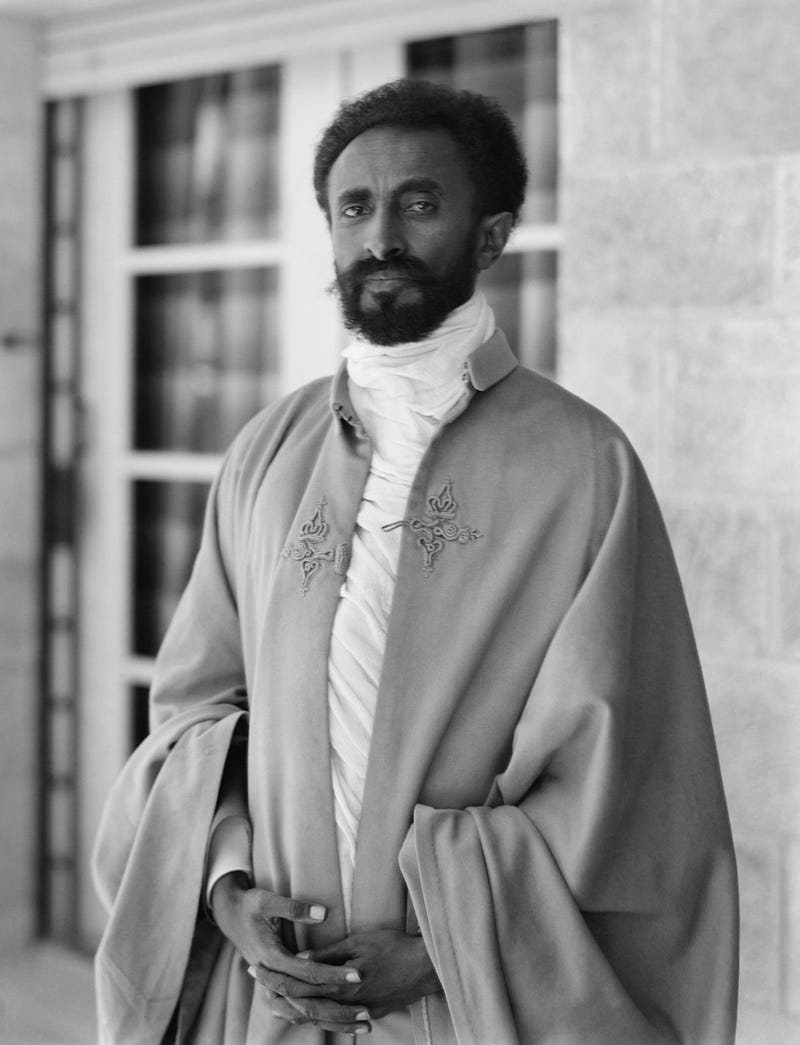
Critics of “Humble” tend to deny the role of Ethiopian church and only see whiteness in Rome not in Rastafarian ideology or in “marvellous churches of Lalibela … Every church has its own priest … They are invariably dressed in white, with a white cloth wrapped around their head, they are the guards of the treasures of their church, and above all, they are human (http://www.traveladventures.org/continents/africa/lalibela-priests.html).
They also seem to completely ignore the use of “
This is about a recurring process. One Lauryn Hill rapped about early in her career in bars sandwiched between two male verses on “Manifest” back in the days of The Fugees.
You see I loved hard once / But my love wasn’t returned / I found out the man I died for / He wasn’t even concerned / In time he turned / He tried to burn me like a perm. / My eyes saw the deception / But my heart wouldn’t let me learn / from …Um Some dumb woman was I /”
I sounded like L-Boogie was bout to say “some dumb bitch” as men were inclined and still are inclined to be overheard saying about us.
For black women who remember the lye of the creamy crack known as a perm we burned the skin nearest the organ of our thinking processes to beautify our assimilation into both patriarchy and white supermacy. This is a post about how the structural logic that seeds and funds popular culture from soundtracks to music videos is killing us without humility for the sake of an enticing beat and propped up masculinity. It’s no longer killing us softly. It’s not soft. This is hardcore, social and symbolic annihiliation of black women. It’s social and symbolic death repeated over and over again, waged symbolic — meaning immaterial or intangible — warfare for profit, where words hurt and kill. This is a manufactured warfare, media for profit, that benefits everyone else in the capitalist logic but the black and brown girl.
The brown girl in the ring who once thrived and did her thing in the playground ring, after nine or ten grows up to be a women who often questions her own authority but rarely questions what threatens her ownership and agency over her own sexuality, body, and black thought — what is feminism to me? Why does it matter to me and my future daughters, nieces, and girl childs?
But who to resist questioning her subjugation at the level of a C. Delores Tucker — putting your money (not someone’s dick) where you mouth is.