
Humans Could Have Sent Life to Other Planets By Mistake:
Scientists now know that extremophiles can survive in space
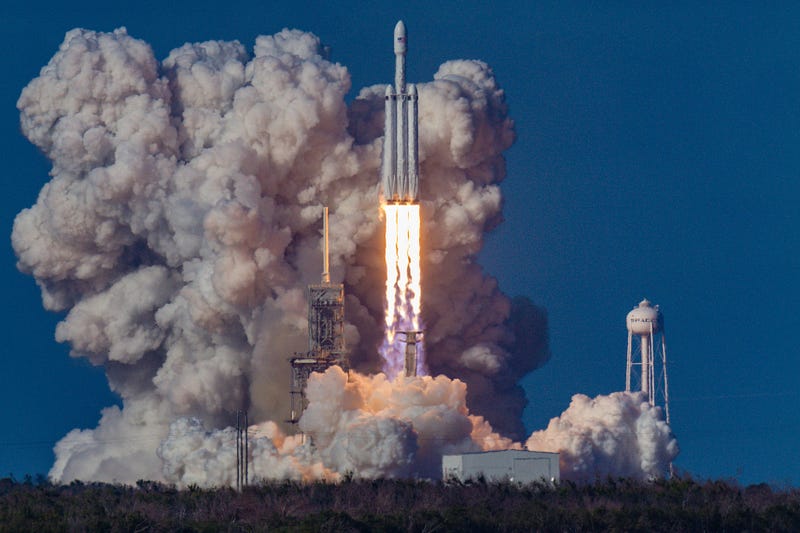
Humans have been sending bits of metal, animals, and people flying into space since the 1960s. Most of the time, the stuff humans have sent into space has ended up there, because they meant it to be up there.
However, scientists have recently speculated that humans could have been unintentionally importing microbial life forms into space, shuttled there on spacecraft exteriors and interiors, since space travel began. The implications this could have are thought-provoking, even awe-inspiring.
Tardigrades in their dormant state can survive in the vacuum of space
Microbes in space? How this can happen.
Scientists have discovered a number of hardy organisms which can, on earth, survive in some of the most hostile environments imaginable. These organisms are colloquially known as extremophiles, because of the extreme environmental conditions they can survive in.
One example of a now well-known extremophile is the tardigrade, or the water bear, an organism which is in fact an eukaryotic animal. In August 2020, Popular Mechanics reported that in 2019, an Israeli spacecraft called Beresheet, which was carrying thousands of dormant tardigrades, crashed into the moon, spilling them onto the moon’s surface.
Scientists usually do not deliberately take terrestrial life forms into space. In fact, usually, extensive efforts are made to sanitise spacecraft to reduce, if not completely eliminate, all the non-human biomass on and in spacecraft. However, in 2007, European researchers sent a spacecraft into orbit of the earth, which had tardigrades placed on the ship’s exterior.
These researchers established that tardigrades in their dormant state could survive in the vacuum of space, which is a really incredible fact.
Microbial life could hypothetically diffuse throughout the universe
In August 2020, Smithsonian Magazine established tardigrades are not the only organisms capable of surviving in space. Microbiologists including Akihiko Yamagishi based at Tokyo University discovered that the bacteria Deinococcus radiodurans could survive for up to three years in space, in an experiment outside Japan’s Kiko lab on the International Space Station.
The discovery made by Yamagishi and his fellow researchers provided further evidence for the hypothesis that postulates life on earth could have originally arrived on our planet on and inside comets, asteroids, and meteors travelling through space. However, even if this hypothesis is true, then one of the most significant puzzles in biochemistry would remain unsolved — how life in the universe emerges from nonliving matter.
The fascinating upshot
That humans have discovered that multiple microbial extremophiles can survive in space supplies evidence for a thought-provoking possibility.
Eventually, humans will set foot on Mars, carrying […] microbes that live on and inside our bodies with them. These microbes too will probably adapt, mutate, and change.
If sophisticated life forms, such as humans, exist elsewhere in space, and if they develop space and interplanetary travel, as humans have successfully managed, given evidence for extremophile resilience in space and on other planets, microbial life could hypothetically diffuse throughout the universe exported on spacecraft.
In May 2021, the BBC reported that the fact scientists have now established some extremophiles can survive in space means a professional enterprise of ‘planetary protection’ called ‘forward contamination’ has been developed.
Planetary contamination essentially involves reducing the amount of biomass that is exported from earth to other planets during space travel. Scientists are taking very seriously the possible risks that life introduced to alien environments could inflict damage to any preexisting ecosystems that may exist on planets and satellites besides earth and the moon.
However, reaching 0% biomass is very hard, so scientists predict some contamination is likely. Moreover, the BBC suggest that sanitising these vessels “might serve as an evolutionary selection process for the hardiest bugs that then may have a greater chance of surviving” interplanetary travel.
The upshot of this is pretty incredible, and it is very clearly explained by the BBC, so I will provide the paragraphs that put the implications this may have for the evolution of life into the starkest terms:
Eventually, humans will set foot on Mars, carrying the cocktail of microbes that live on and inside our bodies with them. These microbes too will likely adapt, mutate, and change. And we can learn from them too.
They may even make life on Mars more tolerable for those who go there, since the unique genomes adapting to the Martian environment could be sequenced, transmitted back to Earth for further characterisation, and then utilised for therapeutics and research on both planets.
Given all the planned Martian missions, we are at the shore’s edge of new era of inter-planetary biology, where we will learn about adaptations of an organism on one planet and apply them to another.
The lessons of evolution and genetic adaptations are inscribed in the DNA of every organism, and the Martian environment will be no different. Mars will write its new selection pressures on organisms that we will see when we sequence them, opening an entirely new catalogue of evolutionary literature.
Hence, scientists are taking the possibility seriously that life can diffuse across space, enabled in part by the resilient extremophiles, capable of surviving in the harshest of conditions, which can then evolve in new environments.
Recent discoveries also add a fascinating dimension to the hypothesis that life originally arrived on earth via comets and asteroids hurtling through space. Well, we now know that the reverse is also a possibility.
It is evident that bits of earth can carry life from our planet to other objects in space too — and the evidence shows it’s not just us making the journeys.