
Humans Are Not Morally Exceptional
Remember a few years ago when a few fast food chains and supermarkets, notably McDonald’s, were found to be serving horse meat at some restaurants?
The 2013 horse meat scandal was a major issue in the food industry in which some meats that were claimed to be beef or chicken were discovered to instead be horse meat! There was instant public outrage; people were angry at how they had been deceived and eaten horse meat, and yet many of these discussions were probably had while eating steak or grilling food at a barbeque.
Or think about back in 2016, when the gorilla Harambe was killed at the Cincinnati Zoo in the United States. Yet another event that sparked anger across the internet and called for changes to zoo policies and the like. It even became a rather popular meme that occasionally springs up even today.
We react with such horror when we hear about the death of such creatures, and yet many of us continue to eat meat. So what is it that separates gorillas and horses from chickens or cows?
And, in fact, what separates humans in such a way that we think it is morally allowed to kill and eat such beings?
Some people might argue that being a human means that we are special, because we have certain capacities and capabilities that other creatures do not. But what are these capabilities?
A number of different ones have been suggested throughout the years — family ties and social bonds, intelligence levels, using language, thinking abstractly and feeling emotions are just a few of these. But let’s take a closer look at some of the most common ones.
Intelligence
Many might point out that humans are the most intelligent species, so we should be considered exceptional and are therefore allowed to use other creatures.
So let’s take this as a fact, and see where this takes us.
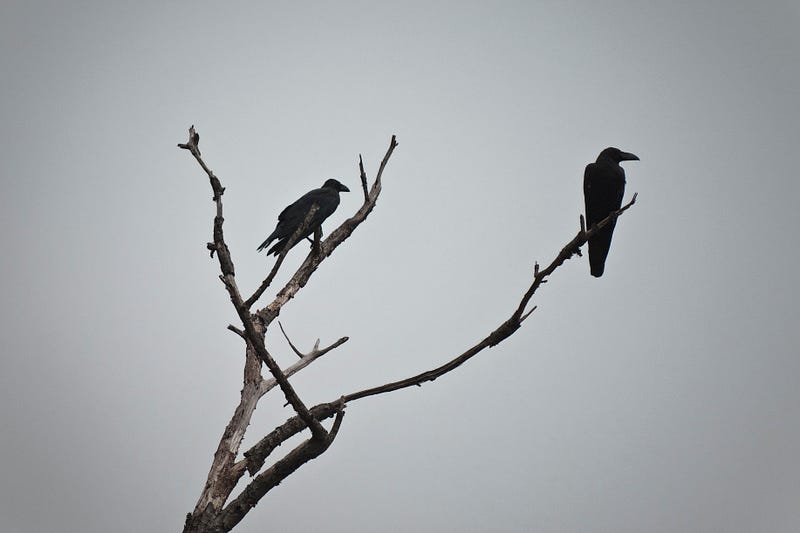
We know from studies that crows and certain species have better problem solving capabilities than 7-year-old children and are overall more intelligent in a few areas. Does this mean that crows should be allowed to eat human children and we would consider that morally okay?
If we agree with the argument that whichever species is more intelligent is superior, then yes we should be okay with this
Or consider the situation of people with disabilities that affect their mental capabilities in a negative manner or people in comas who are brain dead. They generally can’t understand a lot of things or have the capabilities that other humans have, so do we consider ourselves morally superior to them?
Now you might argue back at this point saying that what matters is the species as a whole. Since humans are overall the more intelligent species, it is okay for us to harm other animals for our own prosperity.
But what if we take this scenario further but keep it constrained to humans. Instead of a society that is ruled by people who are white, or a society ruled by men, consider a society that is ruled by people with the highest IQ. At a certain age, every child is given a test that measures their intelligence potential. Those who have the highest ones are sent to live in the upper classes of society, while the lowest ones are the general workers and part of the lower classes. Is this a good way to divide things up then?
As we follow this fact and its repercussions, we rather quickly see that intelligence does not mean that a species is morally superior
Emotional and Social Bonds
The capacity for emotion, for example, has been seen and noted in a number of different species, the most notable one being orcas who show clear feelings of anger or boredom and sometimes just kill other animals for fun; they don’t even eat them. Other animals that are household pets like dogs and cats have been shown to develop familial bonds with their owners
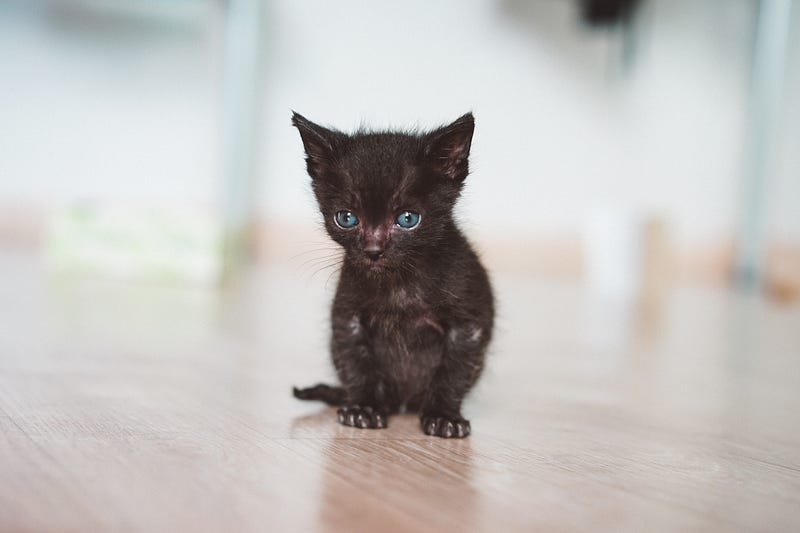
When a new human baby is born, cats will look after it as though it is their own kitten and they will clean them and play with them like they would their kitten. Obviously, each individual creature is different and they may each have different reactions to a new baby, but that doesn’t take away from the fact that they do bond with humans and see people as part of a family.
Both scholarly and popular work on animal behaviour suggests that many of the activities that we think occur only in humans occur in many non-human animals as well. One proposed reason for humans being exceptional was that we can form better social bonds, but you only need to look at a few species to see this isn’t the case
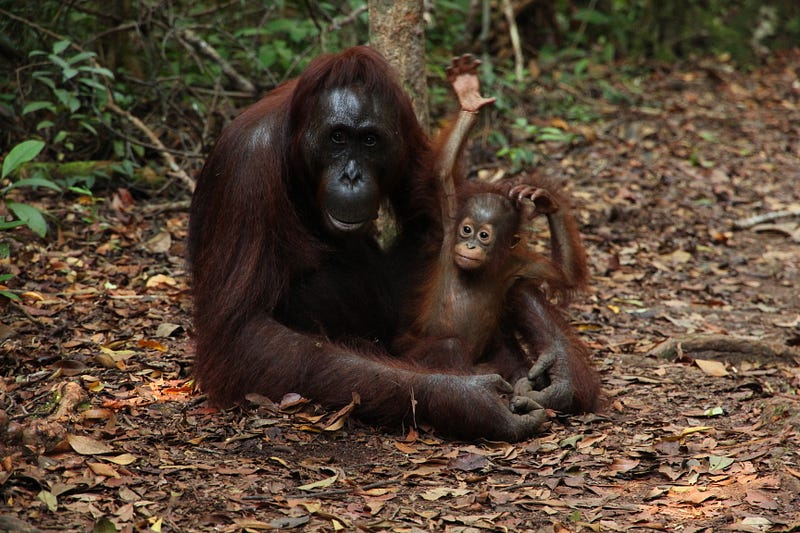
Orangutans, for example, will always look after their children for eight to ten years until the kids are old enough to go on their own, and even then they will maintain relationships and meet throughout their life.
Other social animals, such as wolves or chimpanzees have extended family units like humans do.
All living creatures that live in social groups also have to solve problems that arise in these large groups. While primates are especially good at this, other creatures such as chickens and horses also exhibit this kind of behaviour and have a defined social structure.
Some animals even make such strong bonds that they can die of sorrow when their partner or child dies! Darwin, in his book The Descent of Man, notes that
“So intense is the grief of female monkeys for the loss of their young, that it caused the death of certain kinds.”
So we see then that most of the capacities that are thought to distinguish the human animal as exceptional or morally considerable have been observed to some extent in a number of non-human animals.
While humans can be seen as special because we can believe in abstract things like gods and money, we can follow the above lines of reasoning to show that this still doesn’t mean we are morally exceptional. Attempts to show human uniqueness through certain capacities are not really the most reliable or promising when it comes to the moral status of animals.
If you enjoy what I write and want to follow me on this journey, consider subscribing to my weekly newsletter! You get bits from my week that I find to be productive or inspirational in my life, as well as some behind the scenes into what I do.
Sign up here: https://www.getrevue.co/profile/sahir-dhalla