
Humanity is About to Become a Type II Civilization
Our species is taking the first steps to leave Earth and become a Type II civilization.
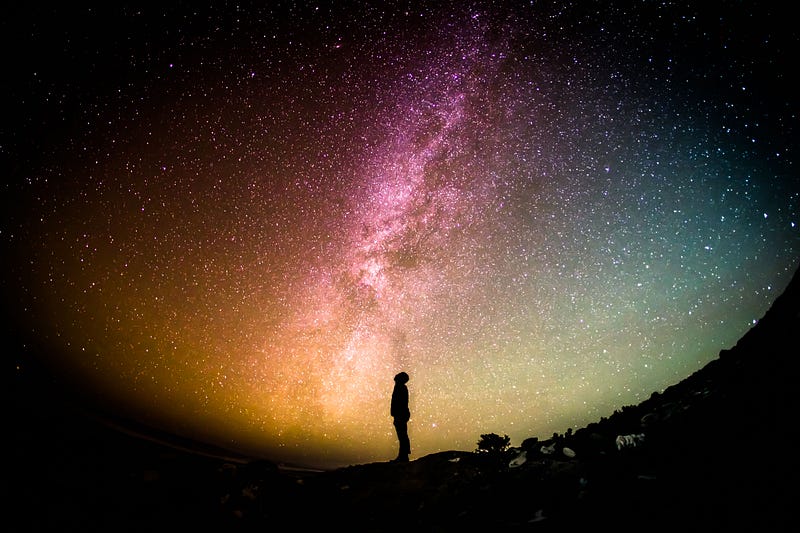
The Scales of Civilization
According to one measure of the Kardashev Scale’s of Civilizations, there are three major categories that intelligent species fall into:
- Type I: A species at this level will have industrialized its respective planet and have access to all of the planet’s resources.
- Type II: At this point, a species will populate its star system and have industrialized multiple planets and moons. The star itself will be the primary source of this civilization’s energy and all mining will be done to asteroids and uninhabitable rocky planets. The home planet will serve as a preserved garden world while other planets are terraformed.
- Type III: A civilization that reaches this level would dominate its respective galaxy having access to all resources that galaxy provide. This civilization would have devised some system of faster than light travel as well as communication. They would inhabit countless star systems and have near unlimited resources. This civilization would be aware of and monitor any other intelligent life in the galaxy. It is possible that this civilization could be comprised of multiple intelligent species that have banded together.
Our Type I Civilization
It has taken Humanity 6,000 years of recorded history to reach our current state. That may seem like a long time in terms of human generations but our history amounts to a mere 13 seconds on the cosmic calendar. Meaning if you plotted the time since the Big Bang to our current year on a 365-day calendar, then 1 cosmic second is ~440 complete Earth orbits.
In those 13 seconds, our species has evolved from hunter-gathers into information and technology experts. We are not perfect by any means, but we have unlocked the power of the atom — for both good and evil. We have advance near-instant communications across the planet. We have probed and place satellites around several celestial bodies in our star systems
Our species has formed an imperfect united representation of humanity in the form of the United Nations. We are far from eliminating war, extreme poverty, or even starvation and will face unprecedented challenges in the future as our population expands. Regardless, I steadfastly believe in human potential and believe we will not only rise to the challenge but exceed our wildest dreams.
Imagine what our species might look like after 1 cosmic minute? That is something I aspire to believe is possible. Humanity's fate is among the stars.
Becoming a Type II Civilization
On the cosmic scale we are but seconds away from becoming a Type II civilization. Our current knowledge and research have yielded plans for space-based solar power stations, fusion power, bases on both the Moon and Mars, and ships able to traverse our solar system.
These steps will be slow as it usually takes several decades to transform a theoretical design into commercially scalable applications. But they will assuredly happen. It will begin with the establishment of bases on the Moon and Mars. Once we have industrialized the moon we will have reached the point where we can deploy a space elevator system. It will happen first on the Moon as the requirements are much lower than that of Earth.
These space elevators will be power by orbital solar arrays that derive all the energy needed directly from the Sun. With the means to transport vast amounts of mass to orbit both quickly and cheaply, we will start to build ships capable of quick interplanetary travel.
Our ships will allow us to reach into the outer solar system and establish bases on the moons of Jupiter and Saturn. Having master fusion power by this point will we have a nearly unlimited source of energy by siphoning hydrogen from these gas against. The water moons of Jupiter and Saturn, Europa and Enceladus respectively, will provide a substantial source of water for these outer bases.
All the metals we need will be available in the form of asteroids in the Asteroid Belt. Our shipbuilder will have devised towing ships that will bring these metal-rich asteroids to our industrial bases for processing.
While our terraforming goals on Mars will have undoubtedly advanced, Earth will remain the only source of abundant naturally occurring life in the solar system. And for that reason, Earth will serve as a garden world that is our most coveted treasure.
Our species is very young and naive, having existed for a mere 13 cosmic seconds. When we are a full fledge Type II civilization we will look back into these years with disbelief similar to how we view the first ten centuries of the common calendar.
If you liked this article, please take the time to support a new writer on the Medium platform. Thank you!


