
Human Fusion — Mind Over Matter
“I Was a Whole Person Again”
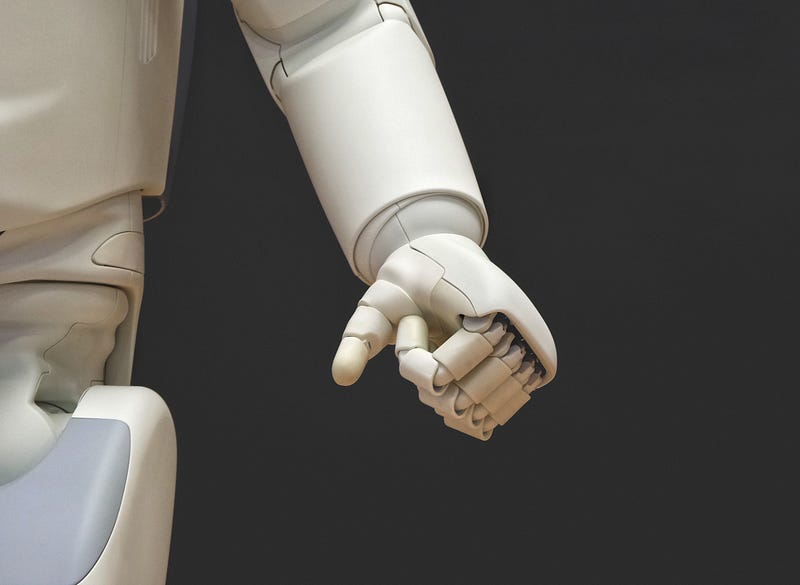
Imagine the Future
A military war veteran lost his hand in an explosion. Now he has an artificial hand, controlled by his mind. Another vet lost his foot in an explosion and has been fitted with an artificial lower leg and foot. He controls the limb with his mind. But now there’s much more.
For decades the one major complaint among those fitted with artificial limbs has been the lack of feeling. Now that’s changed. These men and women not only can use their minds to control the movement of their limbs, they now can touch and feel with artificial limbs. Fingers and toes that can feel. This is made possible by a fusion of multiple sciences with similar or the same goals and centered at Case Western University in Ohio.
Imagine, after many years, the ability to touch your granddaughter and feel that touch or hug. Imagine using your mind to finally be able to manipulate a prosthetic hand to close on an apple and pick it up to eat, all while feeling that apple in your hand.
Human Fusion Technology
The Human Fusions Institute at Case Western University is behind these changes and others. From their website: The Human Fusions Institute (HFI) conceptualizes and delivers cutting-edge, socially responsible technologies that reimagine how people can interact with their devices, transcending the physical limitations of space and geography.
Recently I came across an article based on an interview with two people with artificial limbs, and their discussion of how their lives have been completely changed by this breakthrough. Thus the subtitle, “I was a whole person again”… a quote from one person who, for the first time, could feel through his fingers.
This research began in 2012, when Dr. Dustin Tyler, Ph.D., and his research team first implanted a sensory interface in a person. This technology allows anyone with an artificial limb to be able to not only close their fingers on an apple but to feel the apple they are touching.
The Human Fusion Institute has designed and implemented a process that is able to provide engineering data from the pressure of touch to a neurological code that is transmitted back to the brain. The brain then transfers this code to the feeling of touch.
Two systems have been designed by these fine people involved. One is through the design of new prosthetics that will be available as a fully implantable system of prosthetics. There remain clinical trials for these fully implantable systems to be concluded. They are also developing a system that can be implanted at a doctor’s office using ultrasound-guided injections, a fairly non-invasive process.
But There’s More
Through the use of HFI technologies, it is believed there will be applications for healthcare, the military, gaming, and more by ground-breaking technologies to come.
By creating a symbiotic relationship between humans and technology, the future is limitless. Doctors will be able to provide care to someone elsewhere in the world. Military and law enforcement personnel could use a robot to disarm a bomb, being able to “feel” with the robot’s arms and fingers, all while maintaining a safe distance.
This technology removes the heretofore biological barriers of robotics and the use of artificial limbs. Another such example would be the ability of a person to perform a welding procedure from an office in NY, on a ship miles out at sea.
The Future
By bringing together the technologies of neuroscience and neuro-engineering to robotics, for example, the opportunities are endless in our efforts as humans to improve the quality of life for all. The prospects and opportunities for our future are endless.
Here is a Link for the full 60 Minutes episode regarding all of this: https://www.cbsnews.com/news/advancements-in-prosthetics-limb-technology-allow-feeling-control-60-minutes-transcript-2023-03-26/
For more information follow the links here to read the article and investigate further. There is also a signup on the website (https://case.edu/humanfusions/) to receive updates and further information if you are interested. I sure hope, at 72, that I will live to see technologies like these come to fruition.
In the interest of mentioning others whose stories and articles I read and have read on Medium, here are a few I recommend: DL Nemeril, B.R. Shenoy, Brooklyn Muse (editor).


